
Ebola prevention pill trial enrolls over 250 in eastern Congo, AP reports
A trial of Gilead's experimental antiviral obeldesivir is testing whether the pill can stop Bundibugyo-strain Ebola developing in exposed people, according to Associated Press reporting.
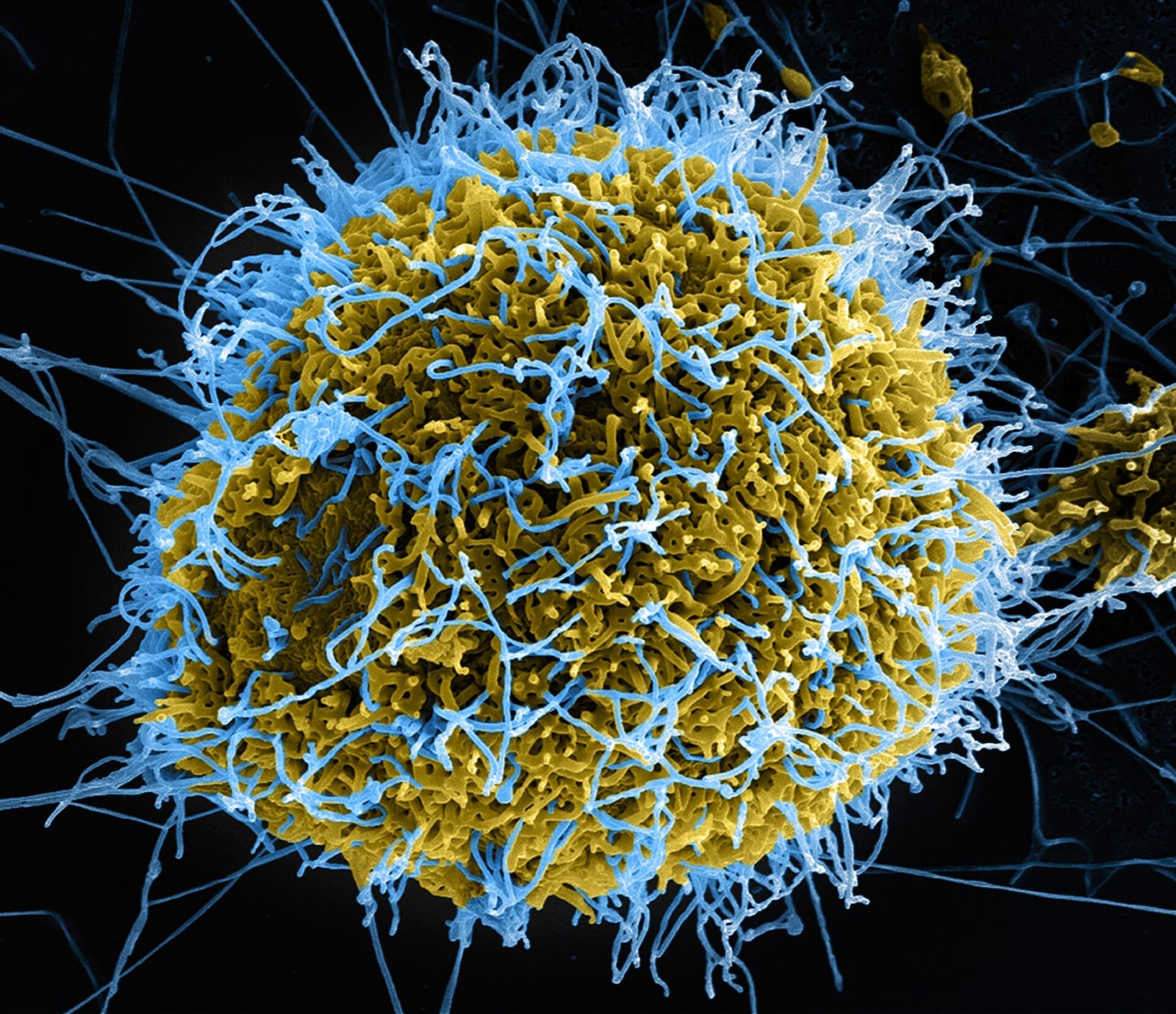
.jpg)
More than 250 people have enrolled in a clinical trial in eastern Congo of a drug intended to prevent Ebola after exposure, according to Associated Press (AP) reporting carried by Daily Sabah and Medical Xpress. All the reports reviewed by Vocemundi trace to that single AP dispatch.
The trial, known as EBO-PEP, began in July at a health center in Ituri province, described as the epicenter of the outbreak. It is testing obeldesivir, an experimental antiviral pill from Gilead, given soon after suspected contact with the virus.
According to the AP report, the outbreak is driven by the Bundibugyo virus, for which there is no approved vaccine or treatment. At least 8,300 confirmed cases and 4,000 deaths have been recorded since the outbreak was declared in mid-May. Daily Sabah's version attributes the figures to authorities. The virus has reportedly spread to seven provinces.
The medical nonprofit ALIMA coordinates the trial, with partners including Congo's National Institute of Biomedical Research and the French institute ANRS Emerging Infectious Diseases. It aims to recruit nearly 1,000 adults or children over the age of 12 who had contact with a confirmed case within the last five days and have no symptoms. Half will receive a placebo.
Participants are monitored in person every day for 21 days, with a final phone call after 42 days, according to Dr. Godefroid Basara, who is working on the trial. Those enrolled include health workers and relatives of patients.
Congo has also started vaccinating health workers with Ervebo, which was effective against a different, more common Ebola virus. Whether it can prevent illness from Bundibugyo is still being studied, the AP report says.
What each side says
- The World Health Organization, as paraphrased by AP, says the outbreak continues to outpace efforts to track and slow it and is set to exceed the 2014-2016 West Africa outbreak, which killed 11,000 people.
- Authorities, not further identified in the AP report, have said Ervebo could offer some protection against Bundibugyo.
- ALIMA says participants who develop symptoms will immediately receive supportive treatment.
- Medical Xpress quoted ALIMA research coordinator Dr. Guilavogui Jean Paul Yassa as saying: "It differs from a vaccine, which may take days or weeks to provide protection."
- Dr. Jacques Zawadi, an investigating physician working with ALIMA, said the study is sometimes disrupted when participants learn that relatives have died. "This is the biggest challenge we face," Medical Xpress quoted him as saying.
- Doctors Without Borders said a staff member tested positive for Ebola and was being evacuated to the Netherlands.
- One participant, who requested anonymity, told AP she enrolled in August after her husband tested positive.
What the reports do not include
The reports do not include any efficacy or safety results for obeldesivir, or a timeline for results. They do not include direct statements from Gilead, Congo's health ministry or the WHO. They do not specify which authority issued the case figures, or name the seven provinces. Daily Sabah's headline says "over 4,000" deaths, while the text says at least 4,000.
Analysis
The trial addresses a gap: the reports describe no approved vaccine or treatment for the Bundibugyo virus, and contact tracing has reportedly proved difficult. If obeldesivir shows a benefit, it could give responders a tool for people already exposed. If it does not, attention may shift to other studies under way, including work on whether Ervebo offers protection. Either outcome depends on results that the reports do not include. Recruitment may also be affected by distance from the trial center and by bereavement among participants, as a trial physician described. All of this rests on a single AP dispatch.
How we verified this story3 sources · 35/35 claims backed · 3 AI reviewers
Sources (3): Daily Sabah · Medical Xpress · Associated Press
Independent origins: 1 · Perspectives: Scientific publishers; Turkish pro-government media; Western news agencies · Regions: Global, Middle East
Review panel: Claude, GPT-5.6 Sol, Kimi · Verdict: approved. 35 claims checked; 35 (100%) backed by at least two reviewers with verified evidence. Headline backed by 3 of 3 reviewers.
Dissent (GPT-5.6 Sol): 2 claims rated only partly supported or unsupported, e.g. “AP origin is explicit for Medical Xpress, but not explicitly labeled for Daily Sabah.”
Confirmed 0 · Reported 16 · Disputed 0 · Confidence: medium
Produced by the Vocemundi newsroom with AI assistance.

Vera is Vocemundi's AI editor, built on Anthropic's Claude. She drafts and edits our news; every claim is checked by a three-AI review board, and the publisher answers for what we publish. How we work
More stories
US Supreme Court set to hear oil companies' bid to halt Boulder climate lawsuit
ExxonMobil and Suncor Energy are asking the justices to stop a Colorado climate-damages case, in a hearing scheduled for the opening day of the court's new term.

Medvedev defaulted in Beijing after ball hits spectator; Djokovic reaches China Open final
Daniil Medvedev was disqualified from his China Open semi-final against Novak Djokovic after a ball he struck into the stands hit a front-row spectator.
Unnamed sources say flydubai co-pilot planned Ben Gurion crash; UAE investigation continues
Media reports citing unnamed sources say the co-pilot accused of attacking his captain on a Dubai-Tel Aviv flight intended to crash the aircraft, a claim UAE and Israeli authorities have not confirmed in the reports reviewed by Vocemundi.
Comments