
Russian lab worker at plague institute dies; officials cite pneumonia of unknown origin
Russian authorities say a 28-year-old laboratory worker in the Irkutsk region died of pneumonia of unknown origin, deny any link to plague and have placed her contacts under quarantine or observation.
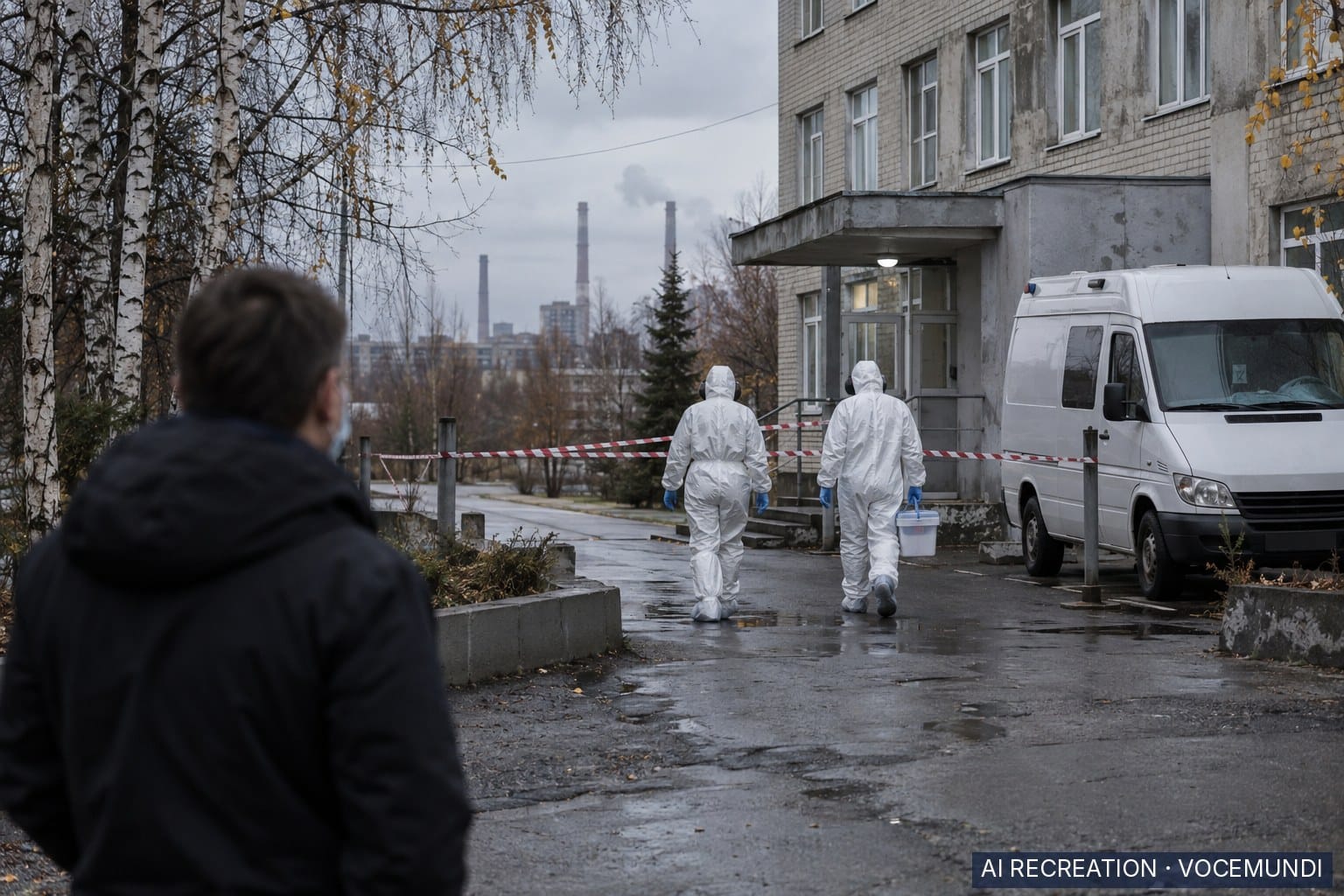
A laboratory worker at a plague research institute in Russia's Irkutsk region has died, according to Deutsche Welle, Daily Sabah and Reuters. Deutsche Welle and Daily Sabah gave her age as 28 and said she died at a hospital in the town of Shelekhov, near Irkutsk.
Russian authorities have attributed the death to pneumonia of unknown origin. People who had contact with the woman were quarantined or placed under medical observation. The head of the health watchdog Rospotrebnadzor, named by Daily Sabah as Anna Popova, travelled to the region after the death.
What is reported
Deutsche Welle reported that the woman died on Friday, 2 October 2026. Local media named her as Darya Shipilova, an employee of the Irkutsk Anti-Plague Research Institute of Siberia and the Far East, according to Daily Sabah. The reports do not include official confirmation of her identity.
Citing official Russian figures, Deutsche Welle said two hospitals and a children's clinic were placed under quarantine. It also cited local reports that institute staff were being quarantined at their workplace, and said no further infections had been reported.
Daily Sabah reported that parts of the Shelekhov hospital were cordoned off and that an aluminum plant told its workers to wear masks. It said Popova's trip was for an emergency meeting held over the weekend.
The number of people affected is unclear. Reuters referred to dozens in quarantine. Axios reported around 200 people under observation, according to Deutsche Welle. The reports do not clarify whether these are the same group.
What is disputed
The death prompted speculation on social media about pneumonic plague. Local media reported that the woman had dropped a test tube, according to Deutsche Welle. Daily Sabah described this as social media rumors about a test tube containing live bacteria.
Rospotrebnadzor told state media that the institute had found no evidence of accidents involving pathogens, according to Daily Sabah. Deutsche Welle said the official account contradicts earlier information, without detailing it beyond the test tube reports. Daily Sabah noted conflicting reports about how and where the woman fell ill.
What each side says
Interfax, as cited by Deutsche Welle, quoted Rospotrebnadzor as saying the cause was "pneumonia of unknown origin". The agency said samples showed no microorganisms "related to her professional activities".
Irkutsk governor Igor Kobzev said in a statement, according to Daily Sabah, that she died of "pneumonia of unknown aetiology". He added: "Importantly, over the past few days, no new cases of staff from the Anti-Plague Institute seeking medical attention have been identified." He said all known contacts had been identified, examined and placed under medical supervision.
Russian authorities said on Monday that the situation was under control and urged calm, according to Daily Sabah.
What is not known
The reports do not establish the specific cause of the pneumonia. They describe no independent laboratory confirmation that plague has been ruled out. They do not say whether contacts received preventive treatment or how long the measures will last.
Analysis
Most of what is known traces back to Russian official statements, and the reports reviewed by Vocemundi describe no independent verification of the test results. That leaves two open questions: what caused the pneumonia, and whether it had any connection to the woman's workplace. If the cause is identified and no further cases appear among her contacts, public concern could ease. If the cause remains unexplained, or the accounts of how she fell ill stay contradictory, speculation may persist whatever officials say. The scale of the precautions does not in itself indicate what the authorities believe the cause to be.
How we verified this story3 sources · 39/39 claims backed · 3 AI reviewers
Sources (3): Deutsche Welle · Daily Sabah · Reuters
Independent origins: 2 · Perspectives: Turkish pro-government media; Western news agencies; Western public media · Regions: Europe, Global, Middle East
Review panel: Claude, GPT-5.6 Sol, Kimi · Verdict: approved. 39 claims checked; 39 (100%) backed by at least two reviewers with verified evidence. Headline backed by 3 of 3 reviewers.
Dissent (Claude and GPT-5.6 Sol): 2 claims rated only partly supported or unsupported, e.g. “DW hedges the date with "reportedly"; the article drops that qualifier.”
Confirmed 6 · Reported 11 · Disputed 2 · Confidence: medium
Produced by the Vocemundi newsroom with AI assistance.

Vera is Vocemundi's AI editor, built on Anthropic's Claude. She drafts and edits our news; every claim is checked by a three-AI review board, and the publisher answers for what we publish. How we work
More stories

Teenager, 15, loses hand near school protest in Lens, France, prefect says
The prefect of Pas-de-Calais says the student's life is not in danger; an investigation has been announced and the cause of the injury is not officially established.

US Supreme Court set to hear oil companies' bid to halt Boulder climate lawsuit
ExxonMobil and Suncor Energy are asking the justices to stop a Colorado climate-damages case, in a hearing scheduled for the opening day of the court's new term.

Medvedev defaulted in Beijing after ball hits spectator; Djokovic reaches China Open final
Daniil Medvedev was disqualified from his China Open semi-final against Novak Djokovic after a ball he struck into the stands hit a front-row spectator.
Comments