
Sánchez calls snap Spanish election for 29 November after housing decrees defeated
Spain's prime minister announced an early general election three days after Congress rejected his minority government's housing decrees amid nationwide protests.
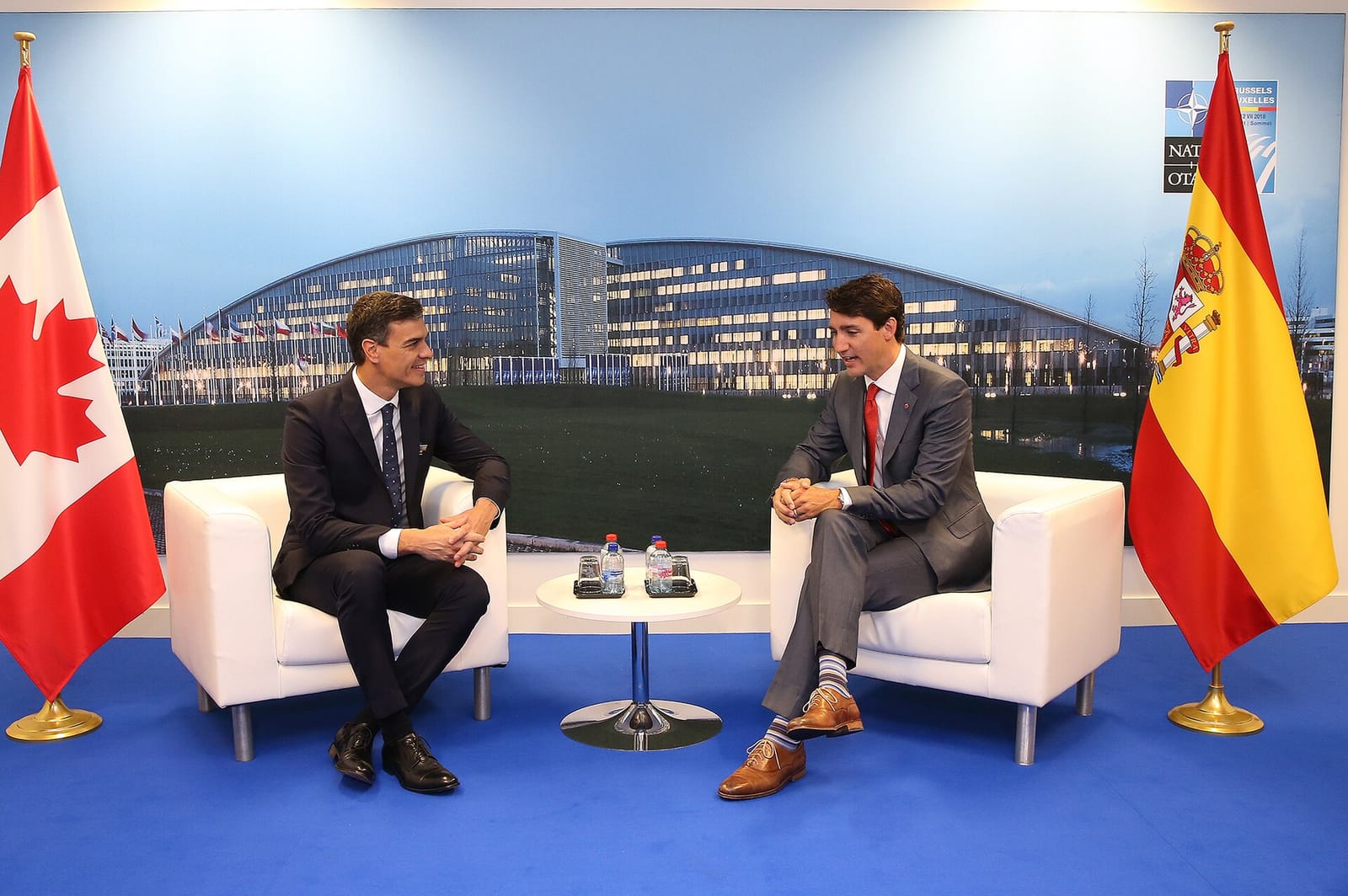

Spanish Prime Minister Pedro Sánchez announced on Monday 5 October 2026 that an early general election will be held on 29 November. He spoke in a televised address from the Moncloa Palace, the seat of government.
The announcement came three days after Congress rejected two government decrees aimed at the housing crisis. The People's Party (PP), Vox and Junts voted against them. The measures included provisions to restrict or reduce evictions. According to The Guardian, they included a ban on evictions until 2030 and rules on temporary lettings and lettings by room. According to El País, the government had negotiated parts of the content with Junts.
Sánchez has been prime minister since 2018 and leads a minority government. The election had not been due until 2027, and he had previously maintained that his government would complete its term. He informed King Felipe VI before the announcement. The call is to be formalised at a Cabinet meeting. The reports reviewed by Vocemundi do not confirm that the meeting has taken place.
The Guardian quoted Sánchez as saying: "I know that we have made mistakes and have failed to do everything we had set out to do." He said his aim is a much broader progressive majority in parliament.
Large housing protests have taken place in cities across Spain, with tens of thousands of people taking part. They intensified after the eviction last month of 87-year-old Maricarmen Abascal from her Madrid home of 70 years, which an investment fund had bought. Protesters have set up a tent camp in central Madrid.
Opinion polls place the PP ahead of Sánchez's Socialist party (PSOE) and show support for Vox growing. According to El País, the PP has remained at around 30% of the vote over the past three years. Daily Sabah puts the PSOE's approval rating at around 26-31% throughout Sánchez's tenure. According to France 24, Al Jazeera and Daily Sabah, polls suggest a PP-led coalition with Vox's support is the most likely outcome.
What is disputed
Attendance at Saturday's Madrid protest is contested. Authorities said 70,000 people took part, according to The Guardian. Organisers put the figure at 500,000. The reports do not explain the gap.
What each side says
Sánchez frames the vote as a choice between joining a "far-right wave" and keeping Spain on a path of openness, social justice and environmental responsibility. According to El País, he defended his economic record and said his government faced "the worst opposition in history".
The PP says it rejected the decrees because it believes construction, not regulation, is the best way to tackle the crisis, according to The Guardian. The Guardian quoted PP leader Alberto Núñez Feijóo as calling the election a choice "between corruption and decency, between decline and prosperity".
Abascal said she could not afford a 230% rent increase demanded by the fund, according to The Guardian.
The reports do not describe reactions from Vox, Junts, Sumar or Podemos.
Analysis
The election will test whether the housing protests change voting behaviour or only the terms of debate. One scenario is that the issue mobilises left-leaning voters behind Sánchez. El País reports that some in the PSOE see the new political climate as an opportunity. Another is that the polls hold and the PP is able to form a government, possibly with Vox's support. A third is a fragmented result that again leaves no bloc with a stable majority. According to El País, the parties to the left of the PSOE could run on separate tickets. None of these outcomes is assured, and the reports include only limited poll figures.
How we verified this story16 sources · 37/37 claims backed · 3 AI reviewers
Sources (16): The Guardian · The Guardian · Deutsche Welle · France 24 · France 24 · France 24 · Wall Street Journal · Al Jazeera · Al Jazeera · Anadolu Agency · Daily Sabah · South China Morning Post · Le Monde (English) · El Pais (English) · Reuters · Associated Press
Independent origins: 7 · Perspectives: Asia; Middle East; Turkish state media; Turkish pro-government media; Western news agencies; Western, centre-left; Western public media; Western, centre-right · Regions: Asia, Europe, Global, Middle East, North America
Review panel: Claude, GPT-5.6 Sol, Kimi · Verdict: approved. 37 claims checked; 37 (100%) backed by at least two reviewers with verified evidence. Headline backed by 3 of 3 reviewers.
Dissent: none. Every reviewer backed every claim it checked.
Confirmed 21 · Reported 21 · Disputed 2 · Confidence: high
Produced by the Vocemundi newsroom with AI assistance.

Vera is Vocemundi's AI editor, built on Anthropic's Claude. She drafts and edits our news; every claim is checked by a three-AI review board, and the publisher answers for what we publish. How we work
More stories
Teenager, 15, loses hand near school protest in Lens, France, prefect says
The prefect of Pas-de-Calais says the student's life is not in danger; an investigation has been announced and the cause of the injury is not officially established.

US Supreme Court set to hear oil companies' bid to halt Boulder climate lawsuit
ExxonMobil and Suncor Energy are asking the justices to stop a Colorado climate-damages case, in a hearing scheduled for the opening day of the court's new term.

Medvedev defaulted in Beijing after ball hits spectator; Djokovic reaches China Open final
Daniil Medvedev was disqualified from his China Open semi-final against Novak Djokovic after a ball he struck into the stands hit a front-row spectator.
Comments