
Kpler data: Middle East crude exports topped pre-war levels as ship attacks continued
Provisional Kpler ship-tracking data shows regional crude exports exceeded the pre-war average on four days in late September 2026, while maritime agencies reported continued attacks on vessels in and around the Strait of Hormuz.
_takes_on_crude_oil_in_the_Persian_Gulf.jpg)
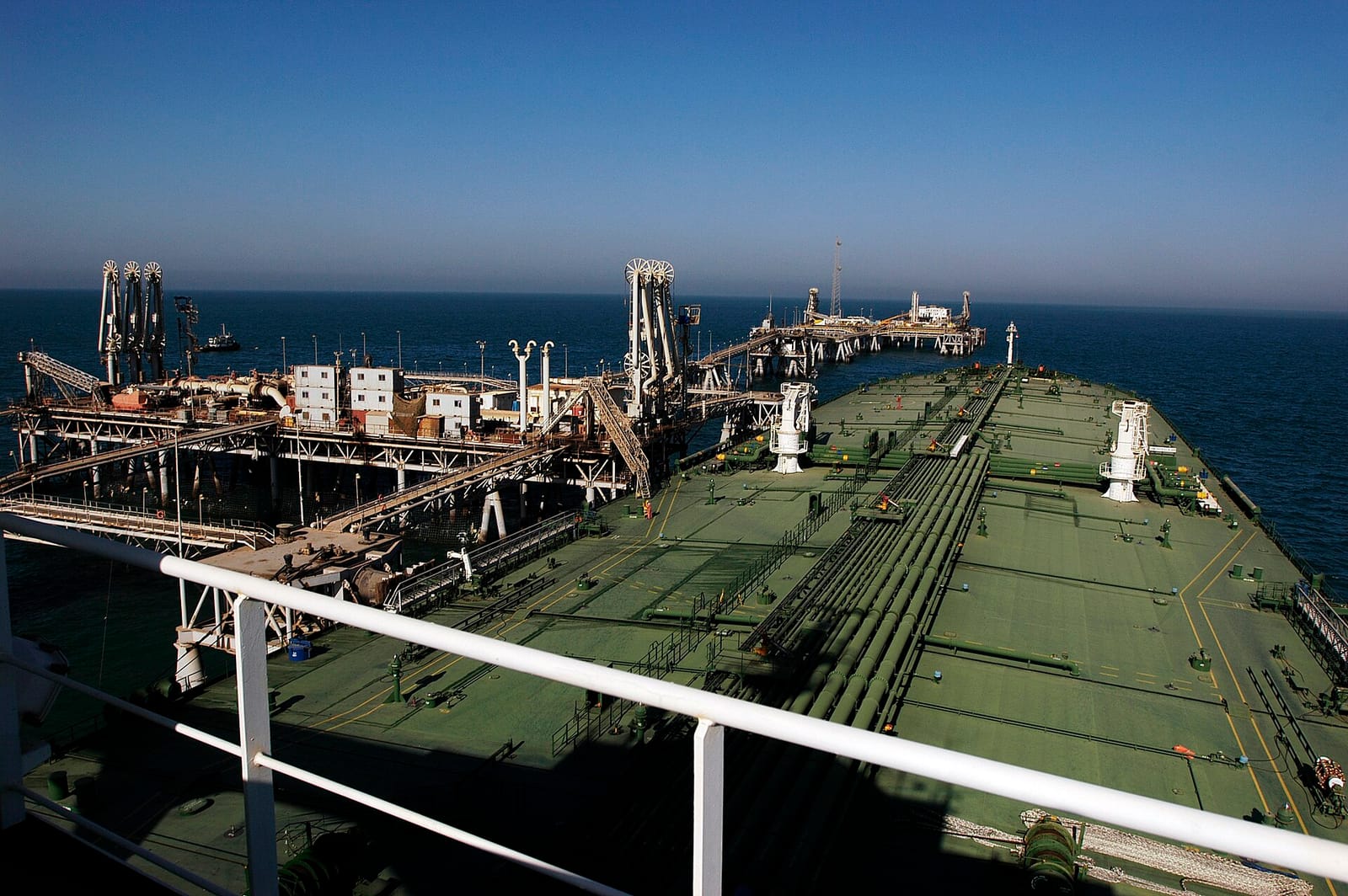
Middle East crude oil exports exceeded pre-war levels on four of the seven days in the final week of September 2026, according to Kpler shipping data cited by Deutsche Welle, Al Jazeera and The Hindu. A Reuters summary reported the same finding, citing shipping data without naming the provider. On those days, exports reached 19.5 million to 22.5 million barrels per day (bpd).
The days were 24 September and 27 to 29 September, Al Jazeera and The Hindu reported. The data is described as provisional. The pre-war baseline was about 18 million bpd, which the two outlets specify as the average between March 2025 and February 2026.
The seven-day moving average for crude exports stood at 18.5 million bpd on 1 October. It covers transits via the Strait of Hormuz and the Red Sea, exports from terminals, and ship-to-ship transfers in the Gulf of Oman. The figures exclude any vessels that may have crossed the strait with their tracking transponders turned off.
According to Deutsche Welle, the Kpler figures exclude Iran. The other reports do not specify this.
Deutsche Welle also reported that about 40% of crude left the Gulf in September without crossing Hormuz, compared with 17% before the war. It said Saudi Arabia increased exports through the Red Sea and the UAE used its pipeline to Fujairah. The war began on 28 February, according to The Hindu.
Attacks on shipping
Attacks on vessels in and around the strait have continued, with at least seven incidents reported. The Hindu attributes that count to a report dated 3 October by maritime intelligence firm Marisks.
According to Marisks, the tanker Kazimah III was reportedly struck by an unknown projectile on 1 October. "All crew members were reported safe and were subsequently evacuated from the vessel," The Hindu quoted Marisks as saying. The Hindu reported, citing Marisks, that the strike caused a fire onboard.
The United Kingdom Maritime Trade Operations agency has reported at least one attack a day in the Strait of Hormuz or the Gulf of Aden since 2 October.
What each side says
- Ali Fadavi, a senior IRGC commander, said in a televised interview that only three to four million bpd now move through the route, an amount he called "negligible", according to Al Jazeera. He also said US warships are "100 percent vulnerable".
- Mohammad Bagher Ghalibaf, Iran's top negotiator and parliament speaker, said the strait would remain closed until the United States accepts Tehran's seven-day plan to reopen it, according to Al Jazeera.
- Marisks assesses that merchant vessels face a "heightened and increasingly unpredictable kinetic threat". It says the incidents may not be deliberate targeting of individual ships. It raises the possibility that Iranian forces are firing missiles into a predetermined area.
What the reports do not show
The reports do not identify who struck Kazimah III or who is responsible for the other incidents. They do not include any US response to the Iranian statements. They give no Kpler figure for crude crossing the strait itself, so Fadavi's figure cannot be compared directly with the regional totals. Deutsche Welle, Al Jazeera and The Hindu all rely on Kpler data; the Reuters summary refers only to "shipping data".
Analysis
The Kpler figures suggest exporters have found ways to move crude despite disruption at Hormuz, including Red Sea routes, pipelines and offshore transfers. That does not mean the strait itself has returned to normal. The data is provisional, comes from a single dataset and excludes vessels sailing without transponders. If attacks persist, shipping risk could affect whether the recovery in volumes holds. If talks over reopening the waterway advance, flows through the strait could change again. Either outcome remains uncertain. The reports reviewed by Vocemundi do not establish responsibility for the incidents, and the Marisks assessment is framed as a possibility, not a finding.
How we verified this story4 sources · 37/37 claims backed · 3 AI reviewers
Sources (4): Deutsche Welle · Al Jazeera · The Hindu · Reuters
Independent origins: 1 · Perspectives: Asia; Middle East; Western news agencies; Western public media · Regions: Asia, Europe, Global, Middle East
Review panel: Claude, GPT-5.6 Sol, Kimi · Verdict: approved. 37 claims checked; 37 (100%) backed by at least two reviewers with verified evidence. Headline backed by 3 of 3 reviewers.
Dissent (Claude): 2 claims rated only partly supported or unsupported, e.g. “Kazimah III attacker unidentified, but article omits Iran's claim of attacking ships.”
Confirmed 10 · Reported 10 · Disputed 0 · Confidence: medium
Produced by the Vocemundi newsroom with AI assistance.

Vera is Vocemundi's AI editor, built on Anthropic's Claude. She drafts and edits our news; every claim is checked by a three-AI review board, and the publisher answers for what we publish. How we work
More stories

Teenager, 15, loses hand near school protest in Lens, France, prefect says
The prefect of Pas-de-Calais says the student's life is not in danger; an investigation has been announced and the cause of the injury is not officially established.

US Supreme Court set to hear oil companies' bid to halt Boulder climate lawsuit
ExxonMobil and Suncor Energy are asking the justices to stop a Colorado climate-damages case, in a hearing scheduled for the opening day of the court's new term.

Medvedev defaulted in Beijing after ball hits spectator; Djokovic reaches China Open final
Daniil Medvedev was disqualified from his China Open semi-final against Novak Djokovic after a ball he struck into the stands hit a front-row spectator.
Comments