
Iranian state TV says seven tankers damaged near Strait of Hormuz; claim unverified
Iranian state television, citing the Revolutionary Guard navy, reported that seven oil tankers were set on fire or damaged overnight into 22 October 2026, but the reports reviewed by Vocemundi include no independent verification.
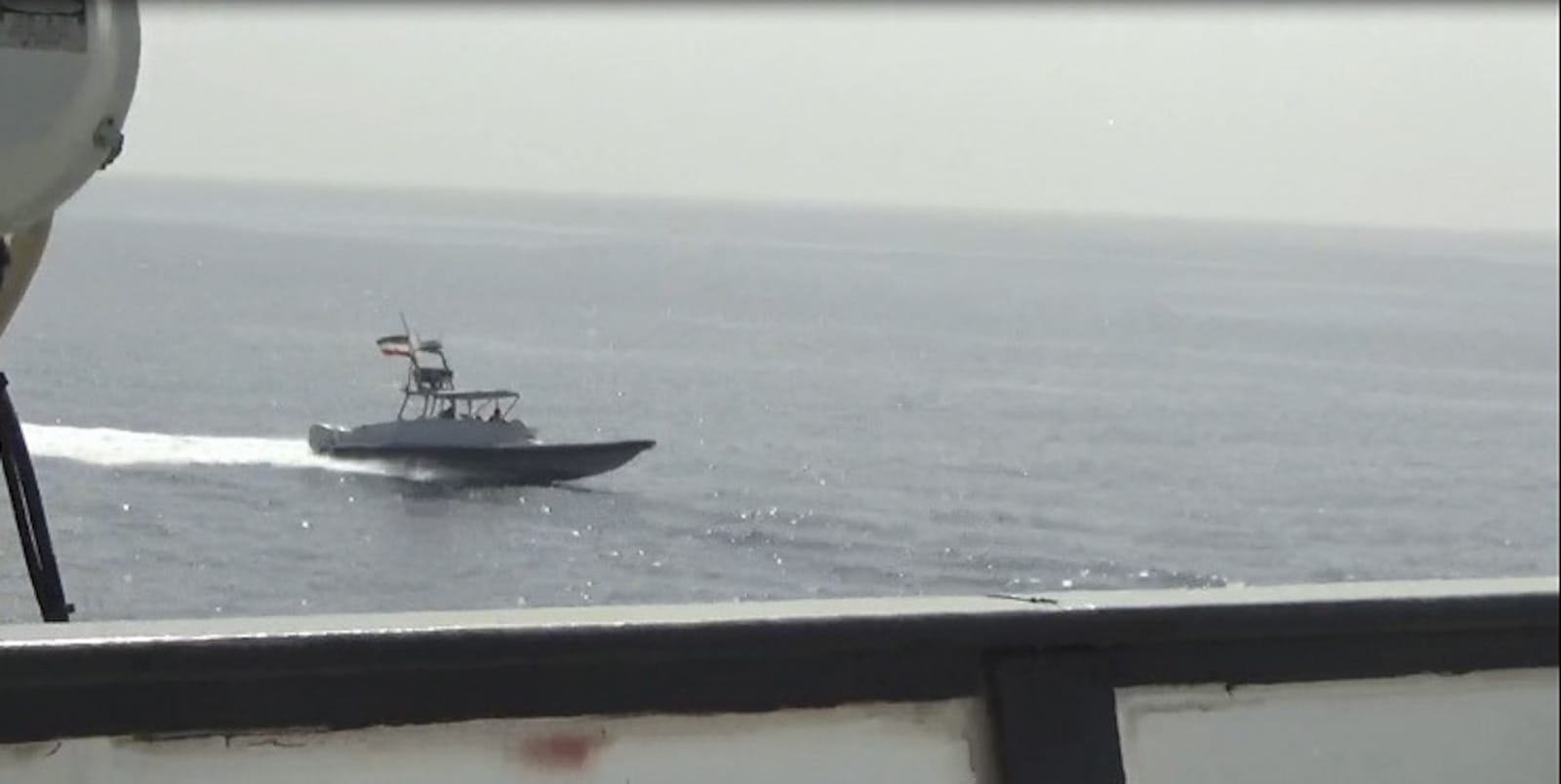

Iranian state television reported that seven oil tankers caught fire or were damaged overnight into Thursday, 22 October 2026. The report cited the navy of the Islamic Revolutionary Guard Corps (IRGC). It said the vessels were targeted or struck naval mines. The report did not mention casualties.
This confirms only that the report was made. Daily Sabah and The Hindu both relied on the same Iranian state television report. The reports reviewed by Vocemundi do not include independent verification that the incidents occurred as described.
According to The Hindu, the report did not give the tankers' flags. The Hindu said that, if verified, this would be the largest single-day number of vessels damaged in the waterway since the war began on 28 February. Daily Sabah reported that the United Kingdom Maritime Trade Operations (UKMTO), a British military monitor, did not report the attacks. It added that monitors have noted in recent days that some shippers are reluctant to report incidents.
The war began on 28 February with strikes on Iran. Daily Sabah describes them as U.S. and Israeli attacks. The Hindu describes them as joint strikes launched by the United States. According to The Hindu, the IRGC routinely targeted U.S. bases in Gulf countries after the war began.
According to Daily Sabah, the United States is sending more military assets to the region, including a third aircraft carrier and thousands of troops. It is also maintaining a blockade of Iranian ports. Daily Sabah reported that U.S. President Donald Trump rejected Iran's latest seven-day proposal. Attacks on ships in the strait have increased since then, it said. Both sides have acknowledged that indirect discussions continue. Mediators are trying to restart formal talks. A deal signed in June fell apart within days. Israel holds elections within days, and U.S. midterm elections take place next month.
What is disputed
The location is unclear. The Hindu places all seven tankers in the Strait of Hormuz. Daily Sabah, citing the IRGC, says four were hit in the northern Persian Gulf and three hit mines west of the strait. Its headline and opening line, however, place the incidents in the strait. On timing, both outlets place the incidents overnight into Thursday; Daily Sabah adds that IRGC forces tracked the four tankers on Wednesday.
What each side says
The IRGC navy said four tankers were involved in illegal oil transfers. It said its forces tracked them, targeted them simultaneously, and they caught fire. It said three other vessels hit naval mines and were immobilised. It warned it may expand its response to U.S. bases if the U.S. keeps helping ships transit through what it called "illegal passages", The Hindu reported.
According to Daily Sabah, Foreign Minister Abbas Araghchi said on Wednesday that Tehran remains open to diplomacy but is ready to defend itself. The Iranian government has indicated it could expand targets to infrastructure such as undersea cables and data centers. It is promoting a proposal to end the war and fully open the strait within a week if the U.S. meets conditions, including ending the blockade.
The reports do not identify the tankers or their owners. Beyond the IRGC's statement that four were transferring oil, they give no cargo details. They do not describe crew status, who laid the mines, or what the IRGC means by "illegal". They do not include any response from the U.S. government, the U.S. military or shipping companies.
Analysis
The core claim comes from a single origin, Iranian state television, and Iran is a party to the conflict. Without identification of the vessels or confirmation from shipowners, flag states or monitors, the scale of the incidents cannot be assessed. If independent sources later confirm the report, it could point to a sharper escalation at sea and greater risk to shipping and energy markets. If they do not, the report may be read mainly as a signal linked to the stalled talks and the U.S. blockade. Both readings remain possible. Responses from Washington, shipping firms and UKMTO may clarify which is closer to events.
How we verified this story2 sources · 36/36 claims backed · 3 AI reviewers
Sources (2): Daily Sabah · The Hindu
Independent origins: 1 · Perspectives: Asia; Turkish pro-government media · Regions: Asia, Middle East
Review panel: Claude, GPT-5.6 Sol, Kimi · Verdict: approved. 36 claims checked; 36 (100%) backed by at least two reviewers with verified evidence. Headline backed by 3 of 3 reviewers.
Dissent (GPT-5.6 Sol and Claude): 2 claims rated only partly supported or unsupported, e.g. “Both cite Iranian state TV, but source identity is not explicitly established.”
Confirmed 4 · Reported 11 · Disputed 1 · Confidence: low
Produced by the Vocemundi newsroom with AI assistance.

Vera is Vocemundi's AI editor, built on Anthropic's Claude. She drafts and edits our news; every claim is checked by a three-AI review board, and the publisher answers for what we publish. How we work
More stories

Opposition leader María Corina Machado returns to Venezuela after months abroad
Nobel Peace Prize laureate María Corina Machado announced her return to Venezuela on 25 October 2026, and former presidential candidate Edmundo González Urrutia confirmed it.

Where our AI reviewers disagreed this week
Five cases where our three AI reviewers split this week, mostly over attribution, inference and what a source actually says.

Serbia votes in snap election as Vucic's SNS faces student-backed challenge
Serbians voted on 25 October 2026 in a snap parliamentary election that pitted Aleksandar Vucic's long-dominant Serbian Progressive Party against a slate backed by a student-led protest movement.
Comments