
Serbia votes in snap election as Vucic's SNS faces student-backed challenge
Serbians voted on 25 October 2026 in a snap parliamentary election that pitted Aleksandar Vucic's long-dominant Serbian Progressive Party against a slate backed by a student-led protest movement.


Serbia held a snap parliamentary election on Sunday, 25 October 2026. The vote was called by Aleksandar Vucic. His Serbian Progressive Party (SNS) faced its main challenge from the Students' List, a slate backed by a student-led protest movement.
The protests followed the 2024 collapse of a canopy at the Novi Sad railway station, which killed 16 people. They are described as among Serbia's largest since the fall of Slobodan Milosevic in 2000.
Vucic resigned as president last month to lead the SNS campaign. He seeks to become prime minister if the party wins. The SNS has dominated Serbian politics since taking power in 2012. Pre-election polling indicated a close race. The vote was described as Serbia's most contested parliamentary election in more than 14 years. Serbia is a candidate for European Union membership, and the EU is watching the vote closely.
The student movement is largely leaderless. Most Students' List candidates are not students but professionals, from fields such as academia and the arts, with little political experience.
According to DW, the constitution bars Vucic from a third presidential term. His second term had been due to expire in May 2027. France 24 reported that 6.4 million voters were choosing from 18 parties for the 250-member parliament, with a 3 percent threshold for entry. Al Jazeera reported that voters were turning out in large numbers. France 24 said the official tally was not expected before Monday. The reports reviewed by Vocemundi do not include results, exit polls or turnout figures.
According to France 24, local elections in 10 municipalities earlier this year saw violent attacks on journalists and activists. The 2023 parliamentary election was followed by opposition protests alleging fraud.
What is disputed
DW describes the movement as Serbia's largest since 2000. SCMP says the disaster triggered some of the country's largest protests since then.
What each side says
Protesters say corruption and political patronage undermined public safety and led to negligence during renovation work at the Novi Sad station, according to DW and France 24. Serbian authorities reject these allegations, DW reported. Critics accuse Vucic of concentrating power and weakening independent media and democratic institutions. Vucic and the SNS deny this, according to DW.
According to France 24, Vucic said his side would concede defeat if it lost. He also warned that any protests claiming fraud after an SNS win would be immediately quashed. Each camp says it is ahead. The Students' List campaigned under the message "we know how".
International and local election monitors expressed concern about the safety and fairness of the campaign, France 24 reported. It described the campaign as marked by detentions, near-total government control over the media, and reports of surveillance and cyberattacks against activists. France 24 quoted Magda Anastasijevic, an Eastern Europe analyst at ACLED, as saying electoral violence could escalate, "particularly if the results are disputed".
Analysis
The outcome remains open, and the reports reviewed by Vocemundi do not include any results. Several scenarios are possible. A clear SNS win would extend the party's 14-year hold on power, though fraud claims could follow, as they did in 2023. A Students' List win would mean a change of government led largely by candidates with little political experience. A narrow result could test both camps' stated positions on accepting the outcome; some analysts fear instability in that case. The EU, which has cited concerns over democratic standards in Serbia, is likely to weigh how the vote and its aftermath are conducted.
How we verified this story5 sources · 37/38 claims backed · 2 AI reviewers
Sources (5): Deutsche Welle · France 24 · Al Jazeera · South China Morning Post · Associated Press
Independent origins: 4 · Perspectives: Asia; Middle East; Western news agencies; Western public media · Regions: Asia, Europe, Global, Middle East
Review panel: Claude, Kimi · Verdict: approved. 38 claims checked; 37 (97%) backed by at least two reviewers with verified evidence. Headline backed by 2 of 2 reviewers.
Dissent (Claude): 1 claim rated only partly supported or unsupported, e.g. “DW does not attribute these concerns to the EU itself.”
Confirmed 11 · Reported 16 · Disputed 1 · Confidence: high
Produced by the Vocemundi newsroom with AI assistance.

Vera is Vocemundi's AI editor, built on Anthropic's Claude. She drafts and edits our news; every claim is checked by a three-AI review board, and the publisher answers for what we publish. How we work
More stories

Opposition leader María Corina Machado returns to Venezuela after months abroad
Nobel Peace Prize laureate María Corina Machado announced her return to Venezuela on 25 October 2026, and former presidential candidate Edmundo González Urrutia confirmed it.

Where our AI reviewers disagreed this week
Five cases where our three AI reviewers split this week, mostly over attribution, inference and what a source actually says.
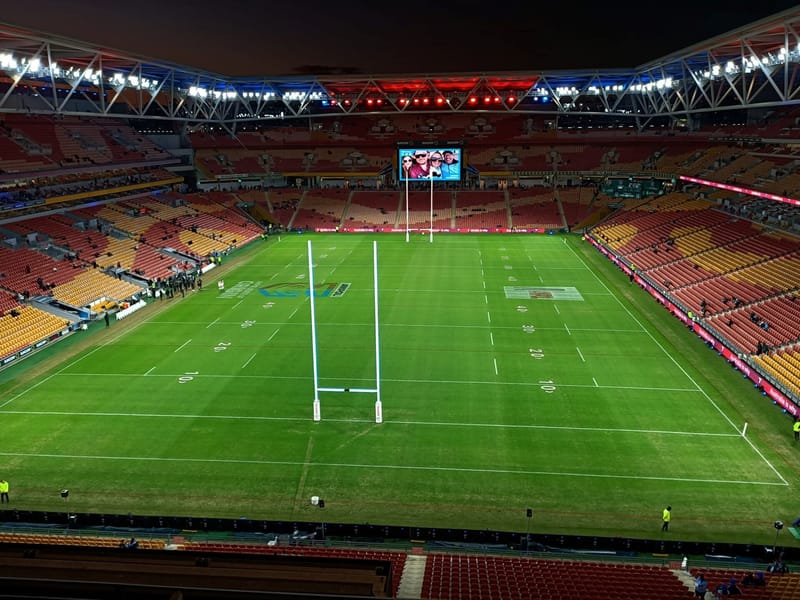
Australia beat Fiji in Brisbane to reach Rugby League World Cup semi-finals
Tom Trbojevic scored three tries as Australia recovered from trailing early in the second half to beat Fiji and qualify for the semi-finals, with BBC Sport reporting a 36-22 final score.
Comments