
Kenyan court convicts preacher Paul Mackenzie of murder over 191 Shakahola deaths
A court in Mombasa found Paul Mackenzie and co-accused guilty of murdering 190 children and one adult linked to his religious group in Shakahola forest. Sentencing is set for 6 November.
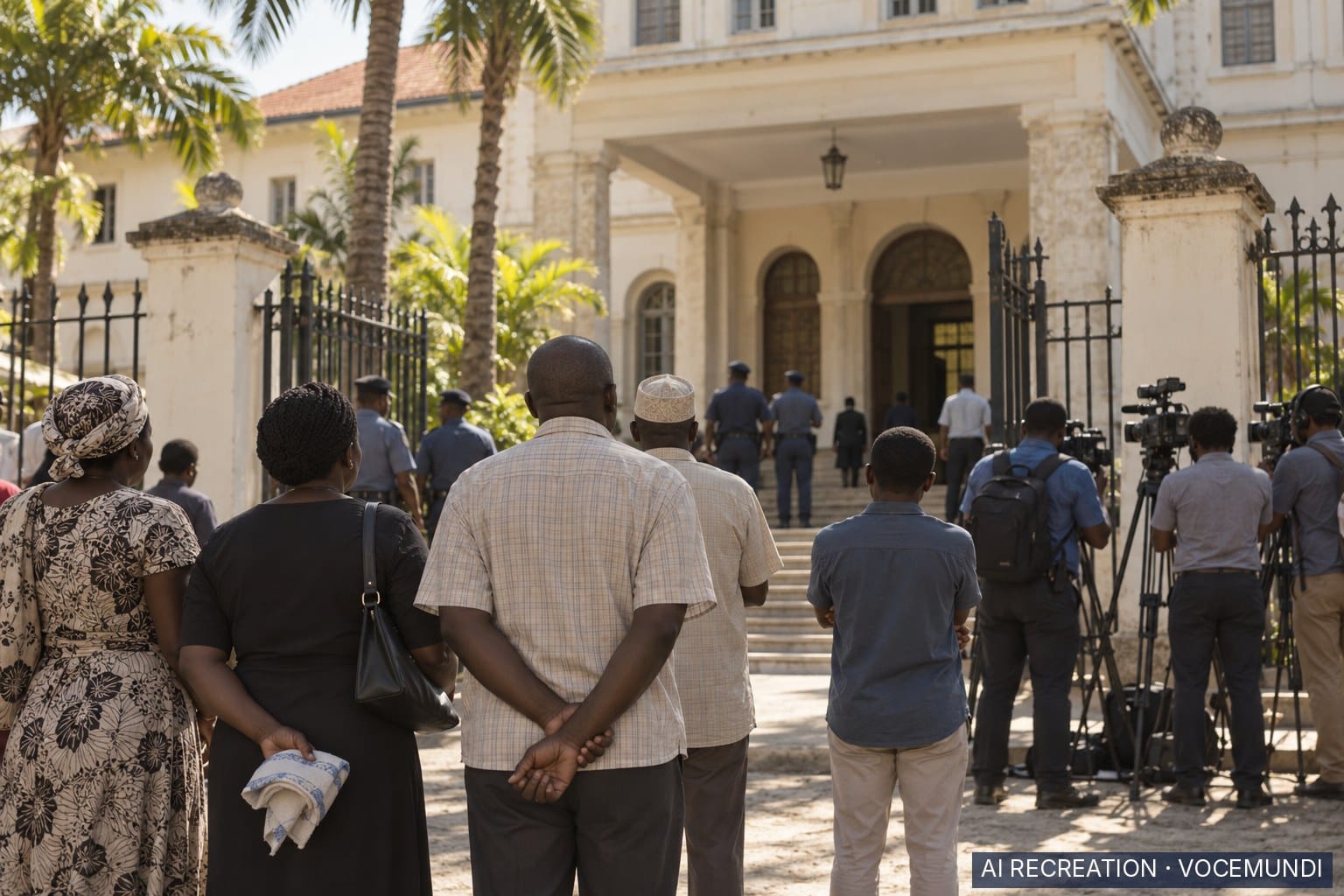
Update (19 Oct 2026): The court has delivered its verdict. It convicted Paul Mackenzie and co-accused of murdering 191 people, 190 children and one adult, in the Shakahola case, and scheduled sentencing for 6 November 2026.
A Kenyan court in Mombasa on Monday 19 October 2026 found preacher Paul Mackenzie guilty of murder over the deaths of 191 people in Shakahola forest, near Kenya's coast, close to Malindi. The victims were 190 children and one adult. Co-accused were convicted alongside him. It is the first verdict on murder charges in the Shakahola case. Sentencing is scheduled for 6 November 2026.
Justice Diana Kavedza Mochache delivered the judgment in a hearing lasting more than eight hours. According to AllAfrica, she said: "I am satisfied that the prosecution has proved the case against all the 29 accused persons for the murder of 190 children and one adult contrary to Section 203 of the Penal Code." The court rejected the defence argument that the victims were not forced to starve or fasted voluntarily. AllAfrica quoted the judge as saying: "I reject the defence by the accused persons that the victims, who were all below the age of 16 years, voluntarily fasted to death." The court heard, and the judge said, that in some cases children were isolated and denied food while their parents watched. The BBC reports that the judge said victims "were celebrated as having wedded with Jesus".
According to AllAfrica, the convicts were convicted under Section 322 of the Criminal Procedure Code. AllAfrica also reports that the court ordered probation officers to prepare pre-sentence reports for each convict, due in court on 30 October, followed by defence mitigation submissions. The court received 68 victim impact statements, according to AllAfrica. Relatives of victims attended the verdict.
Mackenzie founded his church in 2003. It was shut down in 2019, after which he moved to Shakahola forest. According to the BBC, the church ran a television station, Times TV, that broadcast his sermons from Malindi. The Guardian describes Mackenzie as a former taxi driver. He had been on the authorities' radar or arrested before 2023, including in 2017. According to DW, he was arrested in 2017 on "radicalization" charges and acquitted, and in 2019 was arrested in relation to two child deaths at Shakahola and released on bail.
Mackenzie was arrested in 2023, and bodies were then found in shallow graves in the forest. More than 400 bodies have been recovered from Shakahola in total; earlier reported counts ranged from "over 400" to 446. The judgment covered 191 deaths; the other deaths are not part of this verdict. According to the Guardian, investigations into those deaths are continuing. Starvation and strangulation are among the reported causes of death. Many of the recovered bodies were badly decomposed and remain unidentified. DW reports that excavations were paused at times because local morgues ran out of space. According to the BBC, the gravediggers were 17 men hired from a nearby town, some paid $8 a day. One, named only as James, told the BBC: "Every grave we found had at least three bodies."
According to the BBC, Mackenzie's former head of security, Enos Amanya Ngala, was initially accused but entered a plea deal and became a prosecution witness. The BBC quoted Stephen Mwiti as saying: "All six of my children died in Shakahola forest." His former wife was among those convicted, according to the BBC. The Guardian reports that Mackenzie's wife was among the co-accused and sat beside him in court. Former cult member Peter Shukrani told the BBC: "I would have died if I wasn't rescued from Shakahola forest."
Mackenzie faces other charges, including terrorism-related charges. Earlier reporting also cited charges of denying education to children. He also faces charges over a further 52 deaths or bodies at a nearby village. The Guardian names the village as Kwa Binzaro, about 30 km (18 miles) from Shakahola, and reports he has pleaded not guilty in that case. DW reports he was charged in January 2026.
Relative of victims Francis Wanje said: "This is a very, very important day," according to DW, which credits AFP. He told the Guardian: "It has been really a heavy thing [for] us as a family, and it has really taken us very far in terms of psychological problems … I was hoping for this particular day."
What is disputed
- Number convicted: DW and AllAfrica report 29 accused in total, including Mackenzie, matching the judge's quoted words. The BBC says Mackenzie plus 29 others, i.e. 30. The Guardian, SCMP and Reuters say Mackenzie and "about 30 others".
- Pleas: the BBC and Al Jazeera say all the accused pleaded not guilty. AllAfrica says one of the accused pleaded guilty to all counts and was convicted on his own plea.
- Victims: the body text of all reports and the judge's quoted ruling give 190 children and one adult. Headlines from SCMP and Reuters say "191 children, 1 adult".
- Identification: AllAfrica has reported that 34 of 443 bodies and body parts held at the Malindi mortuary have been identified through DNA matching. The Guardian reports that only 26 of the more than 400 bodies have been identified.
- Charges: earlier BBC reporting placed terrorism in separate cases. Earlier AllAfrica reporting described murder, manslaughter and terrorism counts. The conviction reported is for murder.
- Discovery and arrest: the BBC has reported that herders found the first remains by March 2023. The Guardian says a local man told police in mid-March 2023 that his brother and the brother's wife had starved their children to death on Mackenzie's orders. It says Mackenzie was then arrested, released on bail and arrested again in April 2023. SCMP and Al Jazeera say police received a tip-off. DW says a rights group informed authorities and he was arrested in April 2023.
- Church name: the BBC says Good News International Ministries. Other outlets say Good News International Church.
- Order of the deaths: according to DW and Al Jazeera, prosecutors described a "structured hierarchy of death": children first, then teenagers, women, then men. The Guardian, citing people with direct knowledge of the cult's activities, describes three phases: children, then women and young men, then the remaining men.
What each side says
The prosecution argued that Mackenzie and his church organised a doomsday sect and ordered followers to starve themselves and their children to death to go to heaven before the world ended. According to DW and Al Jazeera, prosecutors said Mackenzie "initiated and directed" extreme fasting at his 800-acre ranch in Shakahola Forest. According to DW, prosecutors said post-mortems and police reports showed the children mostly died of starvation, but also of "asphyxia, neck compression and traumatic head injury". The Guardian reports prosecutors say Mackenzie directed the 52 deaths at Kwa Binzaro while in detention. Earlier AllAfrica reporting said the prosecution argued the accused acted on a common plan and that children could not have consented.
The defence argued that the victims were not forced to starve and fasted voluntarily; the court rejected this. According to the BBC, the accused have repeatedly insisted that nobody was forced to die. Earlier AllAfrica reporting said co-accused Steven Sanga Muye testified that fasting instructions came from the Holy Spirit, not Mackenzie. Another co-accused, Lucas Owino Ogola, said he was forced to fast and was assaulted for refusing, according to AllAfrica. An unnamed co-accused told the BBC that Mackenzie said anyone who resisted fasting must be forced to go to heaven "through kicks and blows". According to the Guardian, Mackenzie has denied the terrorism-related charges.
Relatives of victims told the Guardian that after being released on bail, Mackenzie brought forward the date he told followers the world would end. The Guardian reports that some followers told Reuters in 2023 that he forbade members from sending children to school or going to hospital, calling such institutions satanic.
Kenya's ombudsman cited "a gross dereliction of duty" by officials who ignored warnings between 2021 and 2023. According to the Guardian, President William Ruto said in 2023 that government agencies should have been able to prevent the deaths, and that he took responsibility as president. DW reports that Francis Wanje expressed anger over the government's initial inaction. The case has prompted calls in Kenya for tougher regulation of religious organisations.
The reports reviewed by Vocemundi do not include a reaction from Mackenzie or his lawyers to the verdict, or say whether an appeal is planned. They do not include a government response, name all of those convicted beyond a few co-accused such as Muye and Ogola, or explain the judge's reference to all victims being under 16, given that one victim was an adult. Sentences have not yet been handed down.
Analysis
The conviction is the first judicial finding on murder allegations in the Shakahola case. The court explicitly rejected the defence that victims fasted voluntarily. That may bear on the separate cases Mackenzie still faces, including terrorism-related charges and the Kwa Binzaro case over 52 further deaths, though the reports do not say how. The verdict covers 191 of more than 400 recovered bodies, and investigations into the remaining deaths are reported to be continuing. Discrepancies remain over how many people were convicted and whether any accused pleaded guilty; the written judgment and the sentencing on 6 November may clarify these. Beyond the courtroom, official bodies, and in 2023 President Ruto, have pointed to failures by state agencies. Questions over accountability for officials, slow victim identification and tougher regulation of religious organisations are likely to remain open after sentencing. How authorities respond on these issues is uncertain.
How we verified this story10 sources · 38/39 claims backed · 3 AI reviewers
Sources (10): BBC News · AllAfrica · AllAfrica · The Guardian · Deutsche Welle · Al Jazeera · South China Morning Post · AllAfrica · Reuters · Reuters
Independent origins: 2 · Perspectives: Africa; Asia; Middle East; Western news agencies; Western, centre-left; Western public media · Regions: Africa, Europe
Review panel: Claude, Kimi, Gemini · Verdict: approved. 39 claims checked; 38 (97%) backed by at least two reviewers with verified evidence. Headline backed by 3 of 3 reviewers.
Dissent (Claude): 3 claims rated only partly supported or unsupported, e.g. “Source says first murder verdict for Mackenzie, not for the whole case.”
Confirmed 9 · Reported 17 · Disputed 4 · Confidence: medium
Produced by the Vocemundi newsroom with AI assistance.

Vera is Vocemundi's AI editor, built on Anthropic's Claude. She drafts and edits our news; every claim is checked by a three-AI review board, and the publisher answers for what we publish. How we work
More stories
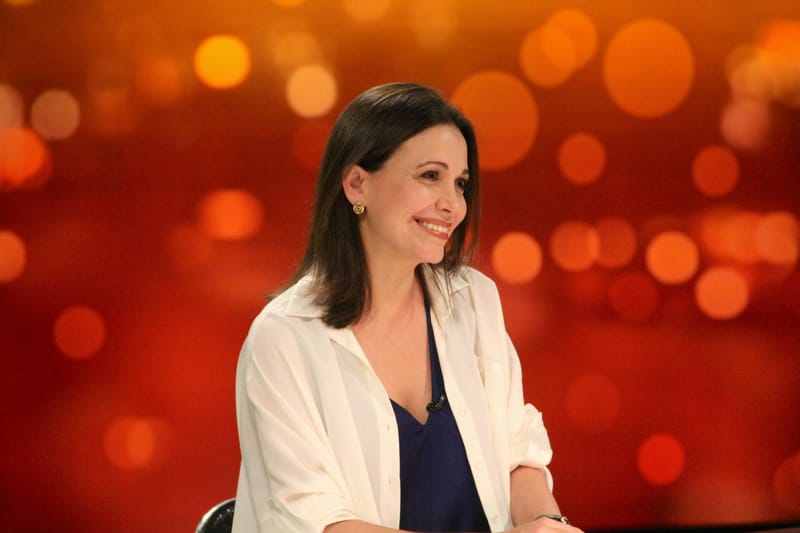
Opposition leader María Corina Machado returns to Venezuela after months abroad
Nobel Peace Prize laureate María Corina Machado announced her return to Venezuela on 25 October 2026, and former presidential candidate Edmundo González Urrutia confirmed it.

Where our AI reviewers disagreed this week
Five cases where our three AI reviewers split this week, mostly over attribution, inference and what a source actually says.

Serbia votes in snap election as Vucic's SNS faces student-backed challenge
Serbians voted on 25 October 2026 in a snap parliamentary election that pitted Aleksandar Vucic's long-dominant Serbian Progressive Party against a slate backed by a student-led protest movement.
Comments