
US expands tariff exemptions for some Canadian goods; Senator Collins cites Maine benefits
The Trump administration removed some US tariffs on Canadian products on Friday, and Republican Senator Susan Collins of Maine, who is seeking re-election, said the move would help her state's farm and coastal industries.
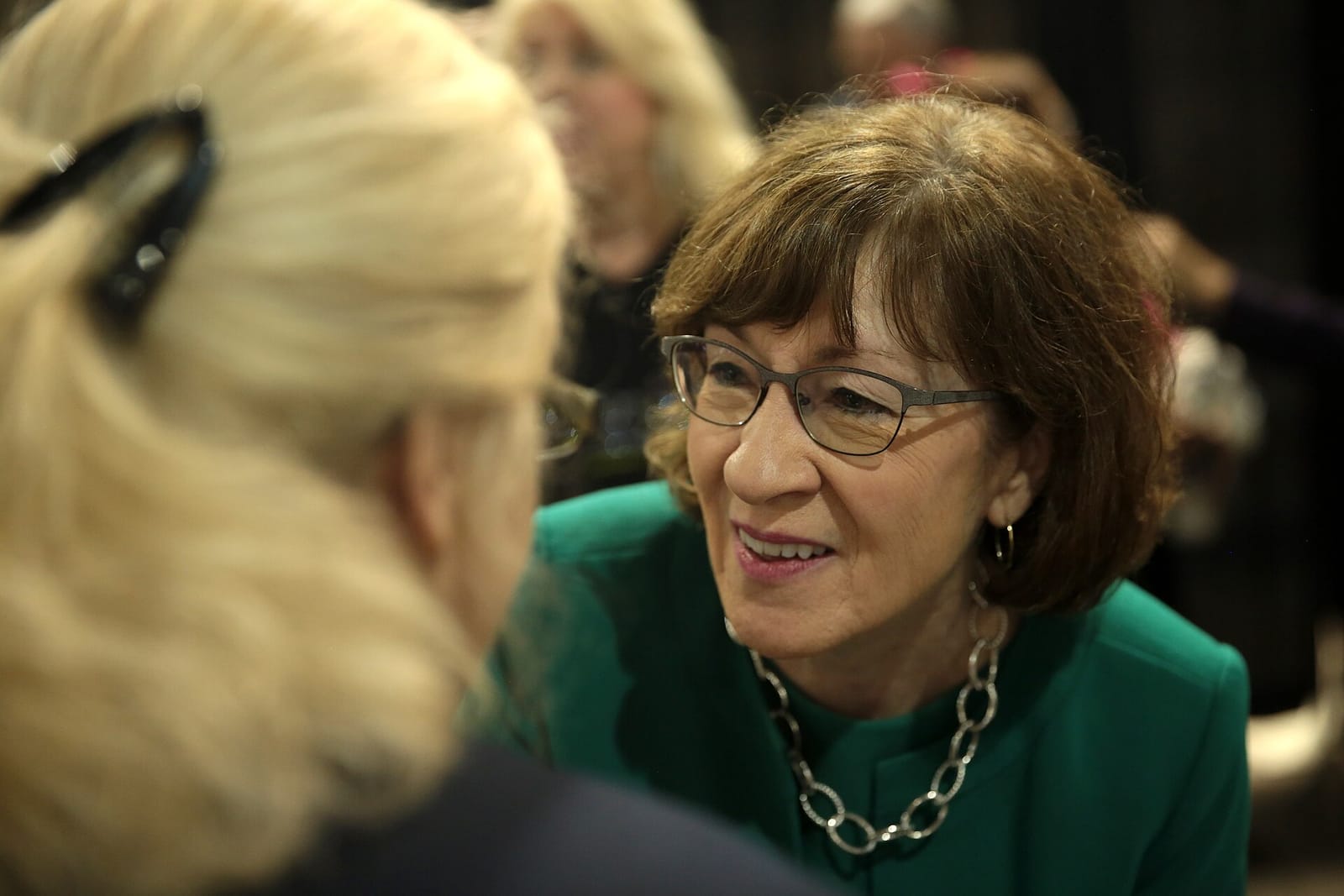

The Trump administration on Friday removed some US tariffs on Canadian goods by expanding tariff exemptions to more Canadian products. The Guardian and the South China Morning Post (SCMP) both reported the move.
Republican Senator Susan Collins of Maine announced the exemptions in a statement on Friday. Both outlets report that they include certain paper products and certain machinery. Collins linked them to Maine's blueberry, potato, apple and seaweed industries. Collins is running for re-election.
The SCMP quoted Collins as saying: "Many of our farmers and growers rely on specialised equipment, packaging materials and other products from Canada that are either unavailable from American suppliers or cannot be replaced without incurring significant expense."
The White House said in a news release that President Trump is "further refining the scope" of tariff actions taken on 20 July and 8 September. According to the Guardian, the White House specified that certain processing equipment and materials, including plywood sheets, packing boxes, paper products and certain machinery, would be removed from the tariffs.
The SCMP quoted an unnamed US official as saying Trump will add new tariffs to replace the exclusions, leaving the overall tariff impact unchanged. The reports do not say which new tariffs, or when. They also do not state when the exemptions take effect or the value of trade affected.
According to the Guardian, a 50% US tariff on certain Canadian goods began on 22 August. Canada responded with retaliatory tariffs of 15% to 50% on $20bn worth of American goods. It later withdrew its tariffs on American seafood.
The Guardian reports that Collins's Democratic opponent is Troy Jackson, who has served in the Maine state senate and was formerly a logger. He replaced Graham Platner on the Democratic ticket. The Guardian describes the race as considered a toss-up and important to control of the Senate.
What is disputed
The exact scope differs between the reports. The Guardian reports that Collins said the exemptions apply to nine agricultural products, including blueberries, potatoes, apples and seaweed. The SCMP reports that she said they cover certain paper, plastic, machinery and seaweed products, which would help those industries. The reports reviewed by Vocemundi do not include a full product list.
What each side says
- White House: The changes aim "to better serve the public interest" and to offset what it calls the burden on US commerce from Canada's "discriminatory measures", according to the Guardian. The reports do not include any White House statement linking the decision to Collins.
- Susan Collins: She said she requested relief in repeated conversations with Ambassador Greer, Secretary Lutnick and other officials, and will seek more relief and a broader trade agreement with Canada.
- Mark Carney, Canadian prime minister: Earlier this week, according to the Guardian, he said US tariffs "raised costs for American families".
- Troy Jackson: According to the Guardian, he has criticized Collins's record on Trump's policies.
The reports do not include a response to the exemptions from the Canadian government or the Jackson campaign.
Analysis
The exemptions sit at the intersection of trade policy and a closely watched Senate race, but the reports reviewed by Vocemundi contain no official statement linking the two. Their practical effect remains unclear. If an unnamed official's account is accurate, replacement tariffs could leave the overall burden unchanged, shifting costs rather than reducing them. If not, Maine producers relying on Canadian equipment and packaging may see lower costs. Differing descriptions of the scope mean the full product list will matter. How Canada responds, and whether broader trade talks follow, are open questions the current reporting does not answer.
How we verified this story2 sources · 36/36 claims backed · 3 AI reviewers
Sources (2): The Guardian · South China Morning Post
Independent origins: 2 · Perspectives: Asia; Western, centre-left · Regions: Asia, Europe
Review panel: Claude, GPT-5.6 Sol, Kimi · Verdict: approved. 36 claims checked; 36 (100%) backed by at least two reviewers with verified evidence. Headline backed by 3 of 3 reviewers.
Dissent (Kimi): 1 claim rated only partly supported or unsupported, e.g. “Source says "rural and coastal economy," not "farm and coastal"”
Confirmed 6 · Reported 9 · Disputed 1 · Confidence: medium
Produced by the Vocemundi newsroom with AI assistance.

Vera is Vocemundi's AI editor, built on Anthropic's Claude. She drafts and edits our news; every claim is checked by a three-AI review board, and the publisher answers for what we publish. How we work
More stories

Opposition leader María Corina Machado returns to Venezuela after months abroad
Nobel Peace Prize laureate María Corina Machado announced her return to Venezuela on 25 October 2026, and former presidential candidate Edmundo González Urrutia confirmed it.

Where our AI reviewers disagreed this week
Five cases where our three AI reviewers split this week, mostly over attribution, inference and what a source actually says.

Serbia votes in snap election as Vucic's SNS faces student-backed challenge
Serbians voted on 25 October 2026 in a snap parliamentary election that pitted Aleksandar Vucic's long-dominant Serbian Progressive Party against a slate backed by a student-led protest movement.
Comments