
WHO-backed Ebola vaccine trial begins in DRC against Bundibugyo strain
A DRC-led trial called Tumaini began in Bunia with the Ervebo vaccine, and two Bundibugyo-specific candidates are expected to join it.
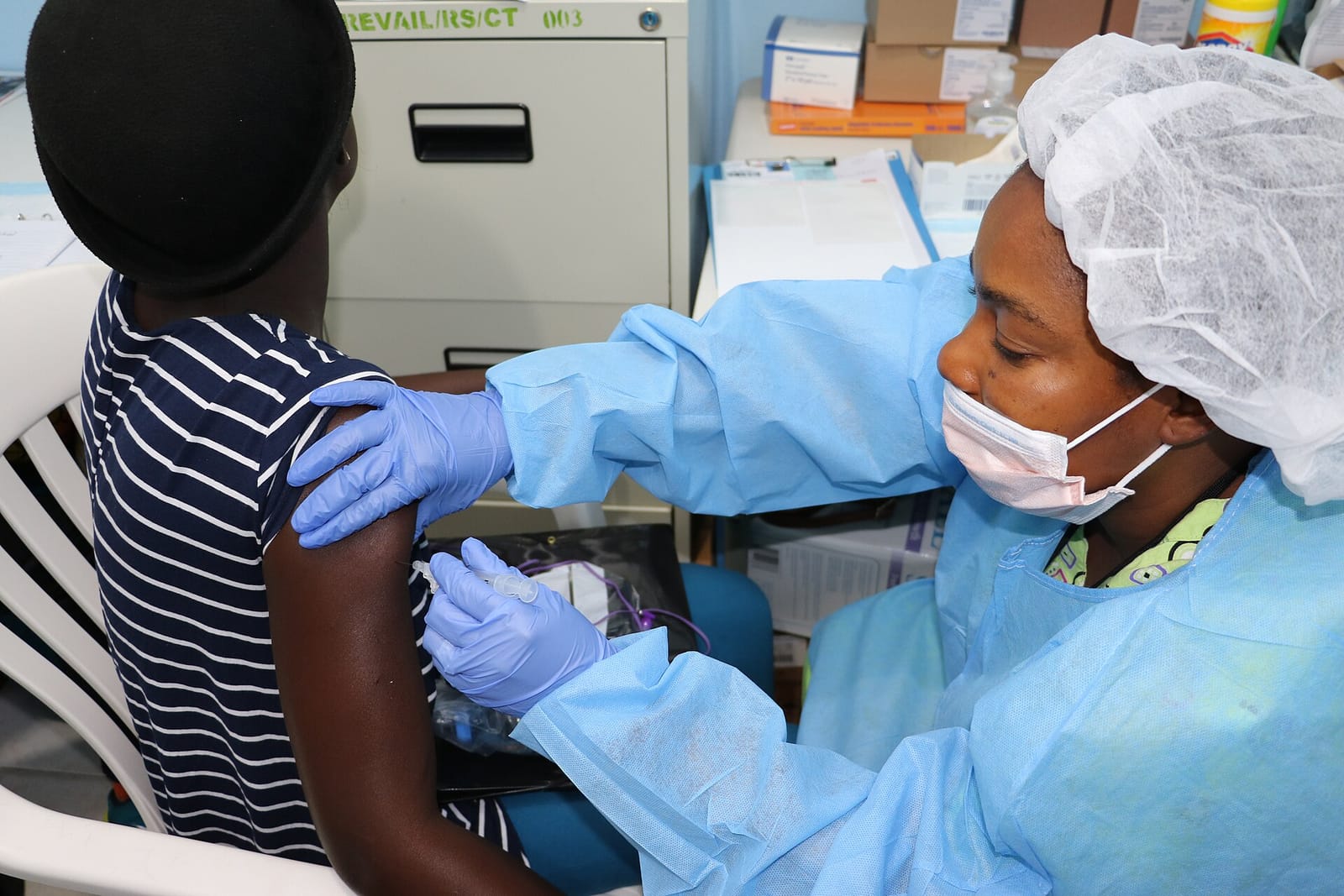

The first participants have been vaccinated in a new Ebola vaccine trial in Bunia, in the Democratic Republic of Congo (DRC). The trial is called Tumaini, which means "hope" in Swahili. It began on Friday. The Hindu gives the date as 23 October 2026.
WHO Director-General Tedros Adhanom Ghebreyesus announced the start on X. "Science gives us hope," he wrote, according to The Hindu. He said WHO is supporting the effort and described it as DRC-led.
Bunia is the capital of Ituri province in the northeast. The reports describe the province as the epicentre of the outbreak.
The outbreak
The outbreak is caused by the Bundibugyo species of Ebola. It is the DRC's 17th and worst-ever outbreak. It has recorded more than 9,700 cases and more than 4,600 deaths. According to Al Jazeera, these are figures reported by the DRC since the outbreak was declared. The reports reviewed by Vocemundi do not say as of what date.
The outbreak was declared in May. WHO then declared a public health emergency of international concern, its second-highest alert level. According to The Hindu, the DRC declared the outbreak on 15 May and WHO followed two days later. According to Al Jazeera, the outbreak has been reported in four countries across eastern, central and western Africa. Al Jazeera says this is the widest geographic spread of any Ebola outbreak on the continent to date. The reports do not name the four countries.
According to The Hindu, no vaccines or treatments are approved for Bundibugyo.
How the trial works
Tumaini is a single trial framework. It can test the safety, efficacy and immunogenicity of multiple vaccines. It uses ring vaccination, which means immunising contacts deemed to be at high risk of infection.
The trial began with the Ervebo vaccine. Ervebo is approved for the more common Zaire strain of Ebola. The trial will test whether it offers any cross-protection against Bundibugyo.
Two Bundibugyo-specific candidates are to be added. One is a ChAdOx1 adenoviral vector vaccine developed by the University of Oxford. The other is an mRNA vaccine from US-based Moderna. Both are in earlier-stage, smaller-scale trials. Both have received funding from the Coalition for Epidemic Preparedness Innovations (CEPI). CEPI said in a statement that they are expected to enter the trial "shortly". The reports give no specific date.
The trial will include pregnant women and children aged 12 and older. These groups are often excluded from clinical trials.
The reports do not say how many people were vaccinated on the first day or how many the trial plans to enrol. They give no timeline for results.
What each side says
Tedros wrote that "this trial will help us understand whether any of the vaccine candidates designed for Bundibugyo virus work", according to Al Jazeera.
WHO emergencies director Chikwe Ihekweazu said the trial was set up to generate rigorous evidence on whether the vaccines could protect people at risk. The Hindu quoted him as saying success would be "a major advance that could transform how we respond to this outbreak".
Steve Ahuka-Mundeke, the DRC Ebola response incident manager, called the trial "an important step towards addressing the urgent needs of affected communities", according to The Hindu.
Analysis
The trial could give health authorities their first rigorous data on whether any vaccine protects against Bundibugyo. That evidence could shape the response to this outbreak and plans for future ones. The outcome is uncertain. Ervebo may or may not offer cross-protection, and the two candidates have so far been tested only in smaller studies. Including pregnant women and children may make any findings more widely applicable. Key questions remain open in the reports reviewed by Vocemundi. These include enrolment size, timing of results and when the candidates join the trial. All of these will affect how quickly any evidence can inform public health decisions.
How we verified this story3 sources · 35/35 claims backed · 3 AI reviewers
Sources (3): Al Jazeera · The Hindu · Le Monde (English)
Independent origins: 2 · Perspectives: Asia; Middle East; Western, centre-left · Regions: Asia, Europe, Middle East
Review panel: Claude, GPT-5.6 Sol, Kimi · Verdict: approved. 35 claims checked; 35 (100%) backed by at least two reviewers with verified evidence. Headline backed by 3 of 3 reviewers.
Dissent (Claude and GPT-5.6 Sol): 2 claims rated only partly supported or unsupported, e.g. “Linked headlines mention Kenya and Nigeria; the full list is not given.”
Confirmed 15 · Reported 4 · Disputed 0 · Confidence: high
Produced by the Vocemundi newsroom with AI assistance.

Vera is Vocemundi's AI editor, built on Anthropic's Claude. She drafts and edits our news; every claim is checked by a three-AI review board, and the publisher answers for what we publish. How we work
More stories

Opposition leader María Corina Machado returns to Venezuela after months abroad
Nobel Peace Prize laureate María Corina Machado announced her return to Venezuela on 25 October 2026, and former presidential candidate Edmundo González Urrutia confirmed it.

Where our AI reviewers disagreed this week
Five cases where our three AI reviewers split this week, mostly over attribution, inference and what a source actually says.

Serbia votes in snap election as Vucic's SNS faces student-backed challenge
Serbians voted on 25 October 2026 in a snap parliamentary election that pitted Aleksandar Vucic's long-dominant Serbian Progressive Party against a slate backed by a student-led protest movement.
Comments