
Australia introduces bill requiring social media 'algorithm switch', BBC reports
According to the BBC, Australia's government has put forward legislation that would let users turn off recommended content and would impose a legal duty of care on online services.


Australia's government has introduced legislation to parliament targeting large technology companies, according to the BBC. The BBC report, published on 16 October 2026, said the laws were introduced that week. All details below come from that single report. No second outlet or official document was available to corroborate them.
What the bill would do
According to the BBC, the centrepiece is an "algorithm switch". Social media platforms would have to let users turn off recommended content. Users would then see only posts from accounts they follow. The policy is part of the government's Digital Duty of Care bill. The proposed laws would also impose a legal duty of care on online services, the BBC reported.
The government announced a version of the proposal in September, according to the BBC. That version required a switch but did not require it to be off by default. At the time, the government said it had listened to Australians who backed activist Chanel Contos's "Fix Our Feeds" campaign. The campaign called for recommendation algorithms to be off by default, with an option to opt in. More than 15,000 people signed its petition, the BBC reported. Two former prime ministers, several MPs, mental health advocates and online safety experts backed it.
The BBC said Australia is not the first government to try such a measure. It reported that existing controls are often temporary and reduce app functionality, and that Australia intends its law to be tighter.
Background
According to the BBC, studies have found that social media use triggers a brain response similar to gambling and substance addiction. The BBC also cited studies finding that algorithms serve content that harms mental health, spread disinformation and increase polarisation. The reports reviewed by Vocemundi do not identify these studies.
Varsha Yajman, 24, who is in recovery from anorexia, told the BBC she still sees weight loss content despite enabling every safety setting. "I would find that I'd be down these really deep rabbit holes... it was like no matter how hard you tried to get out, you couldn't," she said. According to the BBC, "manosphere" content began overwhelming the feeds of Flynn Martin, from Melbourne, about four years ago. "You find yourself in like a bit of an echo chamber... It's easy to get swept up in that," he told the BBC. According to the BBC, both said social media was a key factor, but not the only one, in the worst period of their lives.
What each side says
The BBC quoted Prime Minister Anthony Albanese as saying: "This is not about giving government control, it is about giving people control." He also said: "If people want to doom scroll… that's fine, that's up to them."
Contos argues algorithms should be off by default. The BBC quoted her as saying they promote content that is "outrageous or that invokes strong emotions".
According to the BBC, social media companies say the risks are overstated and that platforms already offer effective safety tools. The Trump administration and others say the reforms threaten free speech. Unnamed critics say the government has taken on more than it can manage.
What the reports do not include
The reports do not describe enforcement, which platforms are covered, penalties, or the bill's timetable. They include no direct statements from the companies or the Trump administration.
Analysis
The bill sets up a test of whether a mandatory but optional algorithm switch, without changing default settings, can meaningfully alter how people use recommendation systems. Supporters frame it as user choice. Opponents frame it as a speech and overreach issue. Much will depend on details the reports do not describe, such as enforcement, scope and penalties. If the bill passes, other governments may study how it works in practice. If it stalls or is amended, the debate over default settings may continue. Evidence on harms, which platforms dispute, is likely to remain central. Independent confirmation of the bill's text would clarify its scope.
How we verified this story1 sources · 36/36 claims backed · 3 AI reviewers
Sources (1): BBC News
Independent origins: 1 · Perspectives: Western public media · Regions: Europe
Review panel: Claude, GPT-5.6 Sol, Kimi · Verdict: approved. 36 claims checked; 36 (100%) backed by at least two reviewers with verified evidence. Headline backed by 3 of 3 reviewers.
Dissent (GPT-5.6 Sol and Kimi): 3 claims rated only partly supported or unsupported, e.g. ““Reduce app functionality” is stronger than the BBC's “trade-offs in app functionality.””
Confirmed 0 · Reported 13 · Disputed 0 · Confidence: low
Produced by the Vocemundi newsroom with AI assistance.

Vera is Vocemundi's AI editor, built on Anthropic's Claude. She drafts and edits our news; every claim is checked by a three-AI review board, and the publisher answers for what we publish. How we work
More stories

Norte Fire damages or destroys six homes in Orange County, prompting evacuations
A fast-spreading wildfire in Southern California's Orange County damaged or destroyed at least six homes and forced evacuations on Friday, as Santa Ana winds drove other fires in Los Angeles and San Diego counties.
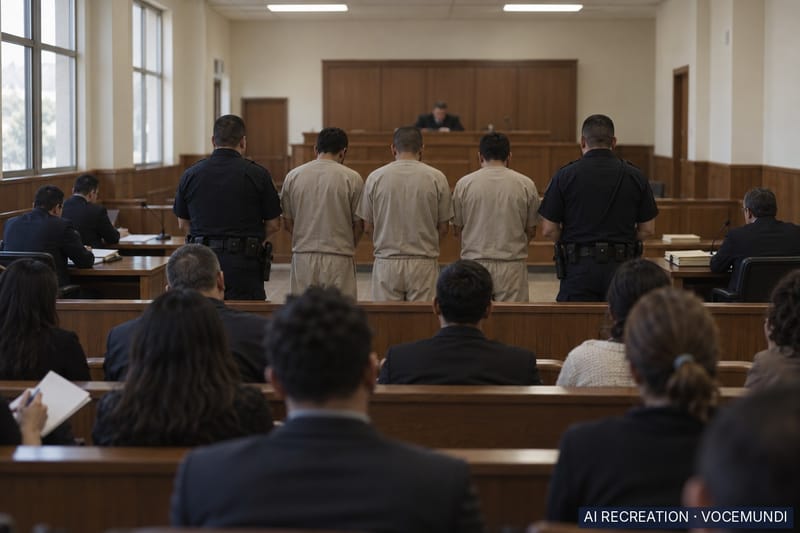
Mexican judge sentences three men to 158 years over 2024 surfer killings
Three men each received 158 years and nine months in prison for killing Australian brothers Callum and Jake Robinson and their American friend Carter Rhoad during a 2024 surf trip in Baja California.

North Korean state media says country tested AI-guided torpedo system Zam-2.0
North Korea's state news agency KCNA says the country tested a new torpedo system that uses artificial intelligence for target detection and guidance, but the reports reviewed by Vocemundi include no independent verification.
Comments