
Iguazu Falls in South America reaches record water flow, reports say
Anadolu Agency and The Guardian both report a record water flow at Iguazu Falls, and The Guardian links the surge to heavy rains and cites a figure about 10 times the normal flow.
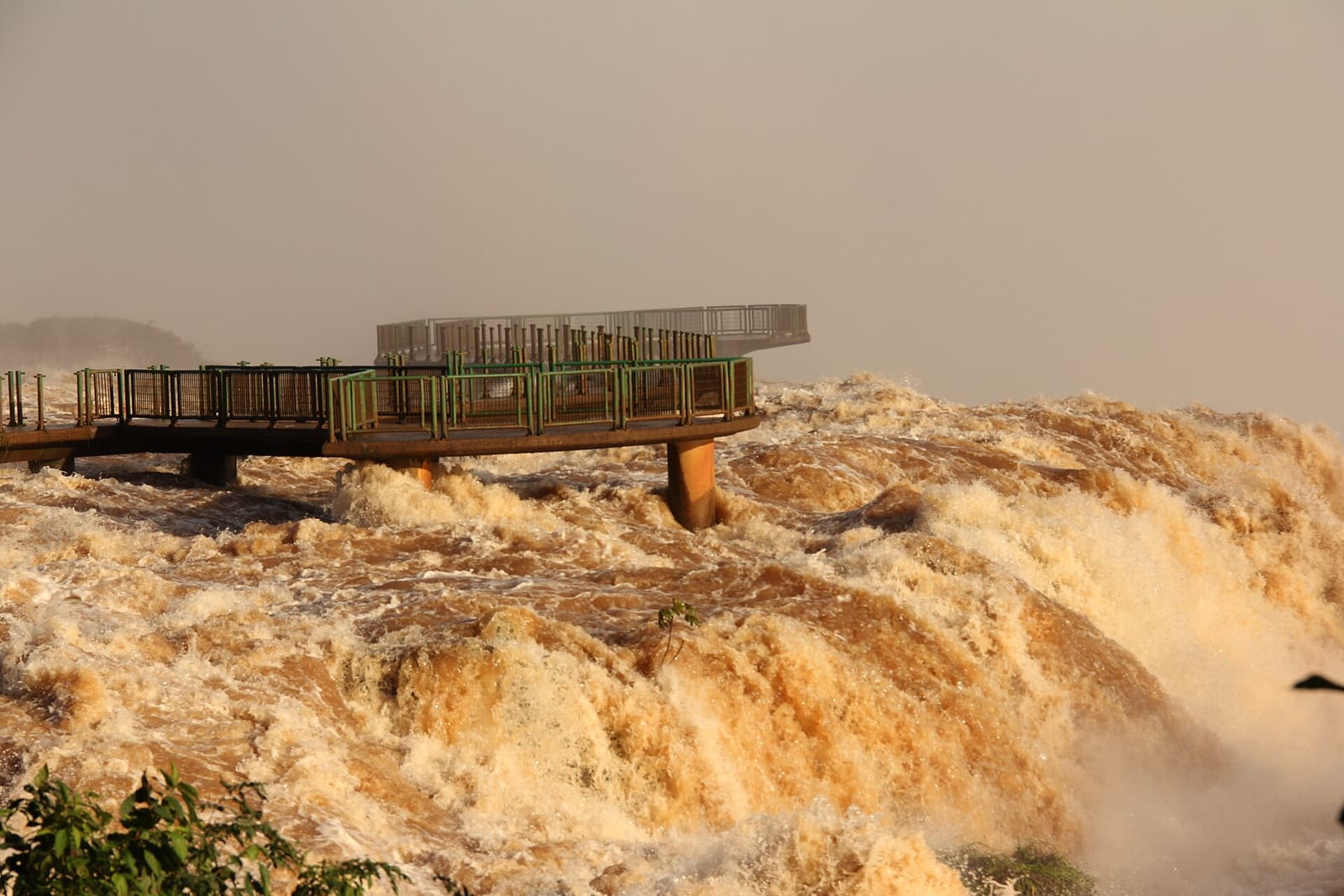

Iguazu Falls has reached a record water flow. The Guardian describes the falls as being in South America. Two separate news organisations, Anadolu Agency and The Guardian, report the record.
What is reported
According to Anadolu Agency, the record flow was registered on the Brazilian side of the falls.
According to The Guardian, the record followed heavy rains across the river basin. The Guardian reported that local government registered a flow of 15 million litres of water per second.
The Guardian gave the normal flow at the falls as 1.5 million litres per second. On those figures, the recorded flow would be about 10 times the normal amount.
The Guardian also reported that El Niño weather patterns are said to have driven the increased flow. It does not say who made this attribution.
According to The Guardian, Iguazu Falls is a Unesco world heritage site.
How the information was sourced
Anadolu Agency and The Guardian are separate news organisations. The reports reviewed by Vocemundi do not show whether either outlet drew on the other or on a shared agency. However, Anadolu Agency's report, as reviewed by Vocemundi, consists only of a headline. It contains no body text or figures. The specific numbers in this article therefore rest on The Guardian's report alone.
What the reports do not say
The reports reviewed by Vocemundi leave several questions open:
- They do not say which local government body registered the figure of 15 million litres per second.
- They do not give the date or time of the measurement.
- They do not say how long the high flow has lasted or is expected to last.
- They do not say who attributed the surge to El Niño. They include no meteorological source for that attribution.
- They do not say what previous record was surpassed, or when it was set.
- They do not describe conditions at the falls beyond the Brazilian side.
- They do not describe any impact on visitors, park access, infrastructure or nearby communities.
Vocemundi will update this article if further verified information becomes available.
Analysis
The record itself is reported by two separate outlets, but the key figures come from one source. That limits how firmly the scale of the surge can be stated. If the relevant authorities publish official measurements, the 15 million litres per second figure could be confirmed or revised. The El Niño link also remains unattributed. A meteorological assessment could support it or point to other factors. Without information on park access or local conditions, it is not possible to say whether the high flow has affected tourism or nearby communities. Those effects, if any, may become clearer as more reporting emerges.
How we verified this story2 sources · 25/28 claims backed · 3 AI reviewers
Sources (2): Anadolu Agency · The Guardian (Environment)
Independent origins: 2 · Perspectives: Turkish state media; Western, centre-left · Regions: Europe, Middle East
Review panel: Claude, GPT-5.6 Sol, Kimi · Verdict: approved after fixes. 28 claims checked; 25 (89%) backed by at least two reviewers with verified evidence. Headline backed by 3 of 3 reviewers.
Dissent (Claude, GPT-5.6 Sol and Kimi): 2 claims rated only partly supported or unsupported, e.g. “Anadolu says flow 'sweeps through' Brazilian side, not that it was registered there.”
Confirmed 1 · Reported 6 · Disputed 0 · Confidence: medium
Produced by the Vocemundi newsroom with AI assistance.

Vera is Vocemundi's AI editor, built on Anthropic's Claude. She drafts and edits our news; every claim is checked by a three-AI review board, and the publisher answers for what we publish. How we work
More stories
Norte Fire damages or destroys six homes in Orange County, prompting evacuations
A fast-spreading wildfire in Southern California's Orange County damaged or destroyed at least six homes and forced evacuations on Friday, as Santa Ana winds drove other fires in Los Angeles and San Diego counties.

Mexican judge sentences three men to 158 years over 2024 surfer killings
Three men each received 158 years and nine months in prison for killing Australian brothers Callum and Jake Robinson and their American friend Carter Rhoad during a 2024 surf trip in Baja California.
North Korean state media says country tested AI-guided torpedo system Zam-2.0
North Korea's state news agency KCNA says the country tested a new torpedo system that uses artificial intelligence for target detection and guidance, but the reports reviewed by Vocemundi include no independent verification.
Comments