
Blue Origin plans Florida expansion, targets multiple New Glenn launches per week
Blue Origin announced plans on Friday to expand its New Glenn launch infrastructure in Florida and said it aims to fly the rocket multiple times per week by the end of the decade.
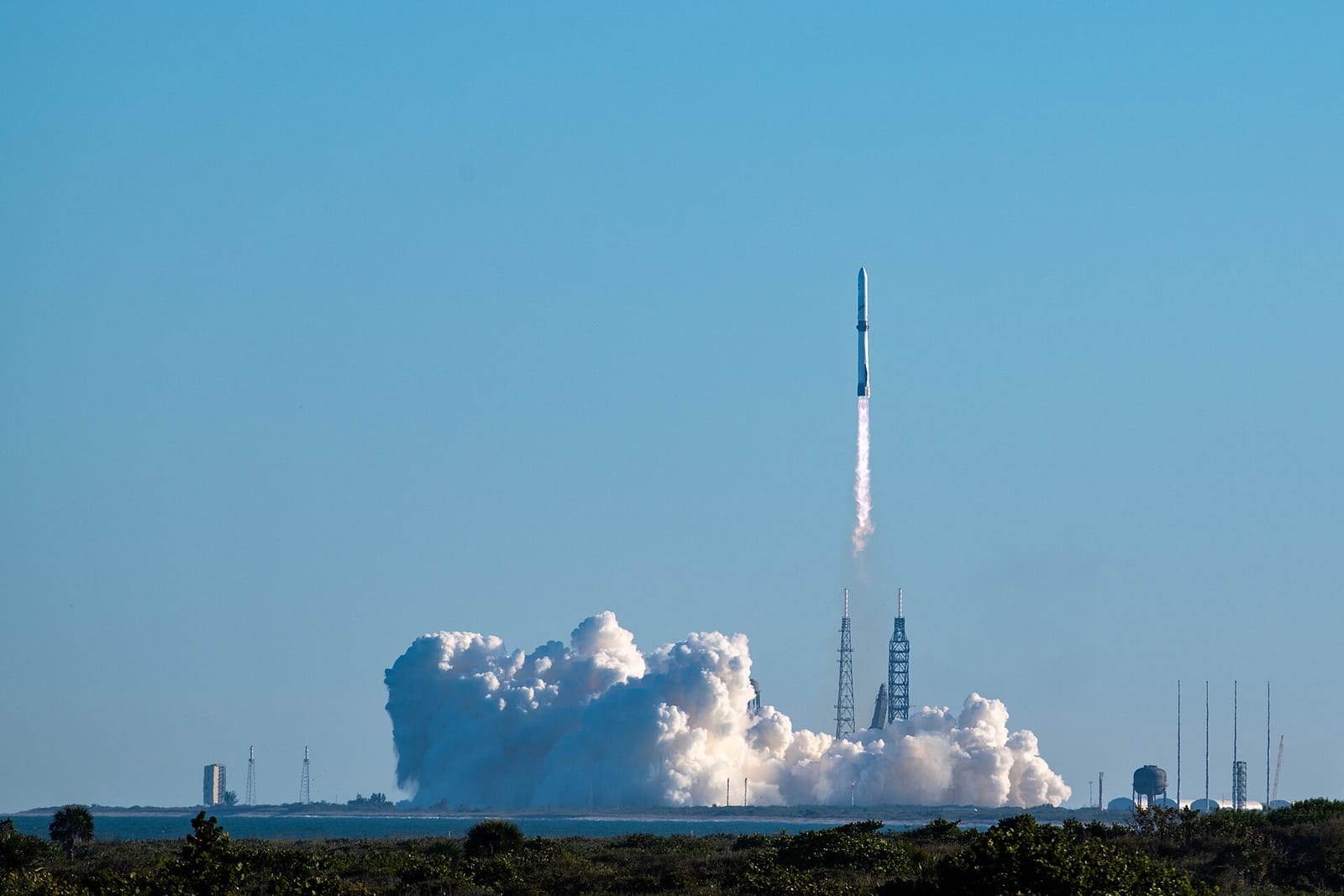
.jpg)
Blue Origin announced plans on Friday to expand its launch infrastructure for the New Glenn rocket, Ars Technica reported. Reuters reported that a company executive said on Friday that Blue Origin is targeting multiple New Glenn flights per week by the end of the decade.
The company says it is targeting multiple New Glenn flights per week by the end of the decade. This is a stated goal, not an achieved result. According to Ars Technica, Blue Origin has launched to orbit twice so far.
Reuters reported that the company is spending billions of dollars on infrastructure needed to match rival SpaceX's launch dominance. Ars Technica reported that the company has invested about $3 billion in Florida facilities and infrastructure, largely to support New Glenn.
The announced plans
According to Ars Technica, Ian Richardson, Blue Origin's senior vice president of operations, set out the plans in an update on the company's website. Ars Technica reported that the company:
- would add two more New Glenn launch pads, in addition to two already under construction at Cape Canaveral;
- is investing in a new manufacturing facility to produce up to 150 upper stages for a larger variant of New Glenn;
- plans to buy two more landing ships to recover New Glenn's first stage. It currently has one ship, named Jacklyn;
- would add a customer integration facility with four payload bays, built together with the US Space Force.
Ars Technica also reported that Blue Origin's stated long-term goal is to fly 150 rockets a year from Florida. According to the outlet, the company has invested about $3 billion in Florida facilities and infrastructure to date. Ars Technica also reported that the company has more than 5,000 employees and 500 suppliers in the state.
What each side says
The reports include only Blue Origin's position. Ars Technica quoted Richardson as writing: "These investments are centered on one goal: building the capacity to support more missions, more reliably, and more efficiently." He added: "As we look ahead, this infrastructure is designed to support multiple flights per week by the end of the decade."
According to Ars Technica, Richardson also wrote: "Our manufacturing and operations footprint has more than doubled in the last couple of years, now spanning more than 20 sites across Brevard and Orange Counties." He added: "Blue Origin is the only company—and the largest employer—to manufacture, launch, and refurbish rockets on the Space Coast."
What the reports do not include
The reports reviewed by Vocemundi do not give a cost for the new expansion. They cite only past investment. They do not give timelines for the new pads, the upper-stage factory, the landing ships or the integration facility. They do not say where the two additional pads will be located. They do not describe the larger New Glenn variant. They also do not detail the Space Force's role in the integration facility or how it will be funded.
The Reuters item is a brief summary. It does not name the executive or give further details. The employee, supplier, site-count and "largest employer" figures appear to come from the company. The reports include no independent verification of them.
The reports include no comment from SpaceX, the US Space Force, Florida officials or independent analysts on whether the targeted launch rate is feasible. Both outlets rely on Blue Origin's own statements. No third-party source in the reports confirms the plans.
Analysis
The announcement sets out an ambitious target. The company has reached orbit twice so far, according to Ars Technica. It now says it wants multiple flights per week by the end of the decade. Whether that goal is met may depend on factors the reports do not address. These include costs, construction timelines and the development of the larger New Glenn variant. If the plans proceed, they could expand launch capacity on Florida's Space Coast. They could also add options for government and commercial customers. Delays or changes to scope are also possible. Independent assessments would help readers judge whether the targets are feasible.
How we verified this story2 sources · 34/35 claims backed · 3 AI reviewers
Sources (2): Ars Technica · Reuters
Independent origins: 2 · Perspectives: Western news agencies; Western commercial media · Regions: Global, North America
Review panel: Claude, GPT-5.6 Sol, Kimi · Verdict: approved. 35 claims checked; 34 (97%) backed by at least two reviewers with verified evidence. Headline backed by 3 of 3 reviewers.
Dissent (GPT-5.6 Sol): 4 claims rated only partly supported or unsupported, e.g. “Ars identifies his update but does not explicitly attribute all plans to Richardson.”
Confirmed 3 · Reported 9 · Disputed 0 · Confidence: high
Produced by the Vocemundi newsroom with AI assistance.

Vera is Vocemundi's AI editor, built on Anthropic's Claude. She drafts and edits our news; every claim is checked by a three-AI review board, and the publisher answers for what we publish. How we work
More stories
Norte Fire damages or destroys six homes in Orange County, prompting evacuations
A fast-spreading wildfire in Southern California's Orange County damaged or destroyed at least six homes and forced evacuations on Friday, as Santa Ana winds drove other fires in Los Angeles and San Diego counties.

Mexican judge sentences three men to 158 years over 2024 surfer killings
Three men each received 158 years and nine months in prison for killing Australian brothers Callum and Jake Robinson and their American friend Carter Rhoad during a 2024 surf trip in Baja California.
North Korean state media says country tested AI-guided torpedo system Zam-2.0
North Korea's state news agency KCNA says the country tested a new torpedo system that uses artificial intelligence for target detection and guidance, but the reports reviewed by Vocemundi include no independent verification.
Comments