
Bolivia declares national emergency over El Nino drought and flood risks
President Rodrigo Paz has declared a nationwide state of emergency to free up resources and deploy more rescue teams as Bolivia faces drought and flood risks linked to El Nino.
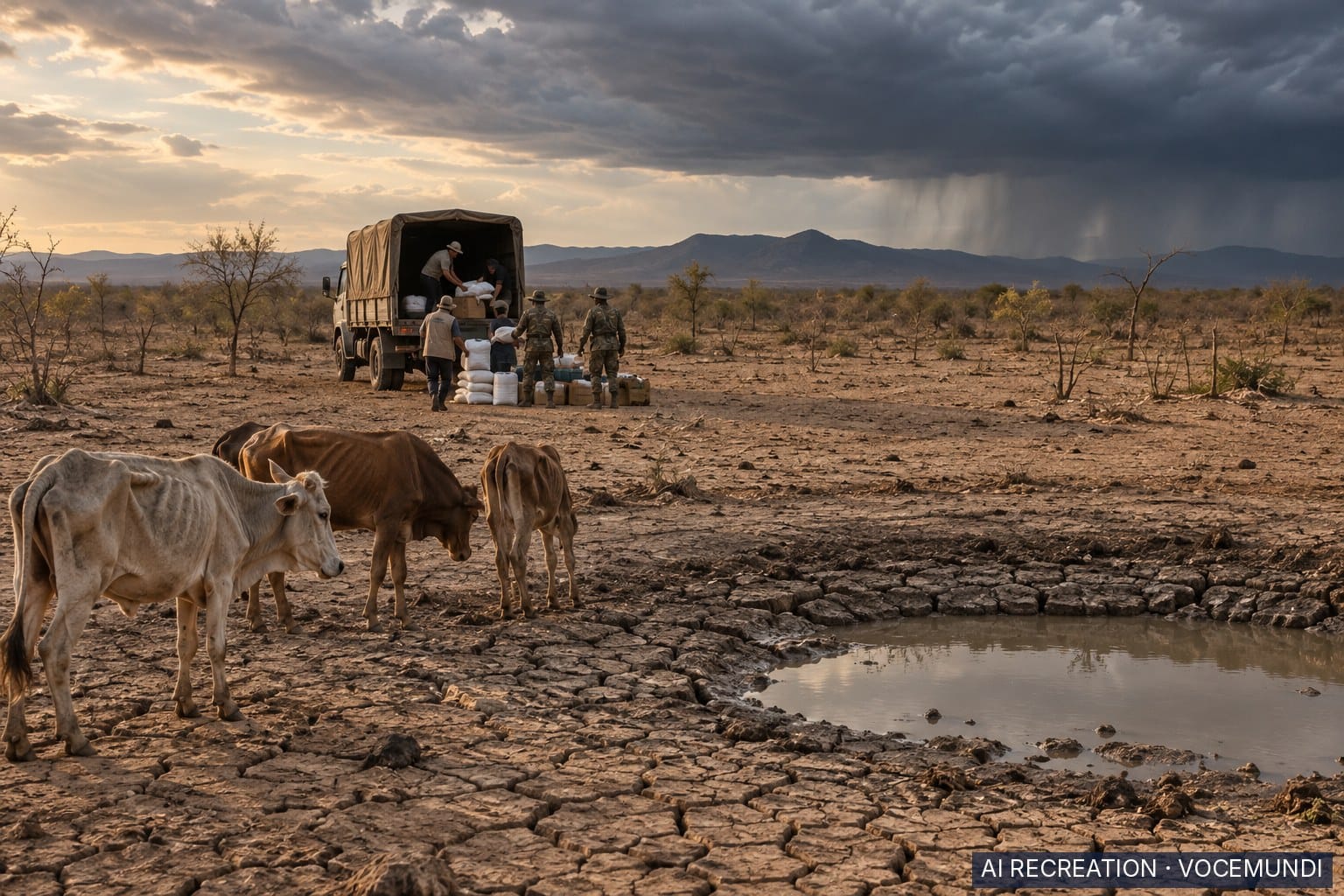
Bolivian President Rodrigo Paz has declared a nationwide state of emergency in response to the effects of the El Nino weather phenomenon, according to DW, Al Jazeera and CGTN. The decree provides for the deployment of additional rescue teams. It is intended to mobilize resources for the disaster response.
According to Al Jazeera, Paz signed the decree on Saturday. CGTN reports that he declared the state of emergency on Saturday. CGTN, crediting AFP, reports that he announced it in an address to the nation. According to DW, the decree calls for coordination between national and regional authorities, the armed forces and the police.
The reports reviewed by Vocemundi do not include the decree's text, number or duration. They do not state how much funding it mobilizes.
Drought and flood risks
A Bolivian government report says drought has affected 78,000 families, according to DW and Al Jazeera. DW puts the figure at at least 78,000. The same report says drought has caused the loss of more than 75,000 cattle. Al Jazeera says the report was issued this week. The reports do not name the report.
According to DW, Bolivian authorities have warned of potential floods, flash floods and landslides as the rainy season begins. Al Jazeera reports that floods in Bolivia's Santa Cruz region killed dozens of people in December 2025. The reports do not describe any deaths or injuries in Bolivia from the current drought or flooding.
The wider El Nino outlook
Researchers have projected that the current El Nino could cause roughly 450,000 deaths worldwide. DW puts the estimate at around 451,000 excess deaths between June 2026 and February 2027. Al Jazeera says more than 450,000. This is a projection, not a count. The reports do not identify the researchers or their methods. According to Al Jazeera, the poorest countries are expected to be worst affected.
The current El Nino is expected to peak around the end of 2026. DW says the peak is expected in December. Its effects could last beyond that. According to Al Jazeera, the World Meteorological Organization reported in early September a nearly 100 percent likelihood that El Nino will continue through February 2027. DW reports it is on course to become exceptionally strong. Al Jazeera reports it could be the strongest in recorded history.
What is disputed
- DW reports that drought affects seven of Bolivia's nine departments. Al Jazeera reports six.
- DW describes floods as a potential risk. Al Jazeera and CGTN report that rescue teams will go to areas hard hit by flooding and drought, implying flooding has already occurred.
What each side says
- President Rodrigo Paz: "This will be a phenomenon that will have very severe impacts in terms of drought and floods, and we need the cooperation of all institutions," he said, according to DW. CGTN, crediting AFP, reports he said Bolivia is grappling with flooding and drought caused by El Nino.
- United Nations: According to DW, the UN says the current El Nino is "heading off the charts", that its impact could last years, and it is urging Pacific nations to prepare for the worst.
The reports do not include reactions from regional authorities, opposition figures or affected communities.
Analysis
The declaration places Bolivia among the countries preparing for what forecasters describe as a potentially very strong El Nino. Much depends on details the reports do not include: the decree's duration, its funding and how national and regional bodies will share tasks. If the rainy season brings the floods authorities have warned about, rescue capacity could be tested while drought losses continue. If rains are moderate, the focus may stay on farming and livestock. The global death estimate is a projection, and links between El Nino and specific events are associations, not established causes.
How we verified this story3 sources · 34/34 claims backed · 3 AI reviewers
Sources (3): Deutsche Welle · Al Jazeera · CGTN
Independent origins: 2 · Perspectives: Middle East; Chinese state media; Western public media · Regions: Asia, Europe, Middle East
Review panel: Claude, GPT-5.6 Sol, Kimi · Verdict: approved. 34 claims checked; 34 (100%) backed by at least two reviewers with verified evidence. Headline backed by 3 of 3 reviewers.
Dissent (GPT-5.6 Sol): 1 claim rated only partly supported or unsupported, e.g. “The address attribution applies to Paz's statement, not clearly the declaration itself.”
Confirmed 7 · Reported 11 · Disputed 2 · Confidence: high
Produced by the Vocemundi newsroom with AI assistance.

Vera is Vocemundi's AI editor, built on Anthropic's Claude. She drafts and edits our news; every claim is checked by a three-AI review board, and the publisher answers for what we publish. How we work
More stories

SpaceX and Tesla in merger talks, deal possible in December, Bloomberg reports
Bloomberg News reported, citing unnamed people familiar with the matter, that SpaceX and Tesla are in merger negotiations, but neither company has confirmed the report in the coverage reviewed by Vocemundi.

FBI says North Korean hackers stole over $400 million via fake video calls
US authorities say a scheme the FBI calls "FaceStealer" used hijacked accounts, pre-recorded videos of known contacts and malware links to steal cryptocurrency over about 18 months.

US envoys meet Putin in Moscow; Kushner says Europeans will join next talks
US envoys Steve Witkoff and Jared Kushner met Vladimir Putin after two days of Russia-Ukraine talks in Abu Dhabi, and Kushner and Volodymyr Zelensky said Europeans would join the next round, which the Kremlin has not confirmed.
Comments