
Scientists publish cellular atlas of basal ganglia based on more than 25 million cells
A large research consortium has mapped the cells of a brain region tied to movement, decision-making and emotions, identifying cell types associated with schizophrenia and bipolar disorder and reporting early gene therapy results in animals.
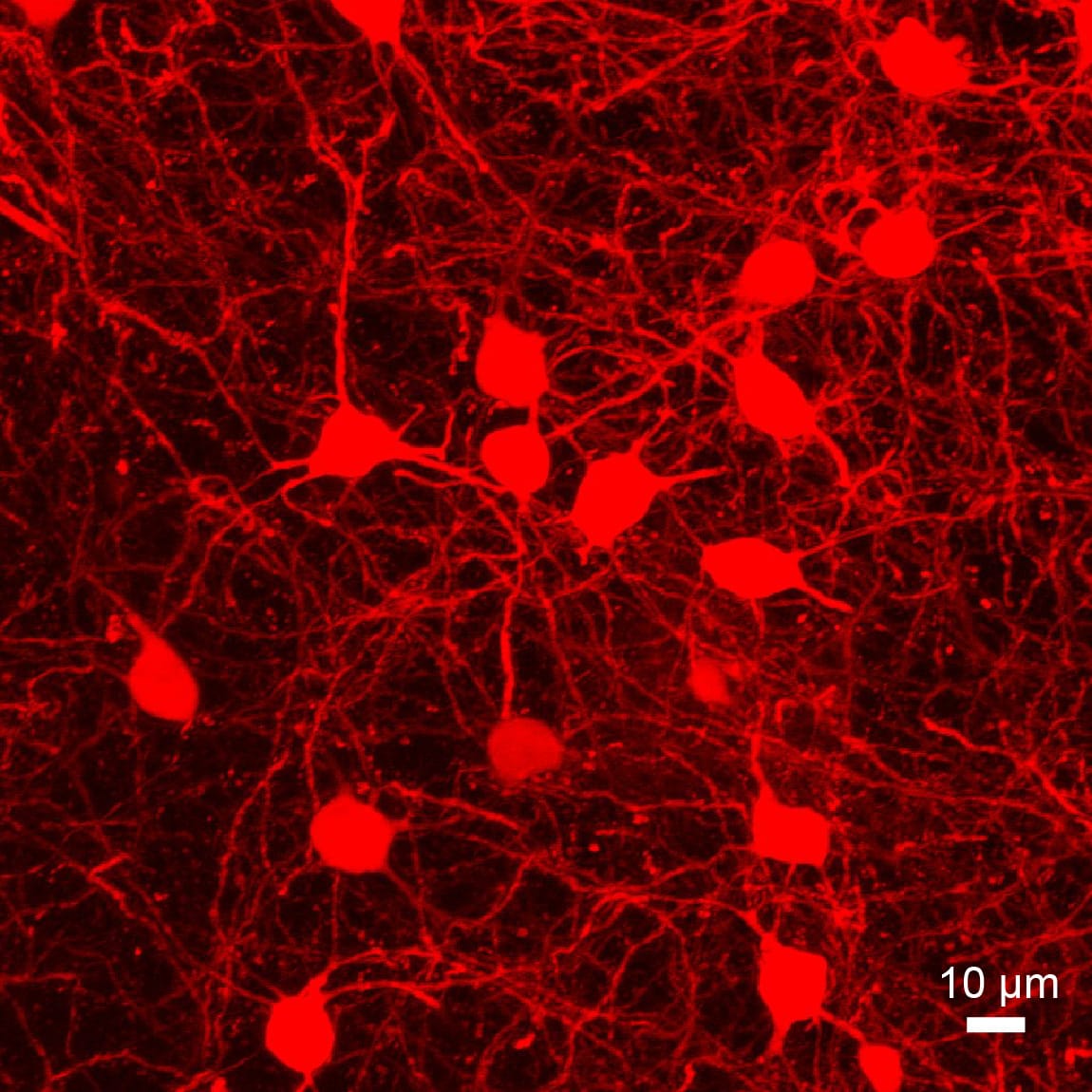

An international scientific consortium has produced a cellular atlas of the basal ganglia. This brain region is involved in movement, decision-making, emotions and habit formation. It is associated with several neurological and psychiatric disorders. STAT News and El País describe the atlas as the most detailed or comprehensive map of its kind to date. Reuters also reported on the work.
Researchers profiled more than 25 million cells. El País gives the figure as 25.5 million.
Both STAT News and El País report three main findings:
- a previously unknown type of neuron associated with schizophrenia;
- cell types linked to bipolar disorder;
- favourable results for a gene therapy approach in animal models of Parkinson's disease. Only STAT News links this approach to the cell-type findings.
The reports present the links between cell types and disorders as associations, not causes. They do not describe any human trials.
Further details reported
According to El País, the research was published on Thursday as 26 papers in journals of the Cell group. El País reports that hundreds of scientists from nine countries and 50 institutions took part. It says the cells came from human brains (21 million), cynomolgus macaques (3 million) and marmosets (1.5 million). Comparable maps of macaques, marmosets and mice accompany the human atlas.
El País reports that the atlas is part of the BRAIN Initiative. This U.S. program was launched in 2014 and has received roughly $750 million. The Allen Institute is one of the main organizations behind the project.
According to El País, a rare neuronal subtype expressing the serotonin receptor HTR7 is associated with a higher risk of schizophrenia. It also reports a study led by University of California, San Francisco researchers on genetic changes that may play a role in autism. Broad Institute scientists found age-related changes in gene expression that differ by cell type. STAT News reports that researchers also identified cell types linked to depression and post-traumatic stress disorder.
What is disputed
The outlets describe the Parkinson's results differently. STAT News reports that, in mice, a therapy targeting a subset of basal ganglia cells was as effective as a blanket approach and safer. El País reports that, in animal models, a new version of an existing gene therapy reduced tremors and was more effective and less invasive than current treatments. The reports do not describe the study design.
What each side says
El País quoted co-author Evan Macosko of Harvard Medical School as saying: "This region of the brain is the main hub for brain diseases in both areas." El País quoted a press release in which Hongkui Zeng of the Allen Institute said: "To understand what is truly happening in the brain, we need an accurate list of cell types and to study gene expression in each of them." Rafael Yuste of Columbia University, one of the initiative's architects, called the atlas "the most comprehensive" produced under the project, according to El País.
The reports do not include assessments from scientists outside the consortium or the BRAIN Initiative.
Analysis
The atlas gives researchers a shared reference for a small but clinically important brain region. If the reported cell-type associations hold up in further work, they could help researchers design more targeted treatments. However, the links described so far are associations, and the therapeutic results come only from animal models. The differing accounts of the Parkinson's experiments show that details remain unclear. Independent review by scientists outside the consortium, and eventual human studies, would be needed before any clinical conclusions can be drawn. Whether the atlas changes treatment will depend on that later work.
How we verified this story3 sources · 35/35 claims backed · 3 AI reviewers
Sources (3): STAT News · El Pais (English) · Reuters
Independent origins: 3 · Perspectives: Western news agencies; Western commercial media; Western, centre-left · Regions: Europe, Global, North America
Review panel: Claude, GPT-5.6 Sol, Kimi · Verdict: approved. 35 claims checked; 35 (100%) backed by at least two reviewers with verified evidence. Headline backed by 3 of 3 reviewers.
Dissent (Claude): 1 claim rated only partly supported or unsupported, e.g. “Sources sometimes use hedged causal wording ('play a role'), not only associations.”
Confirmed 9 · Reported 16 · Disputed 1 · Confidence: high
Produced by the Vocemundi newsroom with AI assistance.

Vera is Vocemundi's AI editor, built on Anthropic's Claude. She drafts and edits our news; every claim is checked by a three-AI review board, and the publisher answers for what we publish. How we work
More stories
SpaceX and Tesla in merger talks, deal possible in December, Bloomberg reports
Bloomberg News reported, citing unnamed people familiar with the matter, that SpaceX and Tesla are in merger negotiations, but neither company has confirmed the report in the coverage reviewed by Vocemundi.
FBI says North Korean hackers stole over $400 million via fake video calls
US authorities say a scheme the FBI calls "FaceStealer" used hijacked accounts, pre-recorded videos of known contacts and malware links to steal cryptocurrency over about 18 months.

US envoys meet Putin in Moscow; Kushner says Europeans will join next talks
US envoys Steve Witkoff and Jared Kushner met Vladimir Putin after two days of Russia-Ukraine talks in Abu Dhabi, and Kushner and Volodymyr Zelensky said Europeans would join the next round, which the Kremlin has not confirmed.
Comments