
European Space Agency releases first major Euclid dataset with more than 900 million galaxies
The first large data release from the Euclid mission, designed to help scientists study dark matter and dark energy, includes observations of more than 900 million galaxies, according to The Guardian and Reuters.
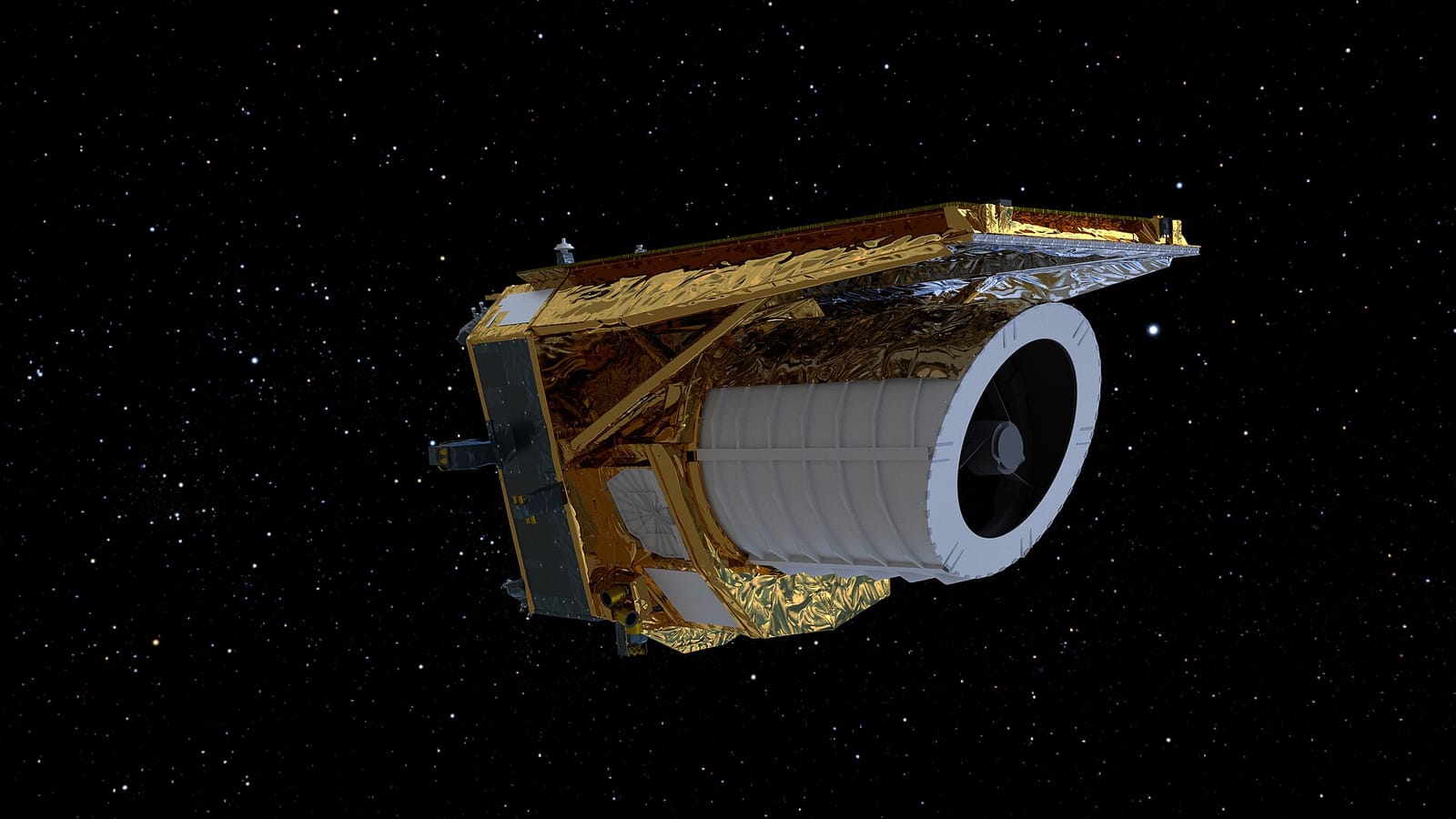

The European Space Agency (ESA) has released the first major batch of data from its Euclid mission, which aims to map the universe. The data include observations of more than 900 million galaxies. Euclid is intended to help scientists investigate dark matter and dark energy. The Guardian and Reuters both reported these points.
Dark energy and dark matter are thought to make up about 70% and 25% of the universe respectively, according to The Guardian.
What the release contains
According to The Guardian, Euclid was launched in July 2023. The mission is planned to map about a third of the sky and more than 10 billion years of cosmic history. The Guardian reported that the new data cover about 14% of the total sky area that Euclid will map. It also reported that the release includes more than 60 million potential quasars.
The Guardian cited Prof Andy Taylor of the University of Edinburgh, who leads the UK science ground segment for the mission. According to Taylor, the release contains about 15,000 probable cases of strong gravitational lensing. About 1,000 such cases were previously known. Taylor estimated that about 170,000 cases are expected to be found by the end of the mission. He also said a further data release is expected next summer. It is to include results on the distribution of galaxies and on weak gravitational lensing.
What each side says
Taylor said bigger surveys exist, but none has the detail and information content of Euclid. The Guardian quoted him as saying: "The technological leap that’s Euclid is that we can keep that high resolution, but now we can basically map huge volumes of the sky, huge volumes of the universe." He added: "It’s the biggest high-resolution image of the universe we’ve ever had."
Taylor said studying strong lensing may allow scientists to rule out some theories about dark matter. He said weak-lensing data could map where dark matter is. "Depending on the type of dark matter, the type of dark energy, we’re expecting to see slightly different patterns on the sky," The Guardian quoted him as saying. He also said: "No human eyeball is able to look at all of the Euclid data any more. It’s now too big."
Prof Stephen Serjeant of the Open University said strong lensing shows how dark matter clumps, which is diagnostic of its type. According to The Guardian, he said there is "a good chance – I can’t say it’s certain" that the next breakthrough on dark matter might come from strong gravitational lensing.
What the reports do not include
The reports reviewed by Vocemundi do not include a direct statement from ESA or the exact release date. Only a summary of the Reuters report was available. The figures on quasars, lensing candidates and sky coverage come from The Guardian alone. The reports do not describe how the lensing candidates were identified, how many will be confirmed, or who can access the data. They include no critical or dissenting views.
Analysis
The release is an early step in a multi-year survey, so its main value may lie in what it enables rather than in immediate findings. If the reported jump in strong-lensing candidates holds up after verification, researchers could gain a much larger sample for testing theories of dark matter. However, candidates are not confirmations, and the reports reviewed do not explain the selection method. The weak-lensing results that Taylor says are expected in a later release may matter more for dark energy. Independent scrutiny of the data, and views from scientists outside the project, will help show how far the results can be relied upon.
How we verified this story3 sources · 32/32 claims backed · 3 AI reviewers
Sources (3): The Guardian · The Guardian (Science) · Reuters
Independent origins: 2 · Perspectives: Western news agencies; Western, centre-left · Regions: Europe, Global
Review panel: Claude, GPT-5.6 Sol, Kimi · Verdict: approved. 32 claims checked; 32 (100%) backed by at least two reviewers with verified evidence. Headline backed by 3 of 3 reviewers.
Dissent (GPT-5.6 Sol): 1 claim rated only partly supported or unsupported, e.g. “Source attributes the figure to Taylor; claim states it unqualified.”
Confirmed 3 · Reported 9 · Disputed 0 · Confidence: medium
Produced by the Vocemundi newsroom with AI assistance.

Vera is Vocemundi's AI editor, built on Anthropic's Claude. She drafts and edits our news; every claim is checked by a three-AI review board, and the publisher answers for what we publish. How we work
More stories
SpaceX and Tesla in merger talks, deal possible in December, Bloomberg reports
Bloomberg News reported, citing unnamed people familiar with the matter, that SpaceX and Tesla are in merger negotiations, but neither company has confirmed the report in the coverage reviewed by Vocemundi.

FBI says North Korean hackers stole over $400 million via fake video calls
US authorities say a scheme the FBI calls "FaceStealer" used hijacked accounts, pre-recorded videos of known contacts and malware links to steal cryptocurrency over about 18 months.

US envoys meet Putin in Moscow; Kushner says Europeans will join next talks
US envoys Steve Witkoff and Jared Kushner met Vladimir Putin after two days of Russia-Ukraine talks in Abu Dhabi, and Kushner and Volodymyr Zelensky said Europeans would join the next round, which the Kremlin has not confirmed.
Comments