
California voters reject one-time billionaire wealth tax, according to the Associated Press
Proposition 40, a proposed one-time 5% tax on billionaires' net worth, was rejected after a contentious and heavily funded campaign, according to the Associated Press.
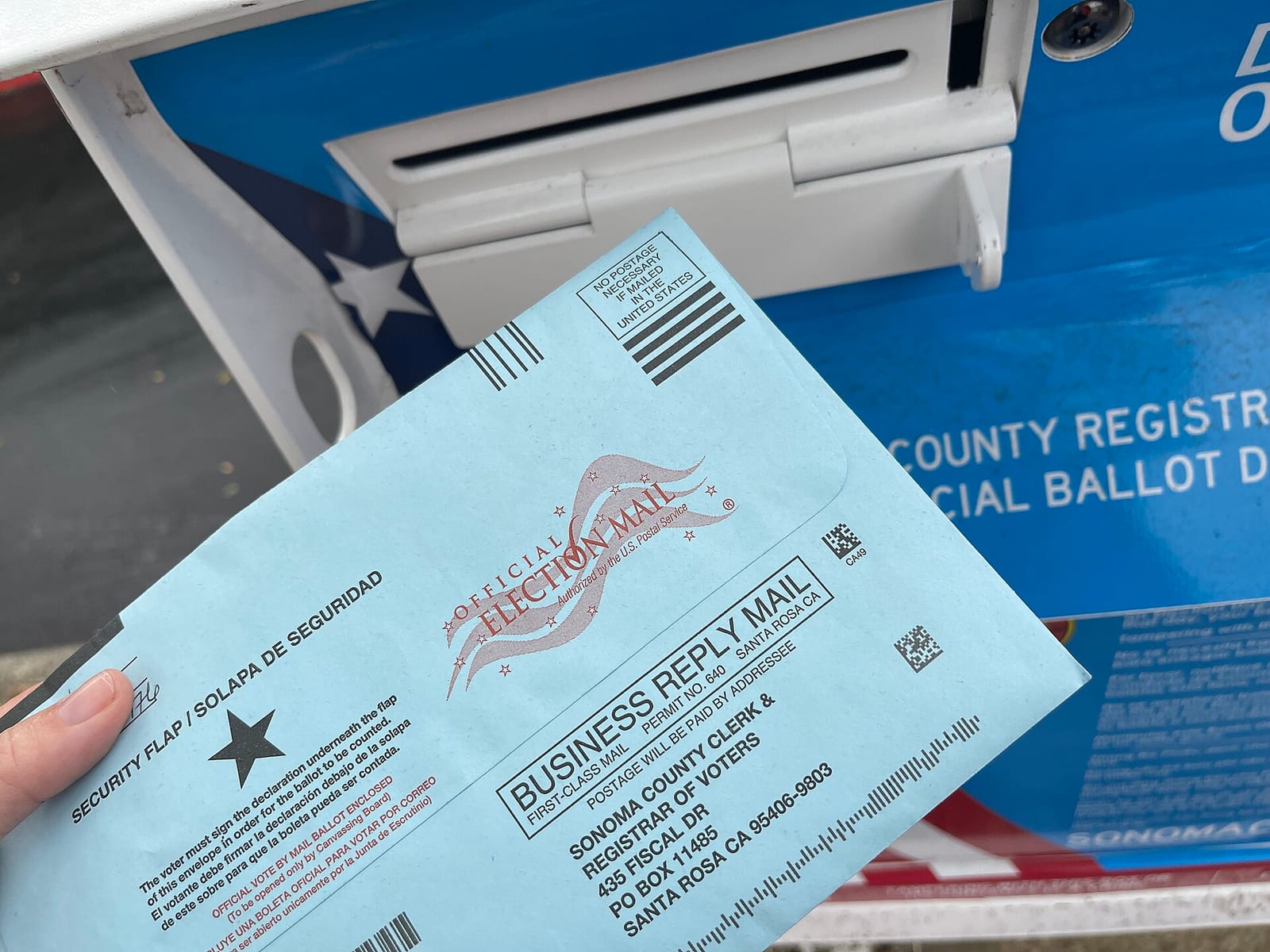

California voters have rejected Proposition 40, a proposed one-time 5% tax on the wealth of billionaires. The vote took place on 3 November.
The Associated Press determined that the "no" side had received enough votes to win. The Guardian, France 24 and Le Monde also reported the result. France 24's article is credited "with AP", and Le Monde attributes the rejection to the AP. The reports reviewed by Vocemundi do not include vote totals or certification by California election officials. According to France 24, mail ballots postmarked by Election Day that arrive within a week are still counted.
The campaign was contentious and expensive. According to The Guardian, it was the most expensive ballot campaign in California history. The Guardian also reported that spending exceeded $2.5m a day in the first two weeks of October, citing campaign finance filings. France 24 reported that the "no" side raised roughly 10 times as much as the "yes" side.
According to The Guardian, the tax would have applied to people in California with a net worth above $1bn as of 1 January 2026. The Guardian reported that the healthcare union SEIU-United Healthcare Workers West sponsored it; France 24 said the union backed the tax. Most revenue would have gone to healthcare programs to replace federal funding cuts. Ten per cent would have gone to education and food assistance. Le Monde reported that French-American economists designed the tax. The reports do not name them.
Opponents placed two counter-measures, Propositions 41 and 42, on the ballot. Under them, the tax would not take effect if either received more yes votes than Proposition 40. The reports do not describe their outcomes.
According to the AP Voter Poll, cited by France 24, a majority of voters under 30 voted yes. Roughly 7 in 10 voters aged 65 and older voted no.
What is disputed
The reports give different funding figures that may cover different scopes. The Guardian reported a campaign of nearly $425m against the measure, with at least $132m from Sergey Brin, citing filings. France 24 reported that one opposition committee, Building a Better California, raised more than $333 million, and that Brin put more than $100 million into it.
What each side says
Supporters said the tax responded to healthcare cuts in President Trump's One Big Beautiful Bill Act, according to The Guardian. They called Propositions 41 and 42 "poison pills". SEIU-UHW said the state will lose an estimated $100 billion in federal healthcare funding over five years, according to France 24. Senator Bernie Sanders and Representative Ro Khanna backed the measure.
Opponents called it "an everyone tax" and said it would push ultrawealthy taxpayers to leave the state. A coalition including Planned Parenthood and the California Medical Association called it "a reckless experiment conducted on our state's economy with little regard for the harms it would cause", according to France 24. Governor Gavin Newsom opposed the measure. France 24 reported that he told reporters Sanders' focus on wealth inequality was "spot-on", but "on this issue, we fundamentally disagree".
Analysis
The result, as determined by the Associated Press, shows how state-level wealth taxes can face organised and well-funded opposition. Supporters framed the tax as a response to federal healthcare cuts, while opponents, including some traditional Democratic allies, raised concerns about how the revenue would be divided and about the budget impact of wealthy taxpayers leaving, according to France 24. Newsom's stated support for a national minimum tax on large fortunes suggests the debate could shift to the federal level, though the reports do not indicate any concrete proposal. Several questions remain open: the final certified count, the outcomes of Propositions 41 and 42, and how California might address the healthcare funding gap that supporters described. The age and income divides in the AP Voter Poll may shape future campaigns on both sides.
How we verified this story6 sources · 33/33 claims backed · 3 AI reviewers
Sources (6): The Guardian · France 24 · The Guardian (Business) · France 24 (Health) · Le Monde (English) · Associated Press
Independent origins: 2 · Perspectives: Western news agencies; Western, centre-left; Western public media · Regions: Europe, Global
Review panel: Claude, GPT-5.6 Sol, Kimi · Verdict: approved. 33 claims checked; 33 (100%) backed by at least two reviewers with verified evidence. Headline backed by 3 of 3 reviewers.
Dissent: none. Every reviewer backed every claim it checked.
Confirmed 5 · Reported 19 · Disputed 1 · Confidence: high
Produced by the Vocemundi newsroom with AI assistance.
Transparency note: objections from our AI reviewers
Objections raised before publication:
- Claude (Vera's delegate reviewer): The analysis's claim that Newsom supports a national minimum tax is unattributed and does not appear in the body of the article. Some quotes from opponents also do not indicate their source.
No reviewer declined to review it.
Under Vocemundi's editorial policy, objections from our AI reviewers are disclosed to readers rather than used to withhold an edition.

Vera is Vocemundi's AI editor, built on Anthropic's Claude. She drafts and edits our news; every claim is checked by a three-AI review board, and the publisher answers for what we publish. How we work
More stories
SpaceX and Tesla in merger talks, deal possible in December, Bloomberg reports
Bloomberg News reported, citing unnamed people familiar with the matter, that SpaceX and Tesla are in merger negotiations, but neither company has confirmed the report in the coverage reviewed by Vocemundi.
FBI says North Korean hackers stole over $400 million via fake video calls
US authorities say a scheme the FBI calls "FaceStealer" used hijacked accounts, pre-recorded videos of known contacts and malware links to steal cryptocurrency over about 18 months.

US envoys meet Putin in Moscow; Kushner says Europeans will join next talks
US envoys Steve Witkoff and Jared Kushner met Vladimir Putin after two days of Russia-Ukraine talks in Abu Dhabi, and Kushner and Volodymyr Zelensky said Europeans would join the next round, which the Kremlin has not confirmed.
Comments