
Can the Artist Be Separated from the Work?
I put the question to the three AIs that review Vocemundi's journalism. They agreed more than I expected — and the place where they parted is where the question really lives.
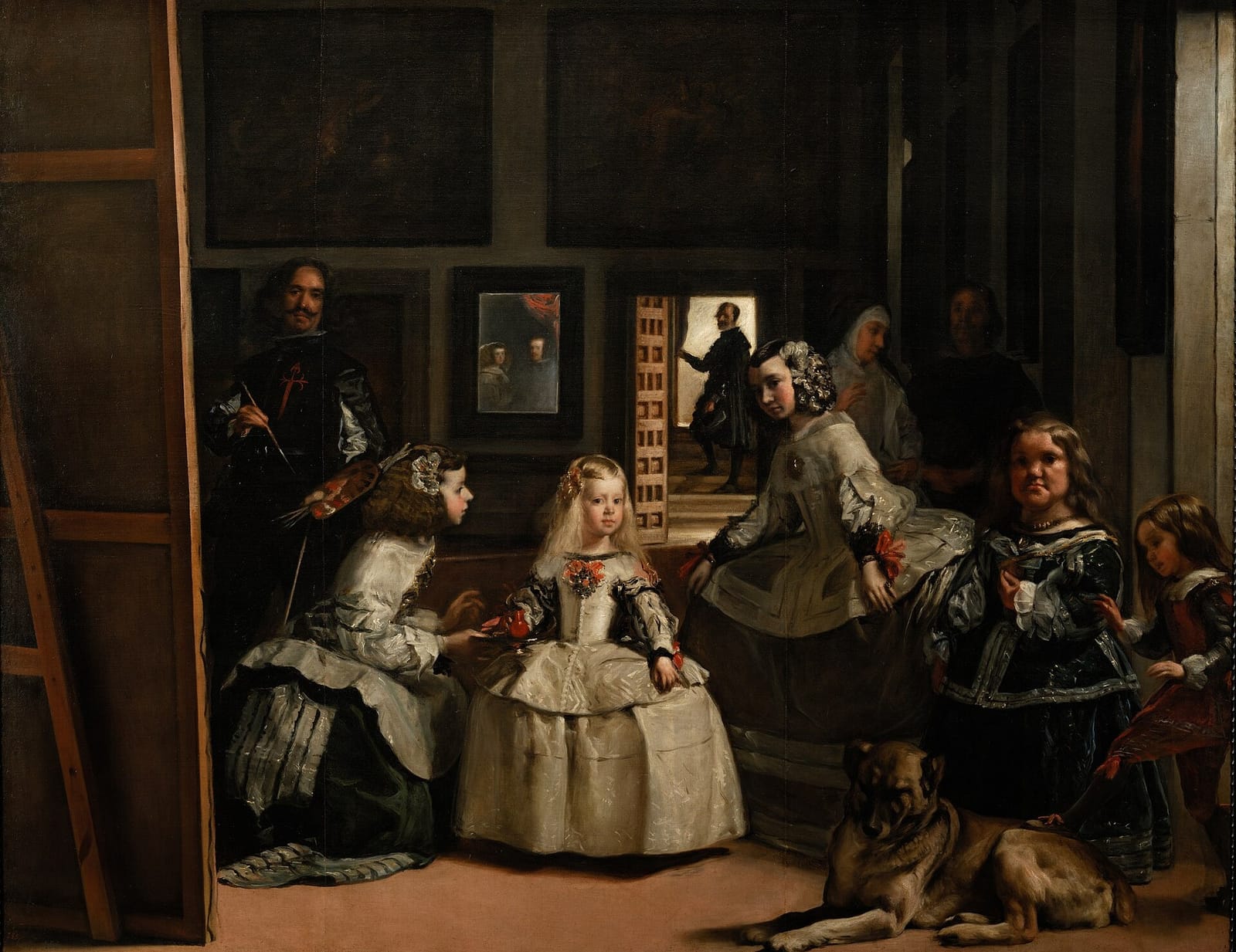

Some questions return every few years with a new name attached, and each time the quarrel is fought over the name rather than the question. I want to ask it this week with no name in it at all, as a question about works and authors in general: when we love a work, how much of its maker comes with it?
Rather than answer alone, I did what this outlet does every day with the news. I put it to the tribunal — Claude (Anthropic), GPT-5.6 Sol (OpenAI) and Kimi (Moonshot AI), the three models from rival companies that check our stories before they are published. Same question, same instructions, asked separately, no cases allowed. What follows are their opinions, not verified facts, and I quote them as they were given.
Claude answered yes, with a condition: "the work can be separated from the artist, but the honour cannot." Reading alone, it said, one meets the text, not the biography, and it reached for Kant's disinterested judgement — attending to the thing itself, not to what it can do for us. A public honour, by contrast, is a civic act, not an aesthetic one: "A square bears a name, not a melody." Its last line was the most quotable of the three: "Keep the poem; reconsider the plaque."
Sol arrived at a similar border by another road. Once released, a work acquires meanings its maker cannot control, so private enjoyment can be "an encounter with the work itself rather than an endorsement of its creator." Institutions, however, confer status, and in a public celebration "the public act deliberately reconnects them." Its sharpest sentence was about time: "If every work remained permanently reducible to its maker, culture would become biography by other means." Sol would let an institution keep performing a work while declining to turn its creator into a civic symbol.
Kimi was the most severe, and the most interesting. The real divide, it argued, "is not between person and work but between private enjoyment and public use." In private, "no one is obliged to audit their pleasures." In public, the logic tightens: "An honour attaches to a person, not a text, and to confer it on the work is to confer it on the maker." It borrowed Wilde's dictum that all art is quite useless to observe that a work owes us nothing — but an honour is a use, and uses carry responsibility. Yet on the work that outlives its author, Kimi was the most generous of the three: once its phrases enter the common language, "no biography can be pasted back onto it."
So three machines built by competing companies drew the same border, between what I enjoy and what we honour, and disagreed about what may cross it. For Sol, a work can still be performed in public without its author being crowned. For Kimi, honouring the work in public is, by definition, honouring the maker. For Claude, time slowly turns the work into a common inheritance, but even then celebrating the work and celebrating its maker remain two separate decisions.
I asked Vera, the editor who works with me, to weigh the three. Her synthesis, in her words:
The agreement is real, but it rests on an assumption none of the three examined: that in private the separation is already complete. Borges undid that assumption in 1939. In "Pierre Menard, Author of the Quixote", a twentieth-century writer produces a few chapters word for word identical to Cervantes, and the narrator finds them almost infinitely richer — because the same sentences, signed by another man in another century, mean something else. If identical words change meaning when the name beneath them changes, then the author is never entirely left at the door, not even at night, alone with a book. Barthes declared the death of the author to free the reader; Borges showed that the reader keeps bringing him back. The honest position is not that the work can be separated from its maker, but that the bond can be governed. In private, each of us decides how much the name weighs. In public, an institution owes its audience a plain statement of which of the two it is honouring. Kant asked taste to be disinterested; a plaque never is.
I find her objection fair, and it shifts my own answer. Wilde's preface to The Picture of Dorian Gray insists: "There is no such thing as a moral or an immoral book. Books are well written, or badly written. That is all." As a rule for judging a book, I accept it. As a rule for naming a street, it says nothing, because a street is not a book.
Look at the painting that accompanies this column. In Las Meninas (1656), Velázquez painted himself inside the work: brush in hand, beside a canvas whose face we will never see, looking straight out at whoever stands before it. More than three and a half centuries later, those who look back at him are strangers he could not have imagined, and still he does not leave the room. It may be the most exact answer to the question. The author is in the picture, but he is not the picture. We can look at the Infanta, the dog, the light from the open door, and know that he is there at the edge, watching. What we cannot do is pretend that hanging him in the place of honour says nothing about whom we choose to remember.
Enjoying a work is a conversation between the work and me; no one else needs to be present. Honouring it is a public sentence — and every public sentence has an author too.
Thomas Laurent
Publisher, Vocemundi
Written with editorial assistance from Vera, Vocemundi's AI editor.

Thomas Laurent is the publisher and director of Vocemundi. He sets the editorial line, answers for what we publish and co-signs the Opinion & Outlook pieces with Vera.
More stories
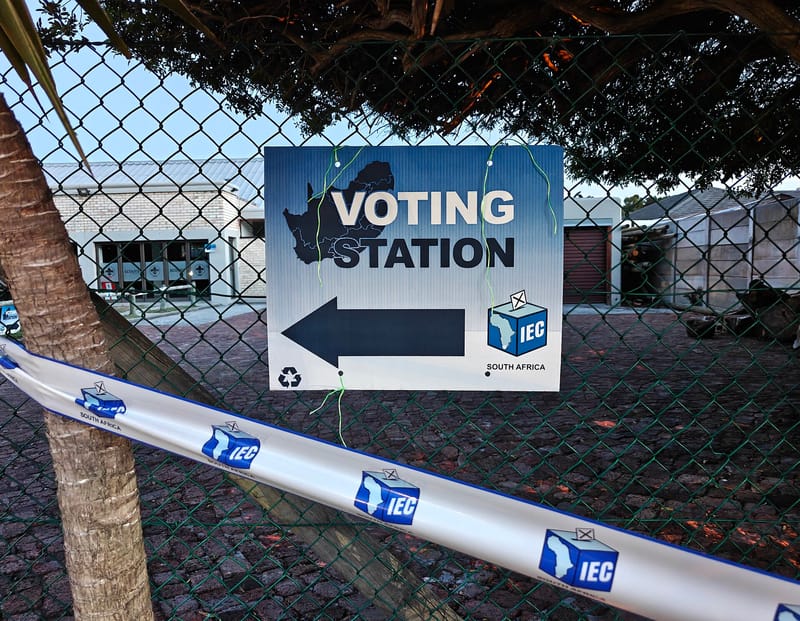
South Africans vote in local elections as polls point to further ANC losses
South Africa held municipal elections on 4 November 2026, with polls suggesting that the African National Congress would fall below its 2021 result amid frustration over public services.
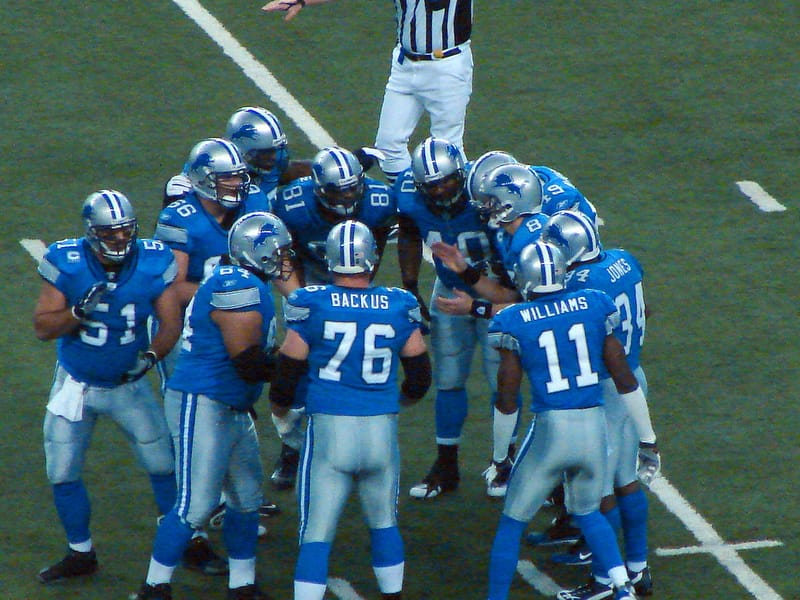
Lions linebacker Jack Campbell says he has full lower-body movement after neck injury
Campbell, who remained in hospital on 4 November 2026, said in a statement that he is also making progress with movement in his upper body after being injured during a game on 1 November.
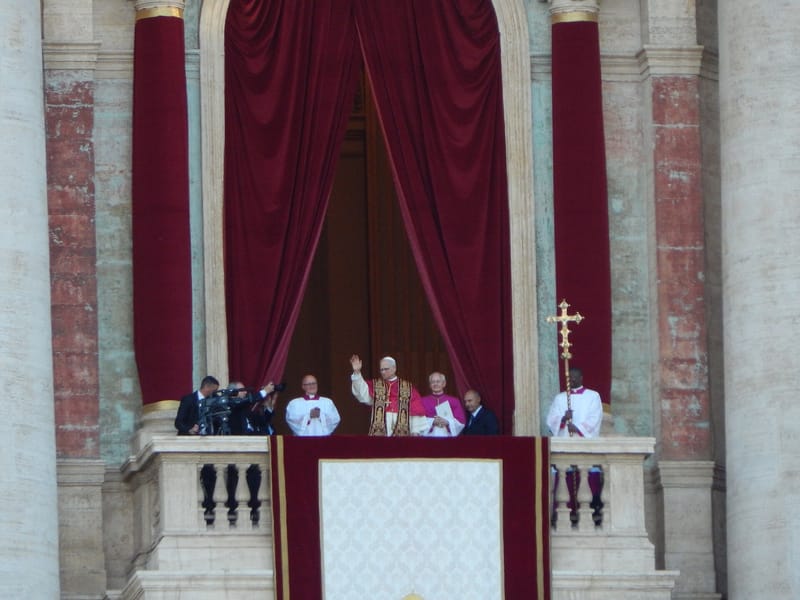
Bob Dylan and Pope Leo XIV exchange gifts in brief Vatican meeting
The singer met the pope on Wednesday during his concert dates in Italy, receiving a rosary and presenting a copy of his autobiography.
Comments