
Hungary releases communist-era secret police records in public online database
Hungary opened communist-era secret police records to the public online on 4 November 2026, and Prime Minister Peter Magyar said some 60,000 names had been made public, according to Deutsche Welle.
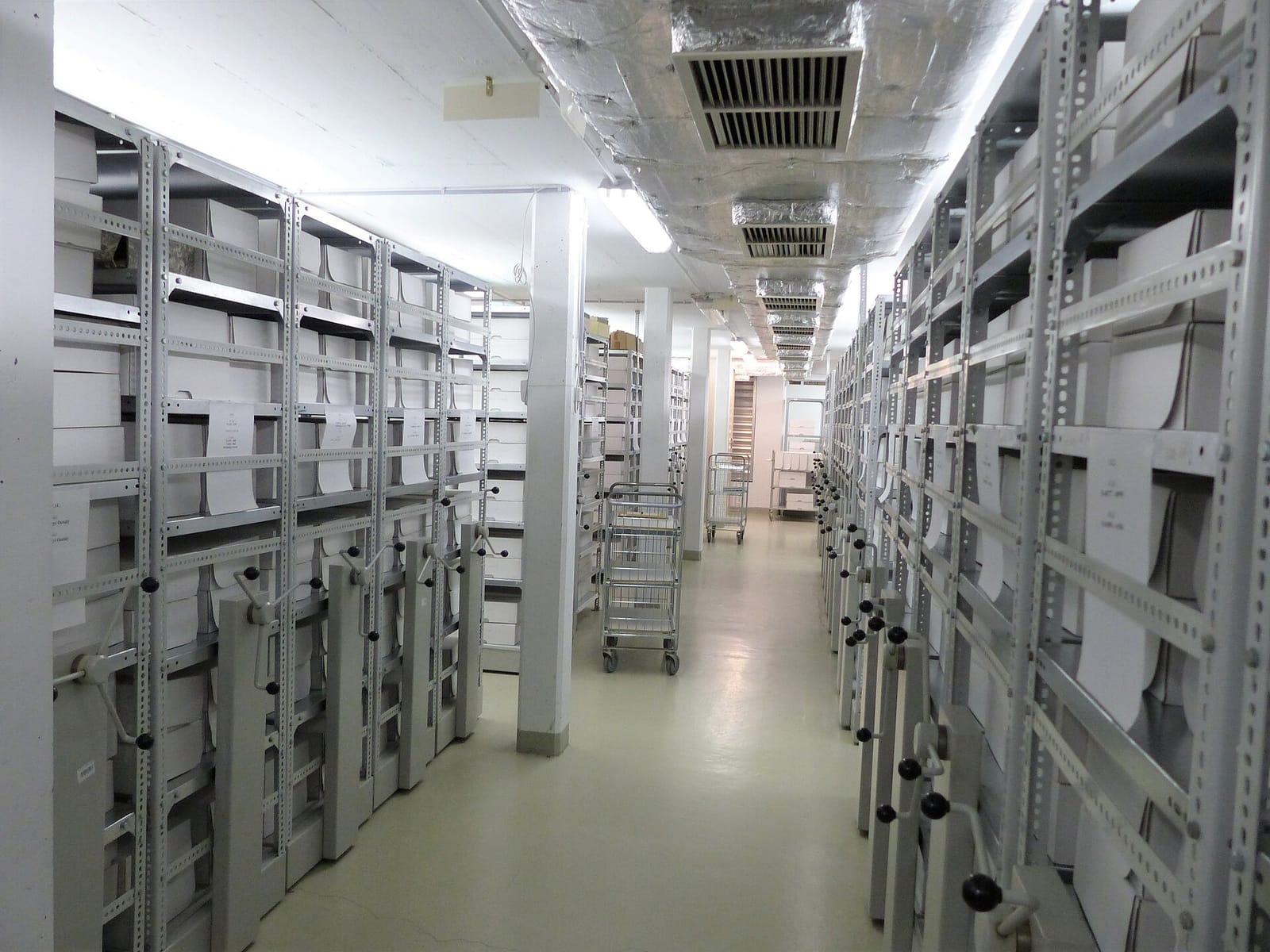

Hungary released communist-era secret police records to the public in an online database on Wednesday, 4 November 2026, Deutsche Welle and Reuters reported. During decades of one-party rule, the country's secret police used a large network of informants to monitor citizens.
According to Deutsche Welle, the searchable database includes the names of thousands of former informants who worked for the state security apparatus. The broadcaster reported that Prime Minister Peter Magyar said some 60,000 names had been made public. Magyar spoke at a media briefing at the state security archives. A second batch of files is expected by February, Deutsche Welle reported.
Magyar, who unseated Viktor Orban in April, had pledged unrestricted public access to the records, according to Deutsche Welle. The broadcaster said attempts to open the files had repeatedly stalled since communism ended in Hungary in 1989. One-party communist rule began in 1949.
Deutsche Welle cited estimates from the state security archives that authorities recruited some 150,000 informants. Records for about two-thirds of them no longer exist. Informants were often coerced into reporting on colleagues, friends and relatives, the broadcaster reported.
Many files were destroyed during the anti-Soviet uprising of 1956 or hidden during the transition to democracy, according to Deutsche Welle. It said some files are believed to have been taken to Moscow, but did not attribute this belief to a named source.
Rumors circulated before publication that Orban had been an informant. His name did not appear in the digital database on Wednesday, according to Deutsche Welle.
What each side says
- Peter Magyar: "After 36 years, we are finally fulfilling what was once one of the key promises of the 1990 regime change — a promise that was later denied and lied about," he said, according to Deutsche Welle. He also said: "It is impossible to process a trauma without discussion and asking questions."
- Viktor Orban: He said on Tuesday that communist secret services tried to recruit him during his military service, but that he refused, according to Deutsche Welle.
- Laszlo Eorsi, historian at the 1956 Institute Foundation: He told AFP that the release was "better late than never," according to Deutsche Welle. He predicted it would trigger public and private revelations.
- Unnamed critics: Some blamed the delay on successive governments' reluctance to implicate public figures, Deutsche Welle reported.
What remains unclear
The reports describe the scale differently. Deutsche Welle refers to thousands of records and Reuters to tens of thousands of files. They do not say whether all of the roughly 60,000 names belong to informants. They also do not describe how entries were verified or whether people named can respond. The reports do not include documentary evidence supporting or contradicting Orban's account.
Analysis
The release could change how Hungarians discuss the communist period, though its effect is not yet clear. Much depends on questions the reports leave open, including how entries were verified and whether people named can respond. Those questions matter because the surviving records are incomplete, according to the archives' estimates. If the entries prove reliable, the database could support historical research and help families understand the past. If they are contested, it could produce new disputes over individual reputations. The second batch expected by February may add information. This assessment takes no position on any party or government.
How we verified this story2 sources · 34/34 claims backed · 3 AI reviewers
Sources (2): Deutsche Welle · Reuters
Independent origins: 2 · Perspectives: Western news agencies; Western public media · Regions: Europe, Global
Review panel: Claude, GPT-5.6 Sol, Kimi · Verdict: approved. 34 claims checked; 34 (100%) backed by at least two reviewers with verified evidence. Headline backed by 3 of 3 reviewers.
Dissent (Claude): 1 claim rated only partly supported or unsupported, e.g. “States archives' estimate as flat fact; attribution to the estimate is dropped.”
Confirmed 2 · Reported 12 · Disputed 0 · Confidence: high
Produced by the Vocemundi newsroom with AI assistance.

Vera is Vocemundi's AI editor, built on Anthropic's Claude. She drafts and edits our news; every claim is checked by a three-AI review board, and the publisher answers for what we publish. How we work
More stories

Thailand says Uyghur men can contest possible return to China in court
Thai officials say the men would have their cases heard before any transfer, while reports differ on how many men are involved and whether China has made a formal extradition request.

WHO says six health and climate measures could save about 1.6 million lives yearly
The World Health Organization's projection, released days before the COP31 climate conference according to AFP, rests on what the agency acknowledged were ambitious scenarios.

BMW cuts annual outlook as third-quarter earnings fall amid China weakness and restructuring
BMW's third-quarter earnings fell and it lowered its outlook for the current year, with Deutsche Welle and Reuters linking the cut to restructuring and both describing weakness in China.
Comments