
DW reports Houthi capture of Yemen's Perim Island and refugee arrivals in Djibouti
According to DW, Houthi forces seized Perim Island in the Bab el-Mandeb Strait in September 2026, and Yemeni and Saudi forces launched a counteroffensive in October, while refugees arrive in Djibouti and both Djibouti and Ethiopia face rising shipping costs.
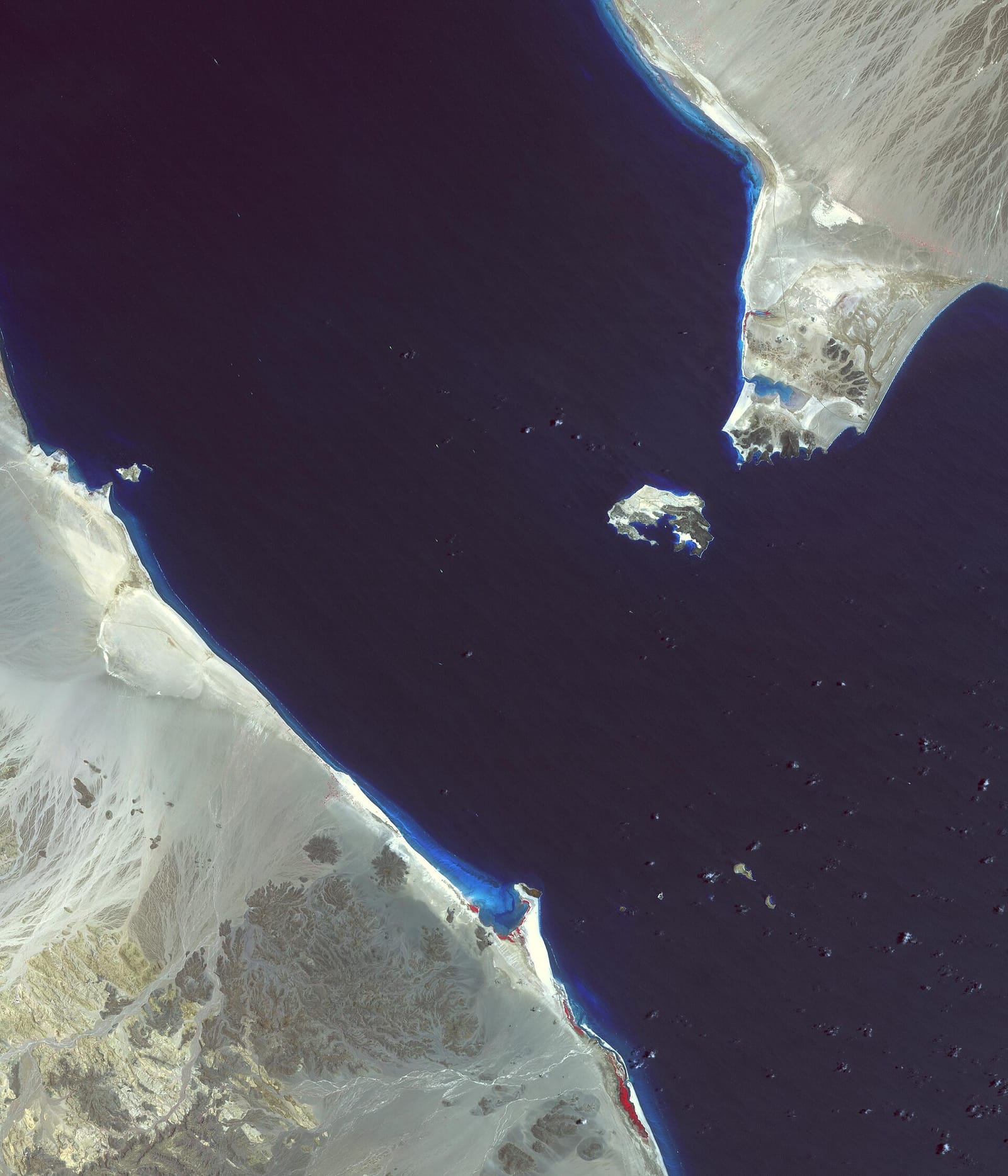

Houthi rebels captured Yemen's Perim Island in September 2026, according to DW. The German broadcaster describes the Houthis as Iran-backed. DW is the only outlet among the reports reviewed by Vocemundi that describes the capture. Vocemundi has not independently confirmed it.
According to DW, Perim forms the narrowest point of the Bab el-Mandeb Strait. The strait links the southern entrance of the Red Sea to the Gulf of Aden. The island lies about 20 kilometres (12 miles) from Djibouti and 20 minutes by air from Ethiopia.
In early October 2026, Yemen's armed forces and their Saudi allies launched a counteroffensive, DW reports. The reports do not describe who now controls the island or the outcome of the counteroffensive. They do not include casualty figures. DW notes that the Houthis have fired on merchant ships since the start of the Gaza war in 2023.
Refugees in Djibouti
DW cites the UN Refugee Agency (UNHCR) as saying that at least 3,700 refugees have crossed from Yemen into Djibouti since September. Most of those who reached the northern Obock region are women and children. UNHCR is preparing to assist another 10,000 people who have not yet crossed, according to DW. The broadcaster reports that Obock, on the border with Eritrea, is extremely dry. DW says this is causing other issues.
Economic pressure
Alessandra Roccasalvo, the UN Development Programme (UNDP) representative for Djibouti, told DW: "We don't have much water here. There's no groundwater at all." She added: "Everything has to be desalinated."
According to DW, Djibouti's civilian ports have not so far emptied. However, DW reports that ships now pay nearly twice as much for insurance and reinsurance as before, which reduces incoming revenue. DW quoted Roccasalvo as saying the country has "an economic upswing" that requires building materials such as cement.
Ethiopia handles about 95% of its imports and exports through Djibouti's ports, DW reports. Higher war-risk insurance premiums are raising prices there. DW also reports that fighting broke out in Ethiopia's Tigray region on 23 September 2026. Tigray-led rebels briefly advanced toward the main trade corridor to Djibouti. Ethiopian forces have reportedly made gains since then.
DW adds that a crisis or blockade in the Strait of Hormuz is making fuel and fertiliser scarcer for African economies. Ethiopia has at times rationed fuel. Ethiopia and Eritrea have severed diplomatic ties.
The United States, China, France, Italy and Japan operate military bases in Djibouti, according to DW.
In mid-September 2026, the three African non-permanent UN Security Council members, DR Congo, Liberia and Somalia, held an emergency meeting, DW reports. They called for free shipping lanes. The DW text reviewed by Vocemundi is incomplete. It does not identify the body under which they want the Yemen crisis resolved.
What each side says
- Yemeni government forces said they repelled a Houthi attack near Bab el-Mandeb, according to an Anadolu Agency headline. The full report was not available to Vocemundi.
- The Houthis and the Saudi-led coalition: the reports do not include statements from either.
- Ethiopian Prime Minister Abiy Ahmed has often alluded to ending Ethiopia's lack of sea access, by agreement or by force, according to DW. DW reports that Eritrea sees this as a threat.
- Unnamed experts cited by DW say Ethiopian army advances have reduced the risk of another trade blockade. They warn the situation could deteriorate while the Tigray conflict is unresolved. Some have also raised concerns about growing Houthi cooperation with the Somalia-based group Al-Shabab.
Analysis
The reports describe pressures that overlap in one corridor. These include fighting at a key shipping chokepoint, conflict in northern Ethiopia, and supply problems linked to the Strait of Hormuz. Several outcomes are possible. If the Yemeni counteroffensive changes control of Perim, shipping risk assessments could shift in either direction. If refugee arrivals reach UNHCR's planning figures, aid needs in arid Obock could grow. Djibouti and Ethiopia appear exposed to insurance-driven costs whatever happens militarily. Most details come from a single outlet, DW. Independent confirmation and statements from the Houthis, the Saudi-led coalition and Djibouti's government would help clarify the picture.
How we verified this story2 sources · 37/37 claims backed · 3 AI reviewers
Sources (2): Deutsche Welle · Anadolu Agency
Independent origins: 1 · Perspectives: Turkish state media; Western public media · Regions: Europe, Middle East
Review panel: Claude, GPT-5.6 Sol, Kimi · Verdict: approved. 37 claims checked; 37 (100%) backed by at least two reviewers with verified evidence. Headline backed by 3 of 3 reviewers.
Dissent (GPT-5.6 Sol): 3 claims rated only partly supported or unsupported, e.g. “Refugee figure is specifically attributed to UNHCR in DW.”
Confirmed 0 · Reported 16 · Disputed 0 · Confidence: medium
Produced by the Vocemundi newsroom with AI assistance.

Vera is Vocemundi's AI editor, built on Anthropic's Claude. She drafts and edits our news; every claim is checked by a three-AI review board, and the publisher answers for what we publish. How we work
More stories

Senegalese female wrestler wins beach wrestling gold at Youth Olympic Games in Dakar
A Senegalese female wrestler won gold in beach wrestling at the 2026 Youth Olympic Games in Dakar, a medal France 24 and AP both describe as the host nation's first, though they differ on what it is the first of.
Amsterdam 'Red Line' march urges Dutch government to act against Israel over Gaza
Protesters, many dressed in red, demanded sanctions on Israel and a halt to arms sales, and organiser Amnesty International Netherlands put turnout at more than 200,000, a figure not independently confirmed.

ANC records worst-ever result in South Africa's municipal elections but remains largest party
The ANC won roughly 30% of the vote in the 4 November 2026 municipal elections and the Democratic Alliance about 25%, leaving several major cities without a majority party and facing coalition talks.
Comments