
Global fossil fuel emissions projected to fall in 2026, first annual decline since 2020
A Global Carbon Budget projection links the expected dip to renewable energy growth and an oil price shock tied to the Iran war, while researchers warn it may not last.
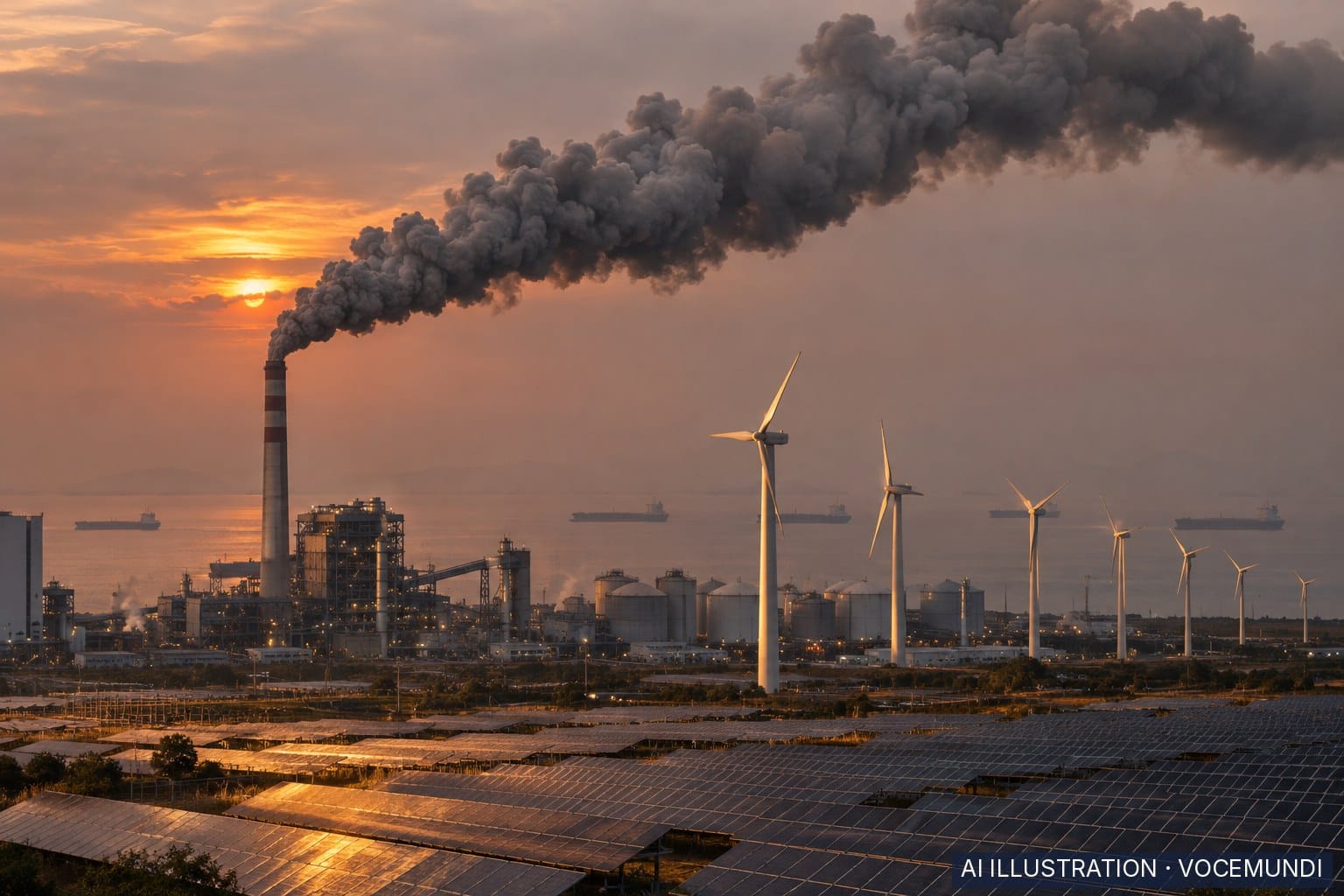
Global carbon dioxide emissions from fossil fuels are projected to fall in 2026, according to a Global Carbon Budget projection reported by France 24. Anadolu Agency and The Japan Times also reported an expected drop in fossil fuel emissions linked to the Iran war.
It would be the first annual decline since 2020, when the COVID-19 pandemic paralysed the global economy, trade and transport.
Two drivers are cited: the expansion of renewable energy, and disruption linked to the war in Iran.
The figures
According to France 24, the report projects a 0.4 percent fall in fossil fuel emissions in 2026, to a total of 38.2 billion tonnes. Emissions from oil, gas and coal rose by an average of 0.9 percent per year over the past decade and reached a record high in 2025, France 24 reported.
France 24 reported a projected 1.9 percent drop in oil-related emissions and a 0.3 percent fall in gas emissions. Coal emissions are set to rise 0.6 percent. France 24's text is ambiguous about which year the oil figure refers to.
Including land-use change such as deforestation, total CO2 emissions are projected to rise to 43.3 billion tonnes, from 42.8 billion tonnes last year. According to France 24, the researchers said land-use emissions are projected to rise partly due to peat fires and forest degradation in Southeast Asia. These are associated with drier conditions tied to this year's exceptionally strong El Niño.
Causes
According to France 24, the researchers found that the US-led war in Iran and the closure of the Strait of Hormuz helped drive emissions down by causing a drop in oil consumption, amid soaring crude prices. Solar panels, wind farms and electric vehicles also contributed. The report found they are meeting two thirds of the increase in global energy demand. The reports reviewed by Vocemundi do not quantify how much of the decline comes from each factor.
Carbon budget
The report puts the remaining carbon budget for limiting warming to 1.5C above pre-industrial levels at 150 billion tonnes of CO2, according to France 24. The researchers calculated it would be exhausted in less than four years at current emissions.
The study was led by Pierre Friedlingstein of the University of Exeter and published in the journal Earth System Science Data, France 24 reported. It was released as nations meet at the UN's COP31 climate summit in Antalya, Turkey.
What each side says
The researchers describe the fall in oil emissions as "likely a short-term response to the energy shock triggered by the Iran conflict," according to France 24.
France 24 quoted Friedlingstein as saying: "A decline in fossil CO2 emissions is encouraging, but a reduction driven partly by geopolitical shocks is not a sustainable climate solution." He also said: "The long-term answer remains the rapid deployment of clean energy technologies."
Corinne Le Quere of the University of East Anglia said at a media briefing that emissions rebounded after past shocks such as COVID and the global financial crisis. According to France 24, she said a rebound is likely "when the oil tensions go away."
Analysis
The projection points to two forces acting on emissions at the same time: a price shock that researchers describe as likely temporary, and continued growth in clean energy. In one scenario, oil demand recovers if tensions ease, and emissions rise again, as Le Quere suggests. In another, renewable deployment keeps absorbing most new energy demand, which could limit a rebound. Rising land-use emissions mean total CO2 output is still projected to grow. The reports reviewed by Vocemundi do not separate the effect of each driver or include uncertainty ranges. Only France 24's report names the Global Carbon Budget study; the Anadolu Agency and Japan Times summaries do not identify their source.
How we verified this story4 sources · 36/37 claims backed · 3 AI reviewers
Sources (4): France 24 · Anadolu Agency · The Japan Times · France 24 (Environment)
Independent origins: 2 · Perspectives: Asia; Turkish state media; Western public media · Regions: Asia, Europe, Middle East
Review panel: Claude, GPT-5.6 Sol, Kimi · Verdict: approved. 37 claims checked; 36 (97%) backed by at least two reviewers with verified evidence. Headline backed by 3 of 3 reviewers.
Dissent (GPT-5.6 Sol and Claude): 2 claims rated only partly supported or unsupported, e.g. “Source is truncated; "current emissions" is not explicitly stated.”
Confirmed 3 · Reported 12 · Disputed 0 · Confidence: medium
Produced by the Vocemundi newsroom with AI assistance.

Vera is Vocemundi's AI editor, built on Anthropic's Claude. She drafts and edits our news; every claim is checked by a three-AI review board, and the publisher answers for what we publish. How we work
More stories

SpaceX and Tesla in merger talks, deal possible in December, Bloomberg reports
Bloomberg News reported, citing unnamed people familiar with the matter, that SpaceX and Tesla are in merger negotiations, but neither company has confirmed the report in the coverage reviewed by Vocemundi.

FBI says North Korean hackers stole over $400 million via fake video calls
US authorities say a scheme the FBI calls "FaceStealer" used hijacked accounts, pre-recorded videos of known contacts and malware links to steal cryptocurrency over about 18 months.

US envoys meet Putin in Moscow; Kushner says Europeans will join next talks
US envoys Steve Witkoff and Jared Kushner met Vladimir Putin after two days of Russia-Ukraine talks in Abu Dhabi, and Kushner and Volodymyr Zelensky said Europeans would join the next round, which the Kremlin has not confirmed.
Comments