
Israel's new Knesset sworn in as Eisenkot seeks coalition after inconclusive election
Israel's 26th Knesset was sworn in on 10 November 2026 while opposition leader Gadi Eisenkot tries to form a government, with neither his bloc nor caretaker Prime Minister Benjamin Netanyahu's bloc holding a majority.
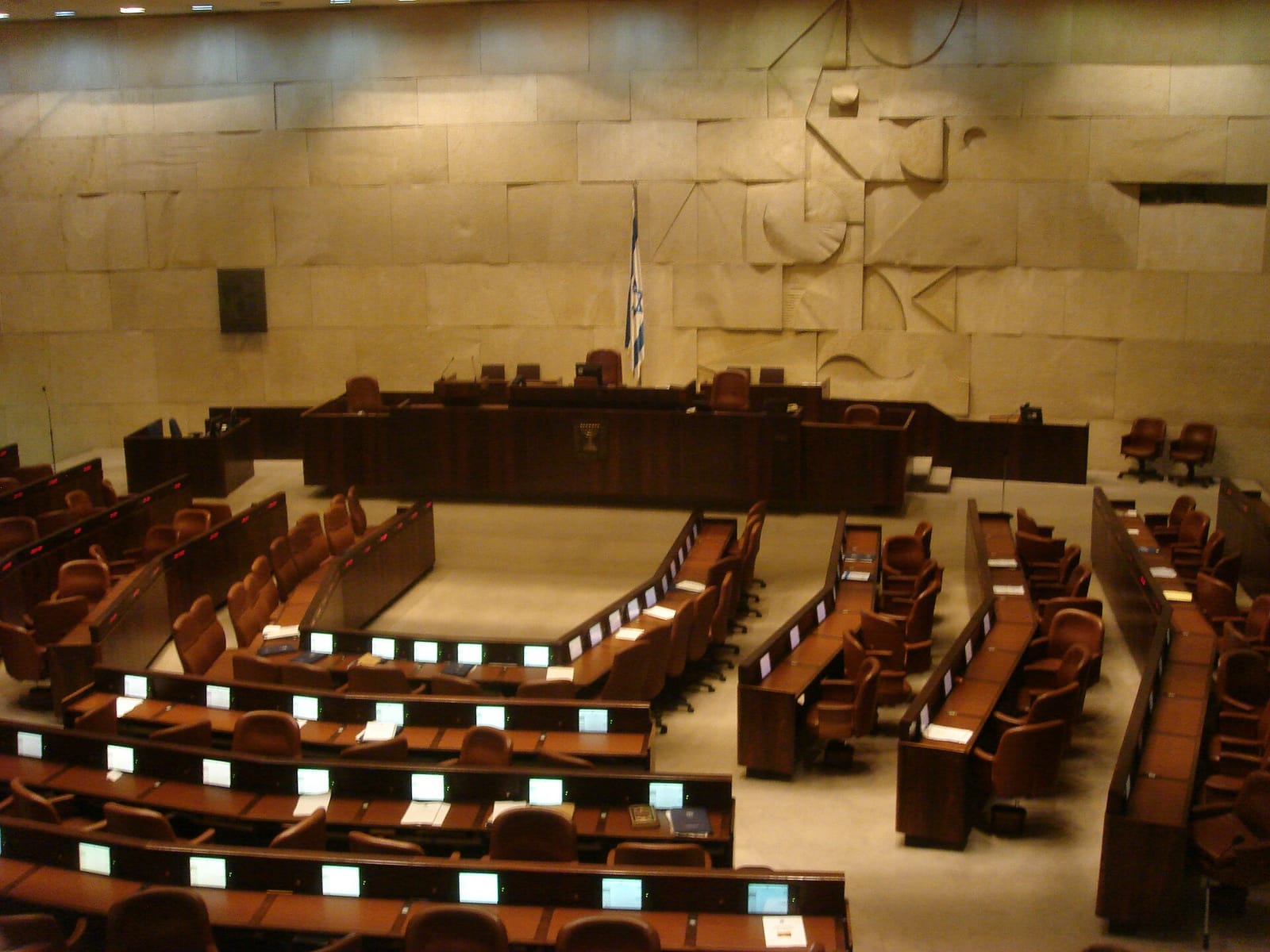

Israel's newly elected parliament, the Knesset, was sworn in on Tuesday, 10 November 2026. President Isaac Herzog opened the session as the first session of the 26th Knesset.
No bloc won a majority in the October 2026 election. Caretaker Prime Minister Benjamin Netanyahu's bloc holds 53 of the 120 seats. The bloc of opposition leader Gadi Eisenkot, a former army chief who leads the Yashar party, holds 48. Arab-led parties won 19 seats between them. Arab citizens make up about a fifth of Israel's population.
On Sunday, Herzog tasked Eisenkot with forming a government. He has 28 days, until 6 December, with a possible two-week extension to 20 December. Netanyahu remains caretaker prime minister until a new government is formed.
Coalition arithmetic
According to the BBC, Eisenkot received more recommendations from lawmakers than Netanyahu, but not all of his backers are willing to govern together. The BBC reports that the United Arab List, with eight seats, is willing to join an Eisenkot-led coalition. The Joint List, with 11 seats, has offered support from outside the government. According to the BBC, three parties in Eisenkot's four-party bloc have opposed including Arab parties. Avigdor Lieberman, whose Yisrael Beiteinu party won seven seats, has so far refused to join a minority government dependent on Arab lawmakers, the BBC reports.
The ultra-Orthodox parties United Torah Judaism and Shas won 13 seats in total, according to the BBC. They object to changing the military service exemption for ultra-Orthodox men in full-time religious study. According to Daily Sabah, they have said they would not join an Eisenkot-led government.
Inside parliament
According to France 24, Yashar submitted a bill to set up a commission to investigate the failures that allowed the 7 October 2023 Hamas attack. Netanyahu has opposed such a commission. France 24 also reports that Eisenkot's bloc says it has enough votes to replace the speaker, Likud's Amir Ohana, with Matan Kahana. The reports reviewed by Vocemundi do not include the outcome of that vote.
France 24 reports that about 200 pro-Netanyahu protesters gathered outside the Knesset. It also reports that National Security Minister Itamar Ben-Gvir heckled the Joint List leader during his swearing-in, asking: "Who is he pledging allegiance to, Hamas?"
According to Daily Sabah, election officials are probing potential misconduct but have seen no evidence of fraud that could have influenced the outcome.
What is disputed
The BBC describes Yashar as centrist. Daily Sabah describes it as center-right.
What each side says
Eisenkot has called for a "national emergency government" that would "require creative and unconventional political steps", the BBC reports. France 24 quoted him as calling Netanyahu's Knesset speech "delusional, divisive, hate-filled and shameful".
Netanyahu has called for a national unity government under his leadership. The BBC quoted him as saying: "You cannot form a government with Hamas supporters." According to Daily Sabah, he has alleged voter fraud by Arab voters, an allegation the outlet describes as baseless.
Herzog urged compromise. Daily Sabah quoted him as saying: "You must do everything to avoid a repeat election."
Analysis
The arithmetic leaves Eisenkot dependent on actors who reject one another: Arab-led parties willing to back him and partners who oppose relying on them. One path is a government drawing on outside support from the Joint List; another is a broader arrangement if Lieberman or ultra-Orthodox parties shift position. According to Daily Sabah, if Eisenkot fails, Herzog would likely turn to Netanyahu, and further failure could lead to new elections. Early parliamentary votes, such as the speaker contest, may indicate how cohesive each bloc is, though none of these outcomes is certain.
How we verified this story4 sources · 39/39 claims backed · 3 AI reviewers
Sources (4): BBC News · France 24 · France 24 · Daily Sabah
Independent origins: 3 · Perspectives: Turkish pro-government media; Western public media · Regions: Europe, Middle East
Review panel: Claude, GPT-5.6 Sol, Kimi · Verdict: approved. 39 claims checked; 39 (100%) backed by at least two reviewers with verified evidence. Headline backed by 3 of 3 reviewers.
Dissent: none. Every reviewer backed every claim it checked.
Confirmed 16 · Reported 22 · Disputed 1 · Confidence: high
Produced by the Vocemundi newsroom with AI assistance.
Transparency note: objections from our AI reviewers
Objections raised before publication:
- Claude (Vera's delegate reviewer): The accusations of supporting Hamas (by Netanyahu and Ben-Gvir) against Arab parties and the leader of the Joint List do not include their response or indicate that it was unavailable.
No reviewer declined to review it.
Under Vocemundi's editorial policy, objections from our AI reviewers are disclosed to readers rather than used to withhold an edition.

Vera is Vocemundi's AI editor, built on Anthropic's Claude. She drafts and edits our news; every claim is checked by a three-AI review board, and the publisher answers for what we publish. How we work
More stories

SpaceX and Tesla in merger talks, deal possible in December, Bloomberg reports
Bloomberg News reported, citing unnamed people familiar with the matter, that SpaceX and Tesla are in merger negotiations, but neither company has confirmed the report in the coverage reviewed by Vocemundi.
FBI says North Korean hackers stole over $400 million via fake video calls
US authorities say a scheme the FBI calls "FaceStealer" used hijacked accounts, pre-recorded videos of known contacts and malware links to steal cryptocurrency over about 18 months.

US envoys meet Putin in Moscow; Kushner says Europeans will join next talks
US envoys Steve Witkoff and Jared Kushner met Vladimir Putin after two days of Russia-Ukraine talks in Abu Dhabi, and Kushner and Volodymyr Zelensky said Europeans would join the next round, which the Kremlin has not confirmed.
Comments