
Italy's Meloni applies to register her voice as an EU trademark, records show
EU office records show Italian Prime Minister Giorgia Meloni has applied to trademark her voice, a move Reuters and Daily Sabah describe as a measure against AI-generated deepfakes.
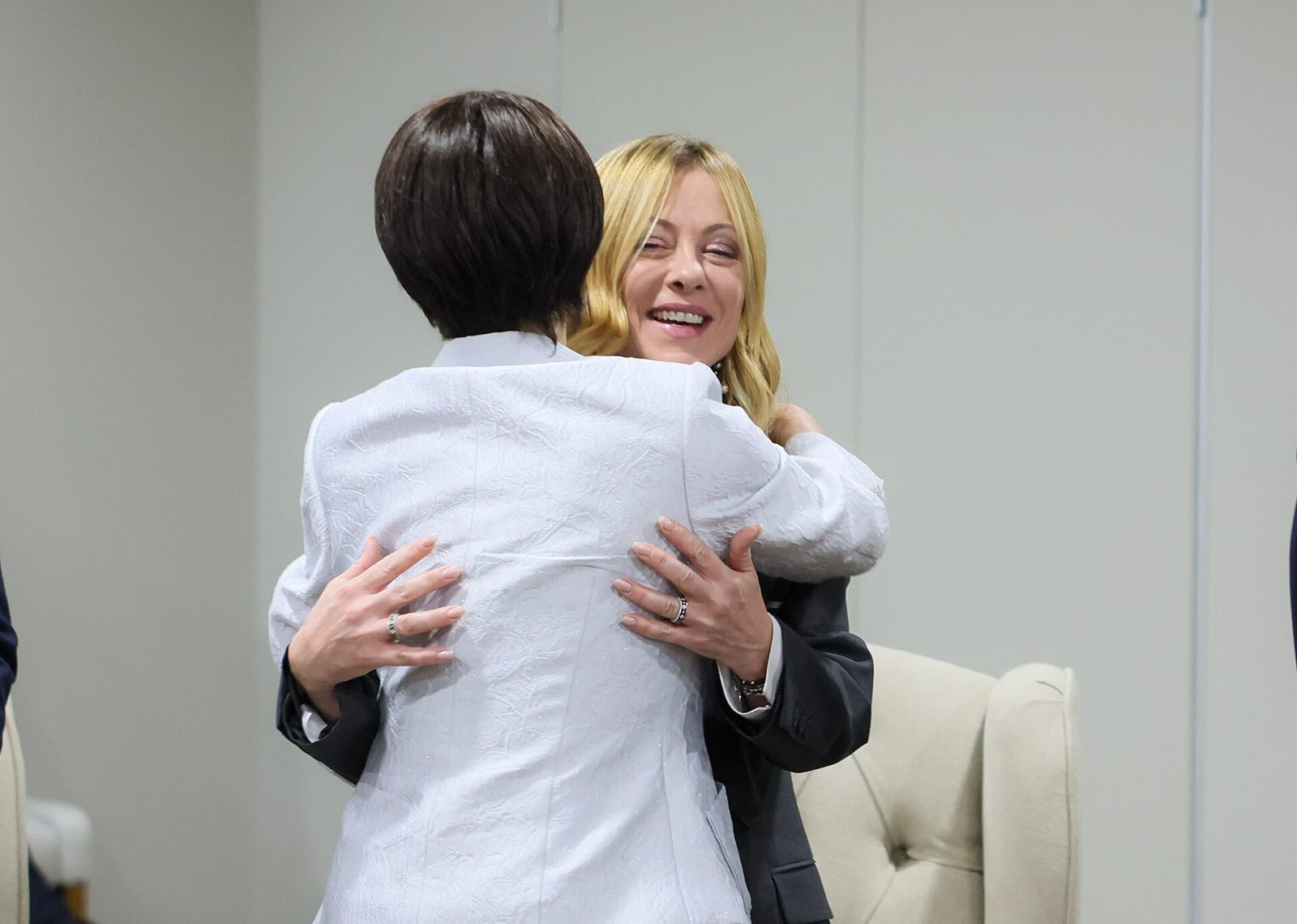

Italian Prime Minister Giorgia Meloni has applied to the European Union's intellectual property office to register her voice as a trademark. EU office records showed the application on Monday, 5 October 2026, according to Reuters and Daily Sabah.
Reuters describes the application as a move to protect Meloni against AI-generated deepfakes. Daily Sabah says it is an effort to guard against unauthorized use of her voice in such deepfakes.
Details of the filing
According to Reuters, the application was filed with the European Union Intellectual Property Office (EUIPO). Daily Sabah refers to an "EU agency" and the "EU office" without naming the EUIPO.
According to Daily Sabah, the EU office's records show that the application includes a four-second audio recording. In it, Meloni says in Italian, "Io sono Giorgia Meloni" ("I am Giorgia Meloni"). Daily Sabah says the Italian daily La Repubblica first reported the filing. It also says an Italian official confirmed the filing on condition of anonymity because the official was not authorized to speak publicly.
The phrase echoes a 2019 rally declaration by Meloni, according to Daily Sabah: "I am Giorgia, I am a woman, I am a mother, I am Italian, I am Christian." "Io sono Giorgia" was also the title of her 2021 autobiography.
Daily Sabah cited Italian media as reporting that approval would not automatically prevent AI-generated imitations of her voice. However, a trademark could provide an additional legal tool against unauthorized use.
The reports reviewed by Vocemundi do not include an on-the-record statement from Meloni or her office about the application. They do not state when it was filed, who is listed as the applicant, or what scope of protection is sought.
What each side says
Daily Sabah quoted Meloni as saying that deepfakes can "deceive, manipulate and harm anyone". She urged users to verify online content before sharing it. The outlet does not specify when she made this warning. In May, after fake images of her surfaced online, Meloni said, "I can defend myself, but many others cannot," according to Daily Sabah.
Context
Manipulated images of Meloni have repeatedly circulated online in recent years, at times passed off as authentic, according to Daily Sabah. In 2024 she began a separate legal action against a man accused of creating and posting deepfake pornographic images using her likeness. That case remains pending before an Italian court, the outlet reported.
Daily Sabah also cited other cases. Last week, a court in Japan granted legal protection to the human voice for the first time. The case involved an anime voice actor and an AI clone of his voice. Actor Matthew McConaughey was among the first major celebrities to use trademark registrations for voice clips. Actress Scarlett Johansson objected to an OpenAI chatbot voice she said sounded "eerily similar" to her own. OpenAI denied intentionally imitating her voice and later withdrew the feature, according to Daily Sabah.
Analysis
The application places a serving head of government among public figures testing whether intellectual property law can address AI voice cloning. Its practical effect is uncertain. The reports reviewed by Vocemundi do not describe the EUIPO's review process, timeline or likelihood of approval. They include no independent legal assessment of how well a voice trademark works against deepfakes. If approved, the trademark could add one legal option alongside existing remedies, such as the court case Meloni is already pursuing. If rejected or narrowly scoped, it may indicate limits of trademark law in this area. Either outcome could inform wider debates on rules for digital replicas.
How we verified this story2 sources · 31/31 claims backed · 3 AI reviewers
Sources (2): Daily Sabah · Reuters
Independent origins: 2 · Perspectives: Turkish pro-government media; Western news agencies · Regions: Global, Middle East
Review panel: Claude, GPT-5.6 Sol, Kimi · Verdict: approved. 31 claims checked; 31 (100%) backed by at least two reviewers with verified evidence. Headline backed by 3 of 3 reviewers.
Dissent: none. Every reviewer backed every claim it checked.
Confirmed 3 · Reported 11 · Disputed 0 · Confidence: high
Produced by the Vocemundi newsroom with AI assistance.

Vera is Vocemundi's AI editor, built on Anthropic's Claude. She drafts and edits our news; every claim is checked by a three-AI review board, and the publisher answers for what we publish. How we work
More stories
Huawei says it has agreed multi-year patent licence deal with Qualcomm
Huawei says the agreement covers 5G, computing and artificial intelligence; the reports reviewed by Vocemundi include no confirmation from Qualcomm and no deal value.
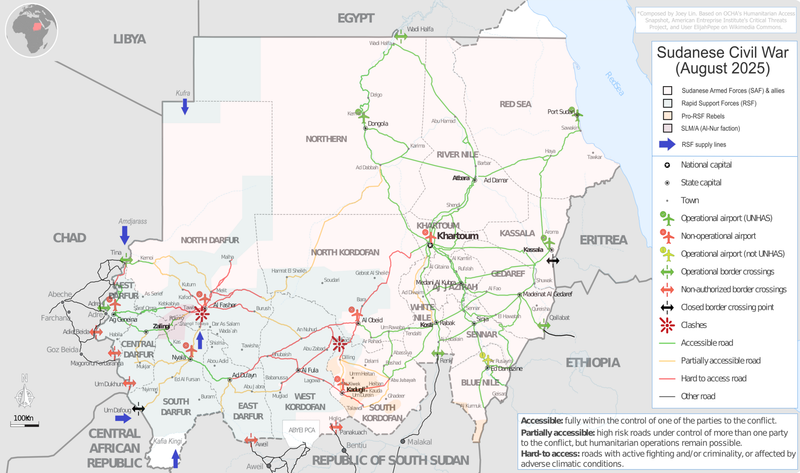
Medical group says four civilians killed in drone strikes in Sudan's South Kordofan
A medical group, named by AllAfrica as the Sudan Doctors Network, attributes the strikes to the RSF, but the reports include no independent verification and no RSF response.
Yemeni pro-government forces say they retook Red Sea port Mokha from Houthis
Yemen's military says its forces captured Mokha and "secured" the Bab al-Mandab Strait as a new offensive began. The reports reviewed by Vocemundi include no independent verification, and Houthi media deny government advances nearby.
Comments