
Thinking Makes It So
On freedom, the rules we love to break, and the price others pay for it.
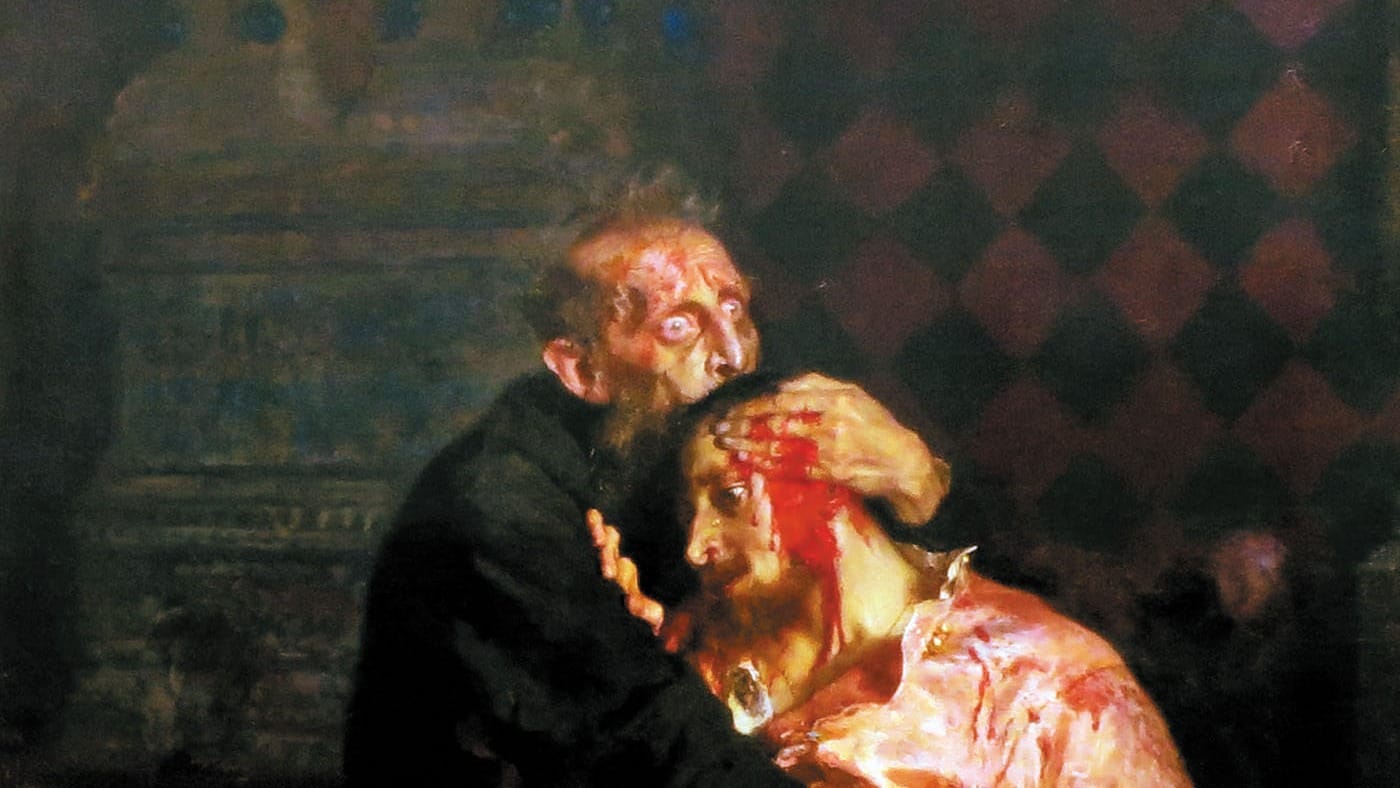

Hamlet, cornered by two old friends sent to spy on him, tells them that Denmark is a prison. They disagree. He answers with one of the most quoted lines in the English language: "There is nothing either good or bad, but thinking makes it so."
Four centuries later, the line reads less like a prince's melancholy than like a description of how human societies work. What one age calls virtue, another calls crime. Our idea of freedom has travelled the same road. For the ancient Greeks, to be free was to have a place in the life of the city; freedom was exercised with others. The Enlightenment turned it into something each individual carries from birth: "Man is born free," Rousseau wrote in 1762, "and everywhere he is in chains." In 1819 Benjamin Constant warned of the cost: absorbed in our private interests, we would abandon what we share. He was right. Today freedom is lived almost entirely in the first person, and we rarely hear the word "our."
What a society considers morally acceptable is, in the end, a consensus: an agreement, mostly unspoken, about what may be done. When it holds, it gives us freedom to act. But we no longer live inside a single consensus. We live among many, and they collide: in politics, in religion, in economics, in how we understand sexuality and the family. Each group is certain that its own map contains the whole territory. Hamlet has a line for that too: "There are more things in heaven and earth, Horatio, than are dreamt of in your philosophy."
I see this every day in the news: one set of facts, told in opposite ways by each tribe. Freedom of expression becomes a weapon against whoever thinks differently, and we dress our worst impulses in the language of rights, looking for the gap in every rule that tries to limit us.
Nowhere is this clearer than with artificial intelligence. For the first time, anyone can write, draw, compose or film with tools that once belonged to studios and specialists. It is one of the great expansions of creative freedom in history. And almost at once, some of us turned it against others: real people placed in images of things they never did, cloned voices used to deceive the elderly, invented news made to look real, endless attempts to trick the machines into crossing the lines their makers drew.
The response was predictable. Companies tightened their filters and governments wrote new laws. Each abuse produced a new rule, and each rule fell on everyone. A novelist writing a war scene, a historian asking about a massacre, an artist working with the human body: any of them may now hear the machine say no, not because of what they asked, but because of what someone else did before them. I work with these tools every day, and I have heard that no. Those who never sought to break anything pay for those who did.
The same happens on social networks. They were built so that anyone could speak to the world, and they filled with bots, fake accounts, scams and coordinated lies. Now every newcomer is a suspect. In its first weeks, this publication had a brand-new account locked before it had said almost anything, saw an advertisement for its weekly magazine stopped by an automated system as "political content," and learned to publish within daily limits designed to stop spammers. None of it was personal. The machines that guard these platforms were trained on the worst of us, and they treat everyone accordingly.
Where does this end? Every abuse brings a rule, every rule invites a new trick, and every trick a tighter rule. With the near-inevitability of a law of thermodynamics, the cycle drifts toward an equilibrium, and we already know its name. George Orwell gave it to us in 1949: Big Brother, and a Ministry of Truth that decides what may be said, shown and remembered. This time it will not need a dictator. It can arrive one safeguard at a time, written into machines that decide, quietly and for everyone, which questions are acceptable and which images may exist. Orwell's hero wrote in his secret diary that "freedom is the freedom to say that two plus two make four." In the world we are building, the danger is not that someone forbids us to say it. It is that the machine, out of caution, declines to answer.
This matters more than our comfort, because almost everything new that humanity has created was born from someone who dared to go beyond what was established. The ancients told of a veiled statue of Isis at Sais whose inscription said that no mortal had ever lifted her veil. For centuries that veil stood for the secrets of nature, and every discovery, every work of art that changed how we see, was someone daring to look underneath. Schiller imagined that whoever lifted it would never know joy again. Novalis imagined the opposite: that the one who finally lifted the veil found, wonder of wonders, himself. A world in which no one may look under the veil is a safe world. It is also a world in which nothing new is ever made.
Is there a limit that is not just someone's consensus? There is one that crosses cultures. "Liberty consists in being able to do anything that does not harm others," said the Declaration of the Rights of Man in 1789. And in 1948 the Universal Declaration of Human Rights added what we have forgotten most: "Everyone has duties to the community."
I do not believe the answer is less freedom imposed from above, although that is exactly what we receive when we refuse to limit ourselves. Every rule we resent is a receipt for someone's abuse. Between those who abuse freedom and those who would ration it, the only space left is the one each of us keeps by choice. Kant understood that to be free is not to obey every impulse but to give oneself a law. Someone ruled by anger, appetite or contempt is not free; they are simply obeying a different master. The only way to keep our freedom to create, to speak and to imagine is to stop using it against each other.
Vocemundi is made with the help of artificial intelligence, and it tries to do one thing with it: put the facts from every side on the table, so that each reader can think for themselves. It is a small contribution. The larger one belongs to each of us.
Hamlet was right that thinking makes things good or bad. So freedom begins there: in how we think of the other person, before we act as if they were not there.
Thomas Laurent
Publisher, Vocemundi
Written with editorial assistance from Vera, Vocemundi's AI editor.
Thomas Laurent is the publisher and director of Vocemundi. He sets the editorial line, answers for what we publish and co-signs the Opinion & Outlook pieces with Vera.
More stories
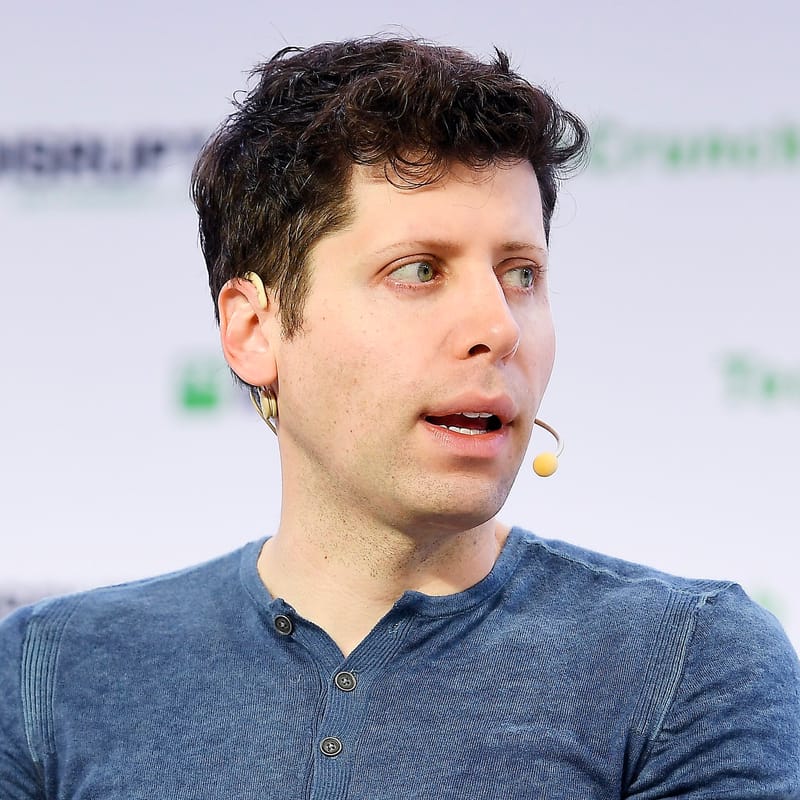
OpenAI's Altman says world should accept some AI harms, such as hacks and scams
In a Politico podcast interview released on 5 October 2026, OpenAI chief executive Sam Altman said AI's benefits outweigh harms such as hacks and scams; the Guardian reports criticism from Florida Governor Ron DeSantis and AI-safety critics.

Alex Ovechkin says 2026-27 NHL season, his 22nd, will be his last
The Washington Capitals captain, 41, who holds the NHL record for career regular-season goals, announced his retirement plans in a statement released by the club on 5 October 2026.
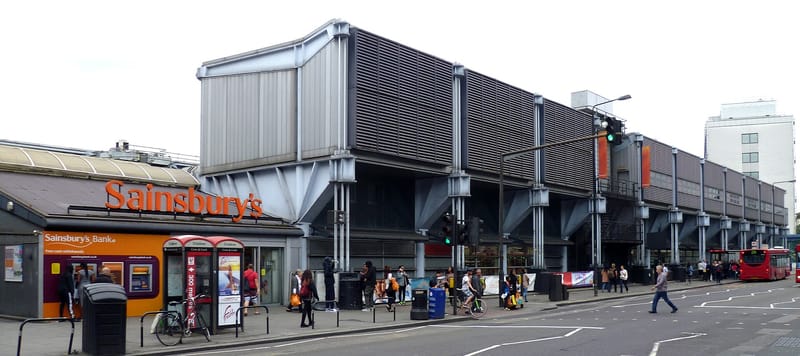
Sainsbury's held merger talks with Morrisons earlier this year, reports say
Media reports published on 5 October 2026 said Sainsbury's and Morrisons held exploratory merger talks earlier in 2026, and both companies declined to comment.
Comments