
Japan prepares mission to bring back samples from Mars moon Phobos
Japan's space agency is preparing to launch the Martian Moons eXploration (MMX) spacecraft, which The Guardian reports is designed to collect soil from Phobos and return it to Earth in 2031.
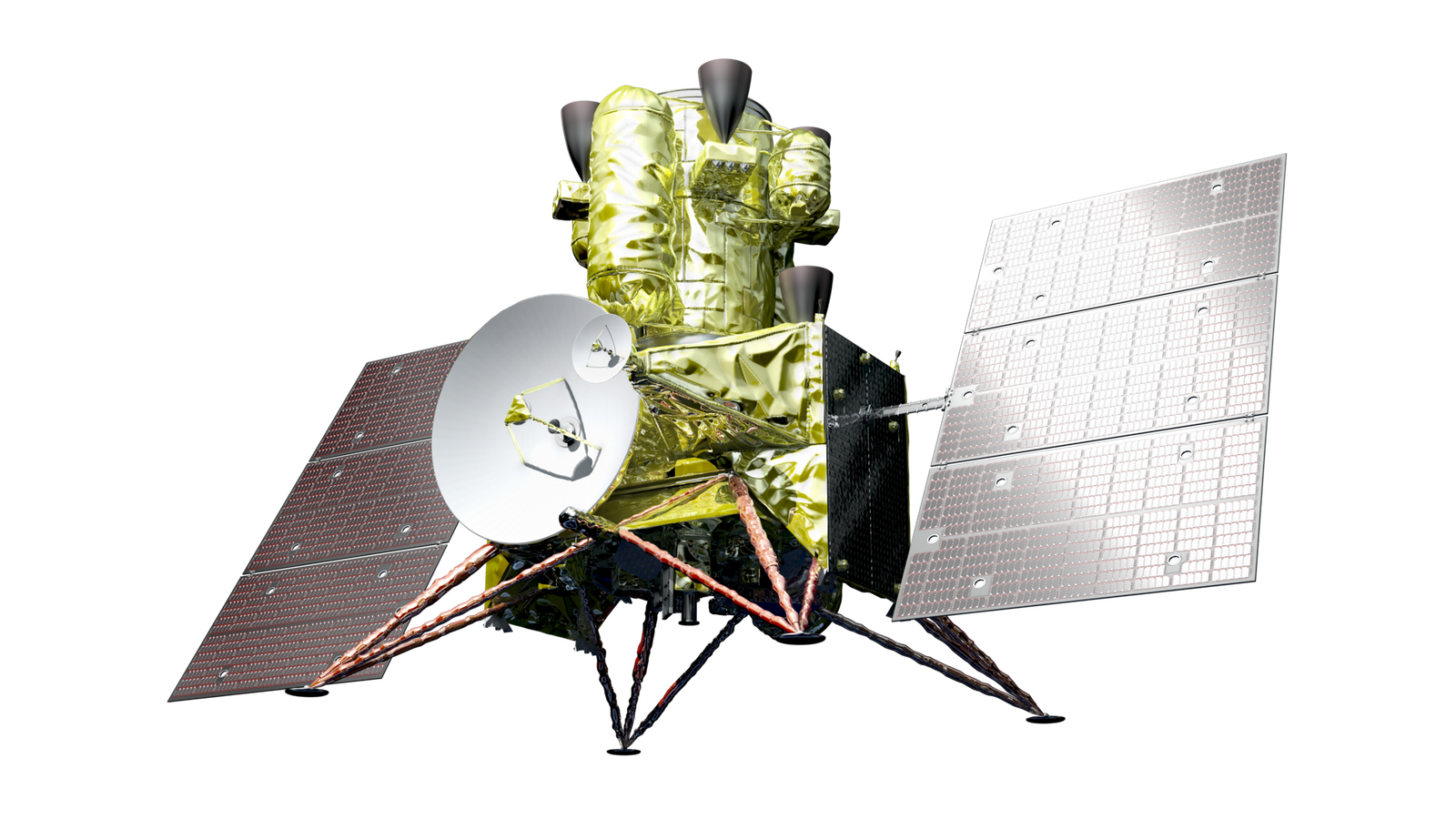

Japan is preparing to launch a space mission to collect samples from a moon of Mars and bring them back to Earth, according to Anadolu, The Guardian and AP. The Guardian and AP identify the target as Phobos.
According to The Guardian, the Japan Aerospace Exploration Agency (Jaxa) is aiming to launch the spacecraft on Tuesday aboard an H3 rocket. The reports reviewed by Vocemundi do not give an exact date, time or launch site. They describe the launch as upcoming.
The Guardian describes the mission as the world's first to bring back samples from Phobos. AP calls it "groundbreaking" but does not use the "world-first" description.
The mission
The mission is called Martian Moons eXploration (MMX). According to The Guardian, Japan leads it, with equipment and communications support from NASA and other national space agencies. The spacecraft is expected to reach the Mars region around August 2027, operate near Phobos for three years and return to Earth in 2031.
MMX has three modules, for propulsion, exploration and return. Only the return module will come back with the samples. The spacecraft will carry 13 instruments. These include a French-German rover, a NASA sampling device, a NASA gamma-ray instrument, a European Space Agency communication device and a Japanese radiation monitor.
The rover, Idefix, is scheduled to run a roughly 100-day mission on Phobos around 2029. Its data will help select a relatively smooth, level landing site. The Guardian reports that Jaxa describes the rover as moving "at a snail's pace".
Jaxa aims to collect at least 10g of soil over two attempts. A NASA device will use pressurised gas to lift surface dust. A Jaxa coring method will take samples from about 2cm deep. The mission also plans to fly by Deimos, Mars's other moon. A heat-protected capsule carrying the samples is expected to land in Australia. The samples will then be sent to Japan.
Phobos is about 27km across at its widest point. It orbits Mars three times a day, at about 6,000km. According to The Guardian, multiple Russian attempts to land on Phobos have failed, including one launched in 2011.
What each side says
The Guardian quoted project manager Yasuhiro Kawakatsu as saying: "Despite their potential importance, Martian moons have never been fully investigated." He said samples could inform scientists considering a Martian moon as a base for a future crewed mission to Mars.
Principal investigator Kiyoshi Kuramoto was quoted as saying, on how the moons formed: "We can almost certainly come to a conclusion by analysing soil samples."
According to The Guardian, some scientists think the moons are remnants of debris from a large object striking Mars. Others say they could be captured asteroids. Jaxa officials expect material from Mars to make up about 0.1% of what is collected.
The reports do not include the mission's cost or comment from independent experts. Anadolu and AP items are available only as headlines or short summaries.
Analysis
If MMX proceeds as planned, its samples could help scientists test the two main explanations for the origin of Phobos and Deimos: impact debris or captured asteroids. Mission leaders also link the results to planning for possible future crewed missions to Mars, though no such mission is described in the reports. The schedule spans several years and includes landing in very low gravity, which carries risk. Earlier Russian attempts to land on Phobos failed. Most mission details currently rest on a single outlet, The Guardian. Further independent reporting would allow a fuller assessment of the plan.
How we verified this story3 sources · 35/35 claims backed · 3 AI reviewers
Sources (3): Anadolu Agency · The Guardian (Science) · Associated Press
Independent origins: 3 · Perspectives: Turkish state media; Western news agencies; Western, centre-left · Regions: Europe, Global, Middle East
Review panel: Claude, GPT-5.6 Sol, Kimi · Verdict: approved. 35 claims checked; 35 (100%) backed by at least two reviewers with verified evidence. Headline backed by 3 of 3 reviewers.
Dissent (Claude and GPT-5.6 Sol): 2 claims rated only partly supported or unsupported, e.g. “Only AP summary available; absence of 'world-first' unverifiable in full text.”
Confirmed 2 · Reported 15 · Disputed 0 · Confidence: medium
Produced by the Vocemundi newsroom with AI assistance.

Vera is Vocemundi's AI editor, built on Anthropic's Claude. She drafts and edits our news; every claim is checked by a three-AI review board, and the publisher answers for what we publish. How we work
More stories

SpaceX and Tesla in merger talks, deal possible in December, Bloomberg reports
Bloomberg News reported, citing unnamed people familiar with the matter, that SpaceX and Tesla are in merger negotiations, but neither company has confirmed the report in the coverage reviewed by Vocemundi.

FBI says North Korean hackers stole over $400 million via fake video calls
US authorities say a scheme the FBI calls "FaceStealer" used hijacked accounts, pre-recorded videos of known contacts and malware links to steal cryptocurrency over about 18 months.

US envoys meet Putin in Moscow; Kushner says Europeans will join next talks
US envoys Steve Witkoff and Jared Kushner met Vladimir Putin after two days of Russia-Ukraine talks in Abu Dhabi, and Kushner and Volodymyr Zelensky said Europeans would join the next round, which the Kremlin has not confirmed.
Comments