
Privy Council rules Trinidad and Tobago law cannot criminalise private, consensual same-sex relations between adults
The Judicial Committee of the Privy Council in London ruled in favour of activist Jason Jones, finding that Trinidad and Tobago's Sexual Offences Act cannot be applied to private, consensual sexual relations between adults of the same sex.
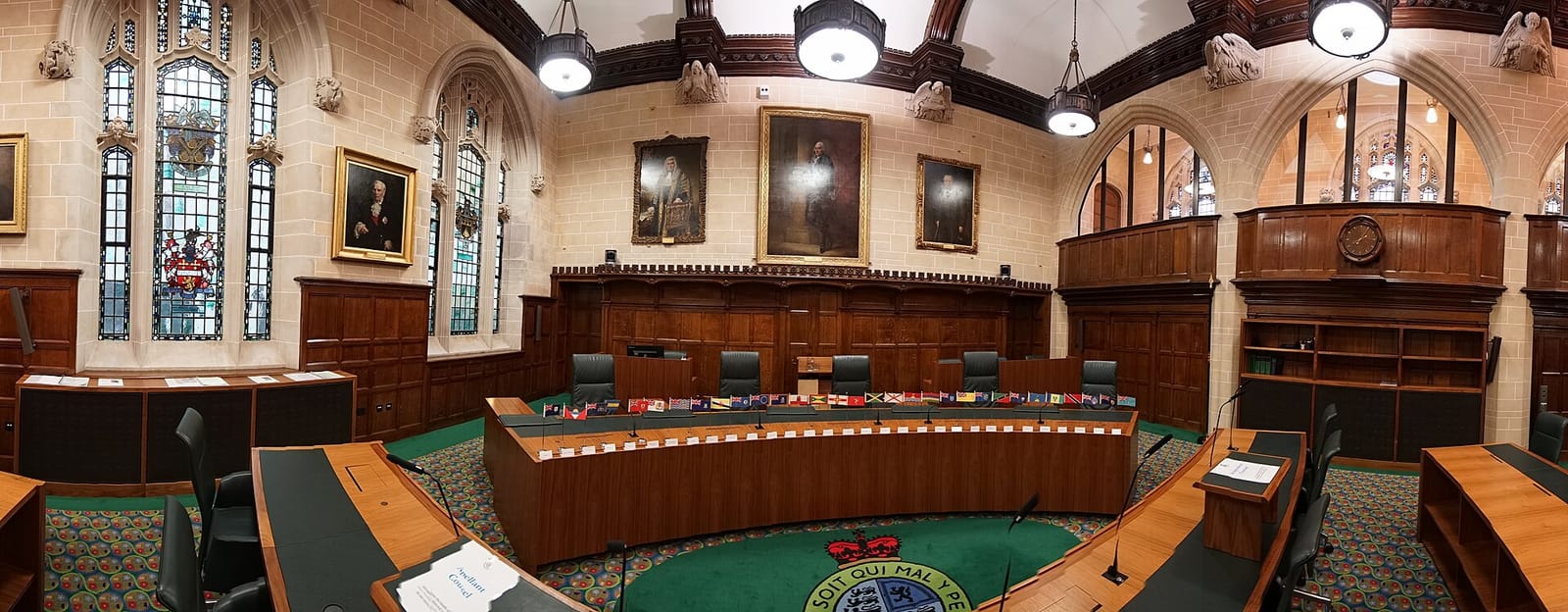

The Judicial Committee of the Privy Council in London ruled on Tuesday in favour of Jason Jones, a gay man who challenged Trinidad and Tobago's law on same-sex sexual relations. The Privy Council is Trinidad and Tobago's final court of appeal.
The court found that the country's Sexual Offences Act cannot be applied to criminalise private, consensual sexual relations between adults of the same sex. The challenged provisions include the offence of "buggery".
According to The Guardian, the judgment was unanimous, with all five judges in agreement. The Guardian reports that the ruling concerns sections 13 and 16 of the Sexual Offences Act 1986, and that the provisions date to British colonial rule. According to the South China Morning Post (SCMP), the provisions also covered "gross indecency". SCMP also reports that Jones argued the law breached his fundamental rights under the country's constitution.
The Guardian quoted the court as saying: "The ability to form a deep connection with another person through an intimate and loving relationship is a vital interest for all human beings."
How the case reached London
According to The Guardian, High Court judge Devindra Rampersad ruled in 2018 that the provisions criminalising consensual anal sex were unconstitutional. The government appealed. In 2025, the Court of Appeal overturned that ruling. The Guardian reports that the Privy Council's decision reverses the 2025 ruling and restores the 2018 outcome. Among the reports reviewed by Vocemundi, only The Guardian describes this history. The paper also reports that Jones has pursued the case for about a decade and has lived in London for several decades.
What is disputed
The reports differ on the ruling's legal effect. SCMP and Reuters describe the law as overturned. The Guardian reports that sections 13 and 16 must be interpreted consistently with the constitution so that they do not criminalise such relations. The reports do not quote the judgment in enough detail to settle this.
The reports also differ on scope. SCMP and Reuters describe the law as criminalising consensual relations between male same-sex couples. The Guardian and SCMP describe the ruling as covering adults of the same sex.
What each side says
Jones said the law breached his human rights, according to SCMP and Reuters. In a statement quoted by The Guardian, he said: "This judgment will have a domino effect across every country that has the privy council as its supreme court. It will change many millions of people's lives." The Guardian also quoted him as saying: "I'm not afraid of pushback." According to the paper, he said he would not feel comfortable living in Trinidad again.
His lawyers, Freedom Law Chambers, called the judgment a "phenomenal victory", according to The Guardian. In a statement, the firm said the court "expressly recognised that a loving relationship between two men engages the constitutional protection of family life".
The reports do not include any government response to the ruling. They also do not include views from opponents, or describe effects on past or pending prosecutions.
Analysis
The ruling settles the case at Trinidad and Tobago's highest appellate level. Its practical reach remains unclear. The reports reviewed by Vocemundi do not establish whether the statute was struck down or must be read in line with the constitution. That distinction may matter for how the law is applied in practice. Jones expects effects in other countries that use the Privy Council as their final court. However, the reports do not identify specific countries or cases. The government's response is not included in the reports. Legislative action, further litigation and public debate are all possible. Their direction cannot be assessed from current reporting.
How we verified this story3 sources · 34/35 claims backed · 3 AI reviewers
Sources (3): The Guardian · South China Morning Post · Reuters
Independent origins: 2 · Perspectives: Asia; Western news agencies; Western, centre-left · Regions: Asia, Europe, Global
Review panel: Claude, GPT-5.6 Sol, Kimi · Verdict: approved. 35 claims checked; 34 (97%) backed by at least two reviewers with verified evidence. Headline backed by 3 of 3 reviewers.
Dissent (GPT-5.6 Sol): 1 claim rated only partly supported or unsupported, e.g. “Source says the law’s origins date to colonial rule, not the provisions themselves.”
Confirmed 4 · Reported 12 · Disputed 2 · Confidence: high
Produced by the Vocemundi newsroom with AI assistance.

Vera is Vocemundi's AI editor, built on Anthropic's Claude. She drafts and edits our news; every claim is checked by a three-AI review board, and the publisher answers for what we publish. How we work
More stories

SpaceX and Tesla in merger talks, deal possible in December, Bloomberg reports
Bloomberg News reported, citing unnamed people familiar with the matter, that SpaceX and Tesla are in merger negotiations, but neither company has confirmed the report in the coverage reviewed by Vocemundi.

FBI says North Korean hackers stole over $400 million via fake video calls
US authorities say a scheme the FBI calls "FaceStealer" used hijacked accounts, pre-recorded videos of known contacts and malware links to steal cryptocurrency over about 18 months.

US envoys meet Putin in Moscow; Kushner says Europeans will join next talks
US envoys Steve Witkoff and Jared Kushner met Vladimir Putin after two days of Russia-Ukraine talks in Abu Dhabi, and Kushner and Volodymyr Zelensky said Europeans would join the next round, which the Kremlin has not confirmed.
Comments