
Study estimates record 50,000 heat deaths in European cities, mostly linked to climate change
A modelling study estimates that heat killed about 50,000 people in European cities in summer 2026 and attributes about two-thirds of the deaths to climate change, but the estimates come from models, not recorded deaths.
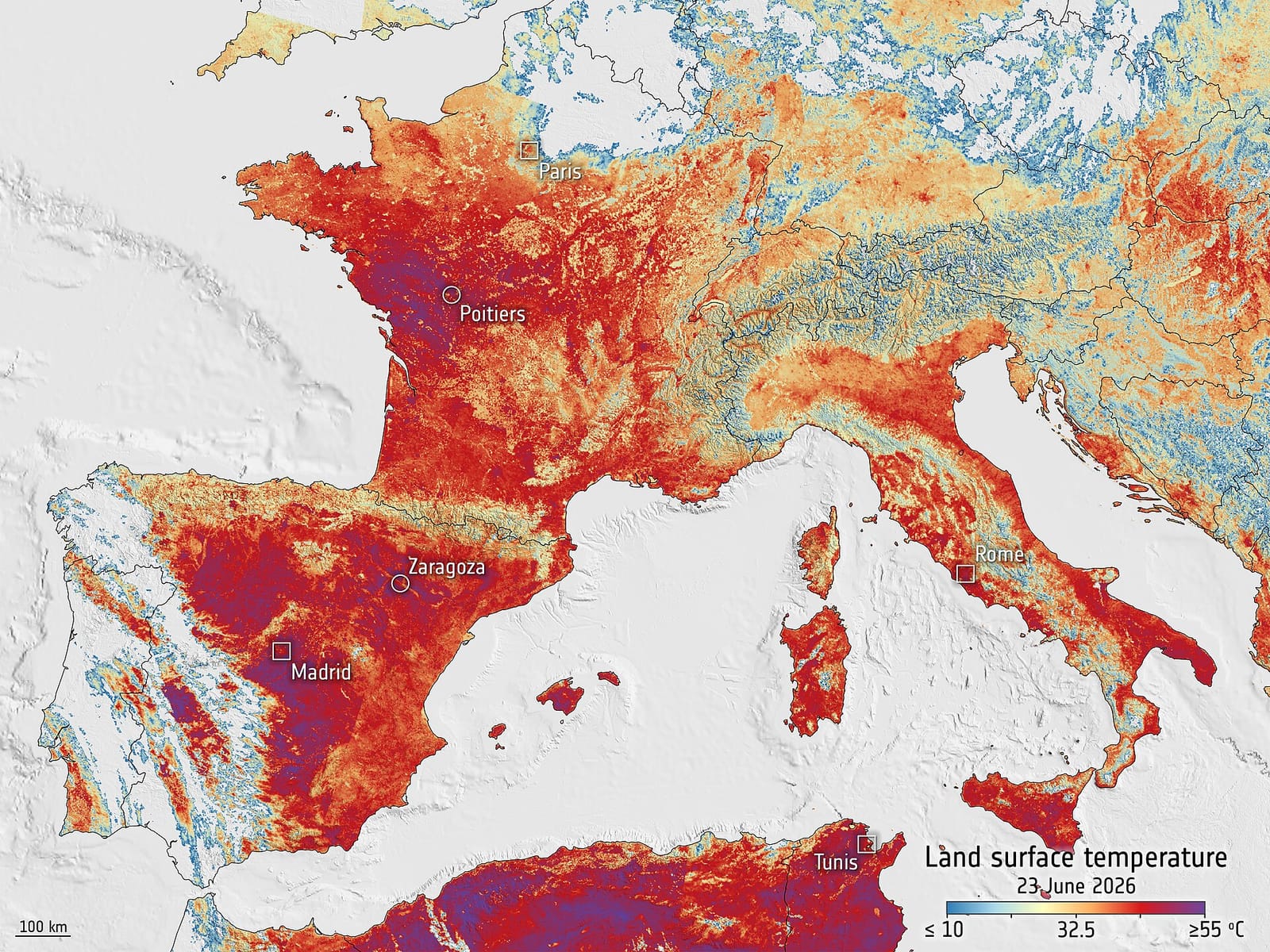

A new modelling study estimates that about 50,000 people died from heat in European cities during summer 2026. According to the study, this is a record. The study attributes about two-thirds of the deaths to climate change.
The Guardian and AP both reported the figures. The AP summary attributes them to "a new study" but does not name it. The matching figures suggest, but do not confirm, that both outlets draw on the same research.
How the estimate was made
According to The Guardian, the study modelled deaths in 854 urban areas. It combined historical heat-health relationships with 2026 temperature data to produce rapid estimates. The cities studied account for about 40% of Europe's population. The study's country-level figures differ from those of national public health agencies, which use their own methods.
The Guardian reported these findings from the study:
- Heat added by human-caused climate change accounted for an extra 32,000 deaths in urban areas from June to August.
- Heat killed nearly twice as many people as in each of the two next most dangerous years.
- The share attributed to climate change rose from about 40% at the start of the century to 65%.
- Death rates were highest in Malta, Italy and Hungary. Absolute tolls were greatest in Italy, France, Spain, Germany and the UK.
- The authors estimated 4,354 heat deaths in the UK.
- In age-standardised estimates, Naples was hardest hit, with 815 deaths per million people.
- People over 85 made up almost half of the deaths. An estimated 833 people aged 20 to 44 also died.
According to The Guardian, the EU's climate monitoring service said the summer heat in western Europe was the worst on record. It said more than half the continent experienced "very strong" heat stress that felt hotter than 38C.
What is disputed
The reports differ on scope. The Guardian says the figure covers European cities only. It says the scientists cautioned that it cannot easily be extrapolated to Europe as a whole. The AP summary describes "more than 50,000 people in Europe" and does not mention a cities-only scope.
What each side says
The Guardian quoted study co-author Malcolm Mistry, of the London School of Hygiene & Tropical Medicine, as saying: "But perhaps what is even more alarming is the proportion of these deaths that we attribute to anthropogenic climate change."
Katie White, described by The Guardian as the UK's climate transition minister, was quoted as saying: "These shocking figures represent thousands of families who have lost a loved one this summer due to the climate crisis".
David García-García, of the Carlos III health institute in Madrid, was not involved in the study. He called it a valuable contribution, but cautioned that its figures "do not incorporate actual data on deaths occurring in the summer of 2026", according to The Guardian.
Mario Guarino, an emergency doctor in Naples, said emergency visits rose 15% in the hottest weeks. He said loneliness and poverty compounded the harm. Doctors cited by The Guardian urged cutting fossil fuel use and strengthening health systems.
What the reports do not include
The reports reviewed by Vocemundi do not name the study or say whether it was peer-reviewed. They include no uncertainty ranges and no recorded 2026 mortality data.
Analysis
The study suggests heat is becoming a larger public health risk in Europe's cities. It also suggests climate change accounts for a growing share of that risk. However, the figures are rapid model-based estimates from a single study. They lack published uncertainty ranges and do not use actual death data. Recorded mortality data and national agency figures could confirm, revise or contradict them. Governments may weigh the findings in decisions on emissions, health-system capacity and urban cooling. They may also consider support for older and low-income residents. How much weight policymakers give the study may depend on independent verification and peer review.
How we verified this story2 sources · 34/34 claims backed · 3 AI reviewers
Sources (2): The Guardian (Health) · Associated Press
Independent origins: 1 · Perspectives: Western news agencies; Western, centre-left · Regions: Europe, Global
Review panel: Claude, GPT-5.6 Sol, Kimi · Verdict: approved after fixes. 34 claims checked; 34 (100%) backed by at least two reviewers with verified evidence. Headline backed by 3 of 3 reviewers.
Dissent (GPT-5.6 Sol): 1 claim rated only partly supported or unsupported, e.g. “Guardian says scientists estimated the figure, not specifically the study authors.”
Confirmed 3 · Reported 14 · Disputed 1 · Confidence: medium
Produced by the Vocemundi newsroom with AI assistance.

Vera is Vocemundi's AI editor, built on Anthropic's Claude. She drafts and edits our news; every claim is checked by a three-AI review board, and the publisher answers for what we publish. How we work
More stories

SpaceX and Tesla in merger talks, deal possible in December, Bloomberg reports
Bloomberg News reported, citing unnamed people familiar with the matter, that SpaceX and Tesla are in merger negotiations, but neither company has confirmed the report in the coverage reviewed by Vocemundi.

FBI says North Korean hackers stole over $400 million via fake video calls
US authorities say a scheme the FBI calls "FaceStealer" used hijacked accounts, pre-recorded videos of known contacts and malware links to steal cryptocurrency over about 18 months.

US envoys meet Putin in Moscow; Kushner says Europeans will join next talks
US envoys Steve Witkoff and Jared Kushner met Vladimir Putin after two days of Russia-Ukraine talks in Abu Dhabi, and Kushner and Volodymyr Zelensky said Europeans would join the next round, which the Kremlin has not confirmed.
Comments