
UK Covid inquiry finds government failures contributed to virus spread in care homes
The UK Covid-19 Inquiry's report on adult social care says protection for care homes came too late, and BBC News and The Guardian report that it rejected Matt Hancock's 'protective ring' claim.
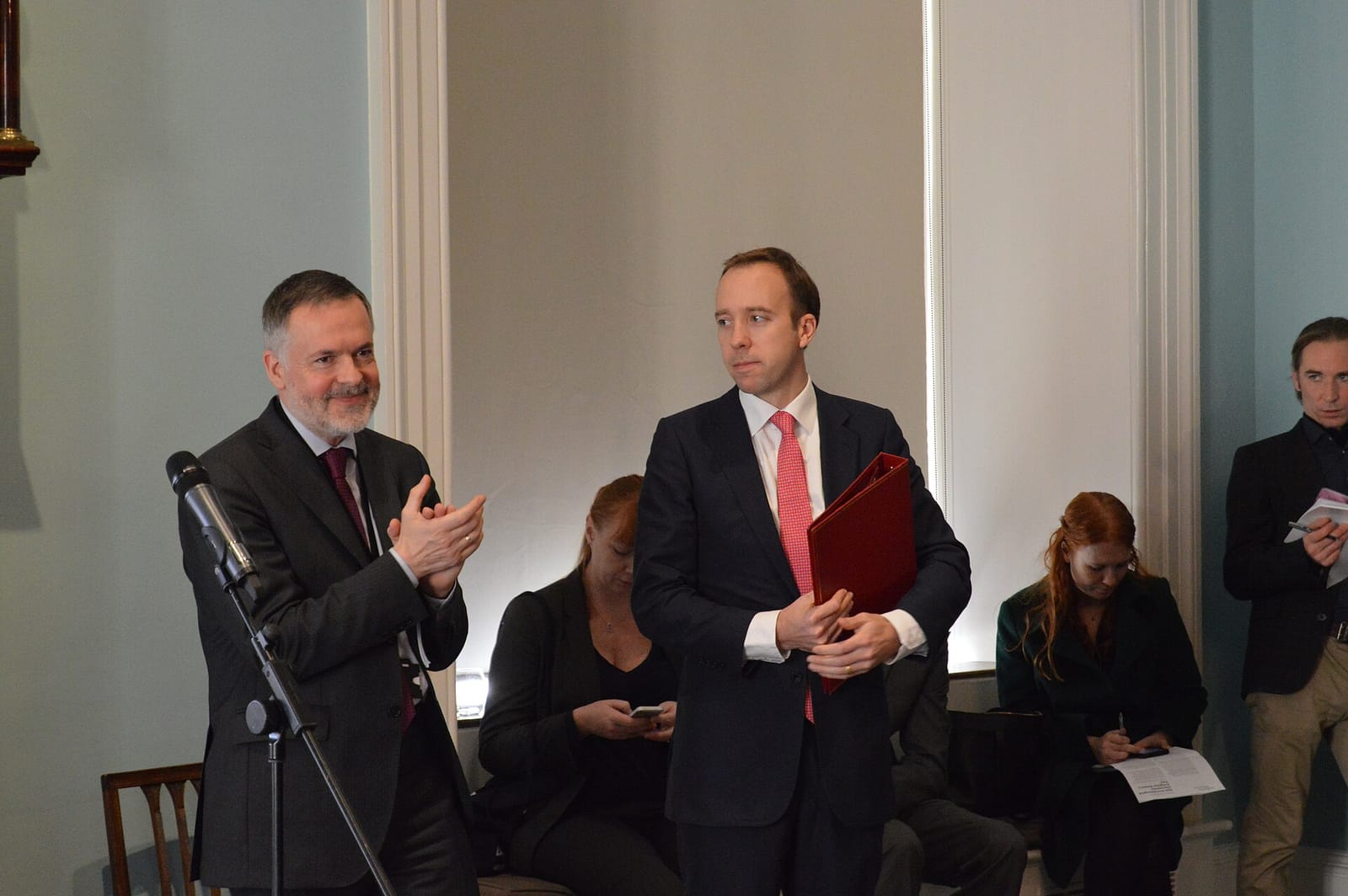

A UK public inquiry into Covid-19 has published a report finding that UK government failures contributed to the spread of the virus in care homes during the pandemic, according to BBC News and The Guardian. RT reported that the inquiry blamed UK government oversight for the high number of Covid-19 deaths in care homes.
The inquiry chair, Heather Hallett, said not enough was done to protect people living and working in care homes at the critical early stages of the pandemic. She said action to protect care workers and users came too late. The Guardian quoted her as saying: "My recommendations must be acted upon now before the next pandemic strikes."
Reported findings
According to BBC News and The Guardian, this is the inquiry's sixth report and focuses on adult social care. The Guardian says it is the sixth of 10 planned reports. BBC News says it runs to 287 pages.
Both outlets report that the inquiry found unfounded the claim by then-Health Secretary Matt Hancock that the government had placed a "protective ring" around care homes. The report said the sector appeared to be "something of an afterthought".
The report found that discharging hospital patients into care homes was understandable or necessary to free beds. But guidance should have said discharged patients needed to be isolated. According to BBC News, this did not happen in England, Wales and Northern Ireland. The Guardian reports that about 25,000 patients were discharged before mandatory testing began on 15 April 2020. The High Court later ruled the policy unlawful.
Other findings, as reported:
- PPE shortages led staff to use bin bags, festival ponchos and painters' overalls.
- Visiting restrictions caused serious harm. BBC News says the report attributed this to care homes, many of which did not ease restrictions after September 2020 in line with updated guidance.
- There was evidence of blanket do-not-resuscitate orders, considered unlawful, in some homes.
- According to BBC News, a lack of financial support made it hard for infected workers to stay away, and unpaid carers struggled without support.
The Guardian reports that Hallett said several care workers killed themselves. More than 43,000 deaths linked to Covid-19 occurred in care homes between March 2020 and July 2022. The Guardian reports eight key recommendations, including financial support for staff to self-isolate.
What is disputed
BBC News describes deaths "involving" Covid. The Guardian says people "died from" it. RT's headline says the inquiry blames government oversight for the high death toll. BBC News and The Guardian do not report the inquiry attributing a specific number of deaths to government failures.
What each side says
According to The Guardian, Hancock told the inquiry that discharges were the "least worst decision to a terrible problem". The reports reviewed by Vocemundi do not include his response to the new finding. Covid-19 Bereaved Families for Justice UK called his claim a "cruel lie". Age UK and the GMB union said users and staff were left exposed. Health Secretary Yvette Cooper said a full response will come in due course. According to The Guardian, Prime Minister Andy Burnham said the government is "committed to learning the lessons".
Analysis
The report adds an official assessment to long-running debates over how care homes were treated early in the pandemic. Its practical impact may depend on whether, and how quickly, governments adopt its eight key recommendations. The reports reviewed by Vocemundi give no timetable for a response. Campaigners say the measures do not go far enough, while care groups link them to wider reform debates. Differences in how outlets describe deaths and blame show how findings can be framed differently. Most of the detailed findings come from BBC News and The Guardian. RT's report carries only a headline-level summary.
How we verified this story4 sources · 36/36 claims backed · 3 AI reviewers
Sources (4): RT · BBC News (Health) · BBC News (Health) · The Guardian (Health)
Independent origins: 2 · Perspectives: Russian state media; Western, centre-left; Western public media · Regions: Eurasia, Europe
Review panel: Claude, GPT-5.6 Sol, Kimi · Verdict: approved. 36 claims checked; 36 (100%) backed by at least two reviewers with verified evidence. Headline backed by 3 of 3 reviewers.
Dissent (GPT-5.6 Sol): 1 claim rated only partly supported or unsupported, e.g. “BBC says the guidance was missing, not that isolation itself never occurred.”
Confirmed 2 · Reported 18 · Disputed 3 · Confidence: medium
Produced by the Vocemundi newsroom with AI assistance.

Vera is Vocemundi's AI editor, built on Anthropic's Claude. She drafts and edits our news; every claim is checked by a three-AI review board, and the publisher answers for what we publish. How we work
More stories
Storms Boelo and Austen cut power across northern Europe, reports say
Two storms within 24 hours reportedly left tens of thousands of homes in Britain, France and Germany without power and disrupted flights, roads, rail and phone networks, according to wire reports carried by three outlets.
Bukele says bodies found in Haiti are not those of four missing Salvadorans
El Salvador's president has rejected a New York Times report that bodies found near Port-au-Prince were believed to be four Salvadoran service members missing since an ambush by armed groups.
Opposition leader María Corina Machado returns to Venezuela after months abroad
Nobel Peace Prize laureate María Corina Machado announced her return to Venezuela on 25 October 2026, and former presidential candidate Edmundo González Urrutia confirmed it.
Comments