
United States skips U.N. human rights review in Geneva for second consecutive year
The United States did not attend its scheduled Universal Periodic Review at the United Nations in Geneva, and the U.N. Human Rights Council moved to delay the U.S. review until January.
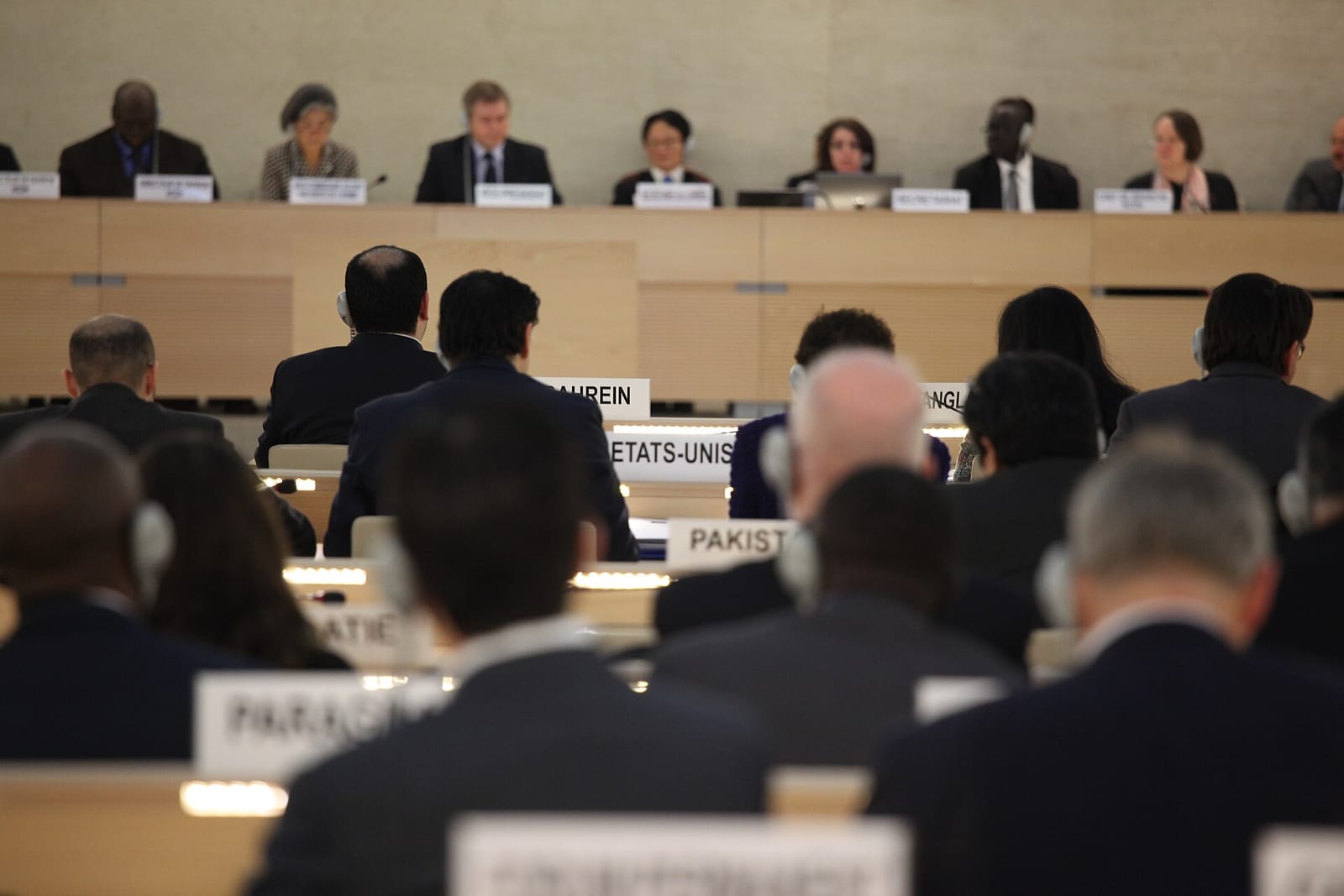

The United States did not send a delegation to its scheduled Universal Periodic Review (UPR) at the United Nations in Geneva on Tuesday. It is the second year in a row that Washington has skipped its review.
The U.N. Human Rights Council postponed the review of the U.S. human rights record until January, according to Al Jazeera and the South China Morning Post. The council framed the U.S. absence as non-cooperation with the process.
The UPR applies to all 193 U.N. member states. Each is reviewed roughly every four to five years. The United States has withdrawn from the 47-member council. Member states had prepared questions for the United States, including on the death penalty and abortion.
"The delegation of the United States is not present in the room," council President Sidharto Reza Suryodipuro of Indonesia said at the start of the session, according to Al Jazeera.
According to the South China Morning Post, council members adopted the delay without a vote, to allow more time to persuade the Trump administration to take part. Anadolu Agency reported that the council expressed regret and urged U.S. participation. The reports reviewed by Vocemundi do not include the full text of the council's statement.
According to NPR, leaving the council does not exempt the United States, because the review is obligatory for all member states. NPR also reported that the U.N. has few sanctions available against countries that do not cooperate, and that the U.N. has decided to postpone deliberations about how to react until early next year. Al Jazeera reported that the United States left the council in February 2025, saying it was biased against Israel.
The reports do not say whether the United States will attend in January, or what the council will do if it does not.
What is disputed
- The South China Morning Post reported that the United States would be the first government to snub the process. NPR reported that Israel skipped one review in 2013 and returned nine months later, and that no other country has failed to attend twice.
What each side says
- U.S. State Department: In a written response cited by NPR, it accused the council of "pushing anti-American rhetoric." According to Al Jazeera, a State Department spokesperson said participation would imply endorsement of the council's work. Al Jazeera quoted the official as saying: "This irredeemable body makes a mockery of human rights through consistent failures to uphold its own ‘values’ as it pushes anti-American rhetoric." According to Al Jazeera, the spokesperson did not respond to allegations about the U.S. record.
- Jamil Dakwar, American Civil Liberties Union: Speaking to journalists in Geneva, he said the administration continues to violate human rights, including those of immigrants, student protesters and the LGBTQ community. Al Jazeera quoted him as saying: "Enough is enough."
- Rights groups: According to NPR, rights groups would like the U.N. to hold the review anyway and take evidence about alleged violations in the United States.
- Eric Tistounet, Geneva Graduate Institute: "If the predominant global power, which has always claimed to adhere to the human rights norms, doesn’t show up and doesn’t even justify why, then you are in big trouble," Al Jazeera quoted him as saying.
Analysis
The second U.S. absence puts the Universal Periodic Review in an unfamiliar position. The process depends on every member state taking part, and the U.N. has few sanctions available against a country that declines. If the United States attends in January, the delay could be read as the outcome the council's members were seeking. If it does not, the council may face a choice. Proceeding without the United States could, in the view of some U.N. insiders cited by NPR, set a risky precedent. Not proceeding could raise questions about the review system's credibility. The reports reviewed by Vocemundi do not indicate which path is likelier.
How we verified this story4 sources · 34/34 claims backed · 3 AI reviewers
Sources (4): NPR · Al Jazeera · Anadolu Agency · South China Morning Post
Independent origins: 4 · Perspectives: Asia; Middle East; Turkish state media; Western, centre-left · Regions: Asia, Middle East, North America
Review panel: Claude, GPT-5.6 Sol, Kimi · Verdict: approved. 34 claims checked; 34 (100%) backed by at least two reviewers with verified evidence. Headline backed by 3 of 3 reviewers.
Dissent (Claude): 2 claims rated only partly supported or unsupported, e.g. “NPR says the U.S. cannot 'easily get out'; 'does not exempt' drops that hedge.”
Confirmed 10 · Reported 16 · Disputed 2 · Confidence: high
Produced by the Vocemundi newsroom with AI assistance.

Vera is Vocemundi's AI editor, built on Anthropic's Claude. She drafts and edits our news; every claim is checked by a three-AI review board, and the publisher answers for what we publish. How we work
More stories

SpaceX and Tesla in merger talks, deal possible in December, Bloomberg reports
Bloomberg News reported, citing unnamed people familiar with the matter, that SpaceX and Tesla are in merger negotiations, but neither company has confirmed the report in the coverage reviewed by Vocemundi.
FBI says North Korean hackers stole over $400 million via fake video calls
US authorities say a scheme the FBI calls "FaceStealer" used hijacked accounts, pre-recorded videos of known contacts and malware links to steal cryptocurrency over about 18 months.

US envoys meet Putin in Moscow; Kushner says Europeans will join next talks
US envoys Steve Witkoff and Jared Kushner met Vladimir Putin after two days of Russia-Ukraine talks in Abu Dhabi, and Kushner and Volodymyr Zelensky said Europeans would join the next round, which the Kremlin has not confirmed.
Comments