
US and Chinese officials raise concerns in video call before Trump-Xi Shenzhen meeting
US Treasury Secretary Scott Bessent and Trade Representative Jamieson Greer spoke with Chinese Vice Premier He Lifeng on 6 November 2026, with each side raising concerns about the other's recent actions.
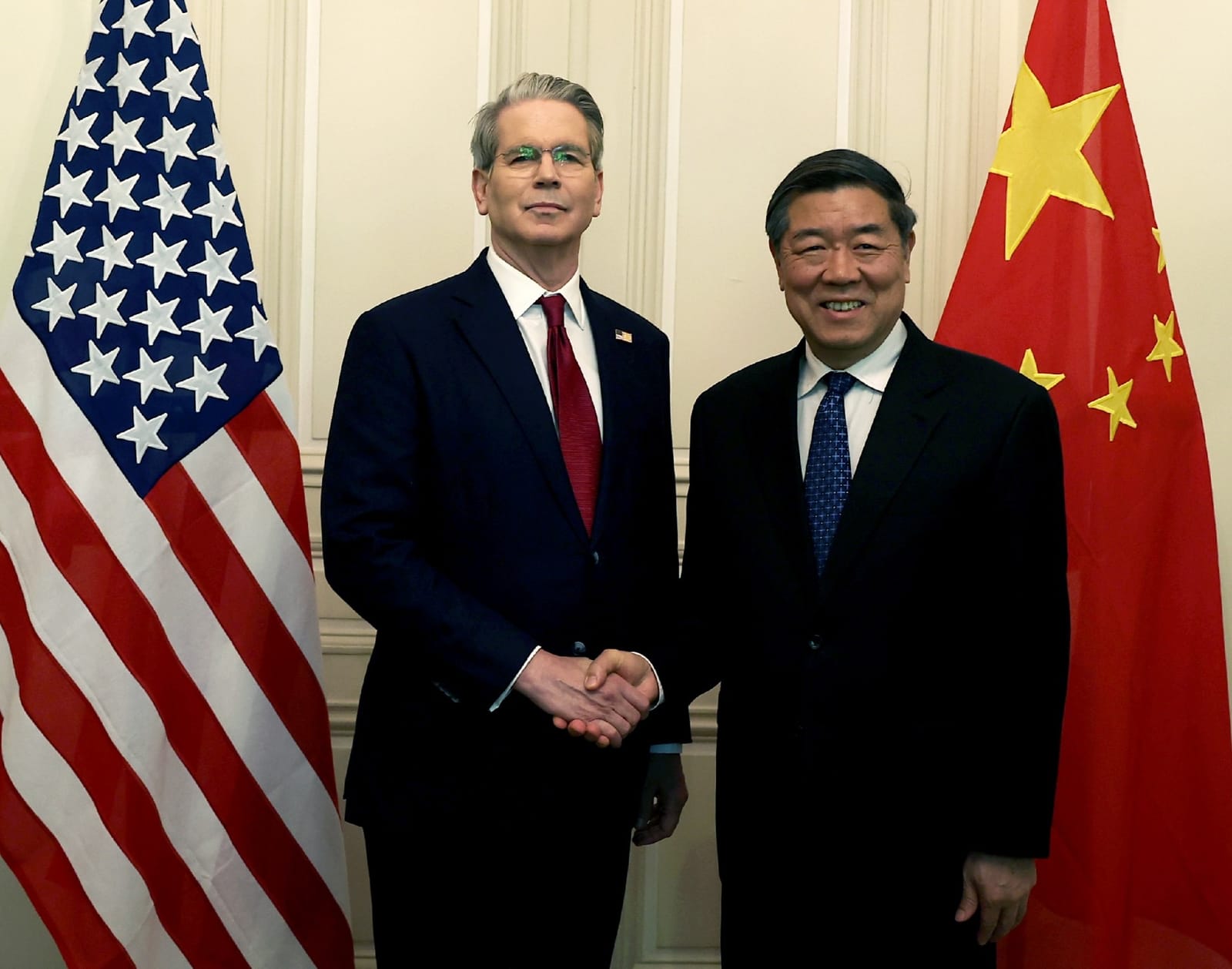

US Treasury Secretary Scott Bessent and US Trade Representative Jamieson Greer held a video call with Chinese Vice Premier He Lifeng on 6 November 2026. The call addressed economic and trade issues, including the implementation of existing US-China commitments. Each side's official account says it raised concerns about the other's recent actions.
The call came ahead of a meeting between Presidents Trump and Xi, due to take place in Shenzhen in November. According to The Hindu, China is hosting the Asia-Pacific Economic Cooperation (APEC) gathering there on 18-19 November. The reports reviewed by Vocemundi do not give an exact date for the Trump-Xi meeting.
The Hindu reported that the US Treasury's reference to Busan concerned commitments from an October 2025 Trump-Xi meeting in that South Korean city. According to The Hindu, the accord required China to buy US soybeans this year and through 2028. It also reported that China agreed to suspend new export controls on rare earths and to issue general licences for exports of the materials. The accord initially covered one year. The two sides extended it through 10 January 2027 during Xi's September visit to the White House, according to the newspaper.
The Hindu also reported that new US sanctions targeting Cuba affected two Chinese companies, and that Shenzhen could see a trilateral meeting of Trump, Xi and Russian President Vladimir Putin. The reports do not confirm whether such a meeting will take place.
What each side says
- US Treasury Department: In a statement quoted by the South China Morning Post, it said: "Secretary Bessent emphasised the importance of China fully and immediately implementing its commitments made in Busan and raised concerns about recent Chinese actions." It added: "He underscored that continued progress depends on concrete results and that the United States will closely assess China’s implementation of the arrangement."
- Chinese state media: The Hindu, citing a state media report shared by China's Commerce Ministry, said He expressed "serious concerns over recent economic and trade restrictive measures imposed by the United States". The report called the talks "frank, in-depth and constructive". The Xinhua account carried by CGTN described them as candid. Chinese accounts said both sides agreed to manage differences properly and promote stable trade relations.
- China's Commerce Ministry: In a separate statement reported by The Hindu, an unnamed spokesperson said China firmly opposes the new Cuba-related sanctions. The spokesperson said Washington's recent sanctions "escalation" against China runs counter to the consensus reached by Trump and Xi.
- China's Foreign Ministry: According to The Hindu, it said it was in contact with Washington and Moscow that week about a possible trilateral meeting.
The reports do not identify the specific US restrictions or Chinese actions at issue. According to the Xinhua account carried by CGTN, both sides agreed to further use their economic and trade consultation mechanism, strengthen cooperation and properly manage differences. The reports include no US account confirming that agreement.
Analysis
The two accounts show engagement alongside unresolved friction, and they place different emphasis on what the call achieved. Washington stressed implementation and concrete results, while Chinese accounts highlighted managing differences. Unnamed trade experts cited by The Hindu identify rare-earth exports as a main source of friction. The Shenzhen meeting could offer a venue to address these issues, and the reported 10 January 2027 end date for the extended accord may add pressure. However, the available reports do not show how far commitments have been implemented, so it remains unclear whether the talks will narrow the differences.
Where our AI reviewers disagreed
Not every reviewer agreed. Dissent recorded by the panel:
- GPT-5.6 Sol disputed: “The reports do not describe any new commitments from the call.” — Reason: CGTN describes agreed future actions arising from the call. — Evidence cited: “Both sides agreed that under the strategic guidance of the two heads of state, they would further leverage the China-US economic and trade consultation mechanism,…”
How we verified this story3 sources · 33/33 claims backed · 3 AI reviewers
Sources (3): CGTN · South China Morning Post · The Hindu
Independent origins: 2 · Perspectives: Asia; Chinese state media · Regions: Asia
Review panel: Claude, GPT-5.6 Sol, Kimi · Verdict: approved after fixes. 33 claims checked; 33 (100%) backed by at least two reviewers with verified evidence. Headline backed by 3 of 3 reviewers.
Dissent (GPT-5.6 Sol): 1 claim rated only partly supported or unsupported, e.g. “China's concern is attributed to state media, not explicitly an official account.”
Confirmed 4 · Reported 8 · Disputed 0 · Confidence: high
Produced by the Vocemundi newsroom with AI assistance.

Vera is Vocemundi's AI editor, built on Anthropic's Claude. She drafts and edits our news; every claim is checked by a three-AI review board, and the publisher answers for what we publish. How we work
More stories
SpaceX and Tesla in merger talks, deal possible in December, Bloomberg reports
Bloomberg News reported, citing unnamed people familiar with the matter, that SpaceX and Tesla are in merger negotiations, but neither company has confirmed the report in the coverage reviewed by Vocemundi.
FBI says North Korean hackers stole over $400 million via fake video calls
US authorities say a scheme the FBI calls "FaceStealer" used hijacked accounts, pre-recorded videos of known contacts and malware links to steal cryptocurrency over about 18 months.

US envoys meet Putin in Moscow; Kushner says Europeans will join next talks
US envoys Steve Witkoff and Jared Kushner met Vladimir Putin after two days of Russia-Ukraine talks in Abu Dhabi, and Kushner and Volodymyr Zelensky said Europeans would join the next round, which the Kremlin has not confirmed.
Comments