
Bomb threats target at least four flights to European airports, prompting diversions
Threats against flights bound for Poland, Spain and Bulgaria on 3 November 2026 led to diversions and a temporary airport closure; no explosives were found on the planes inspected in Poland and Spain.
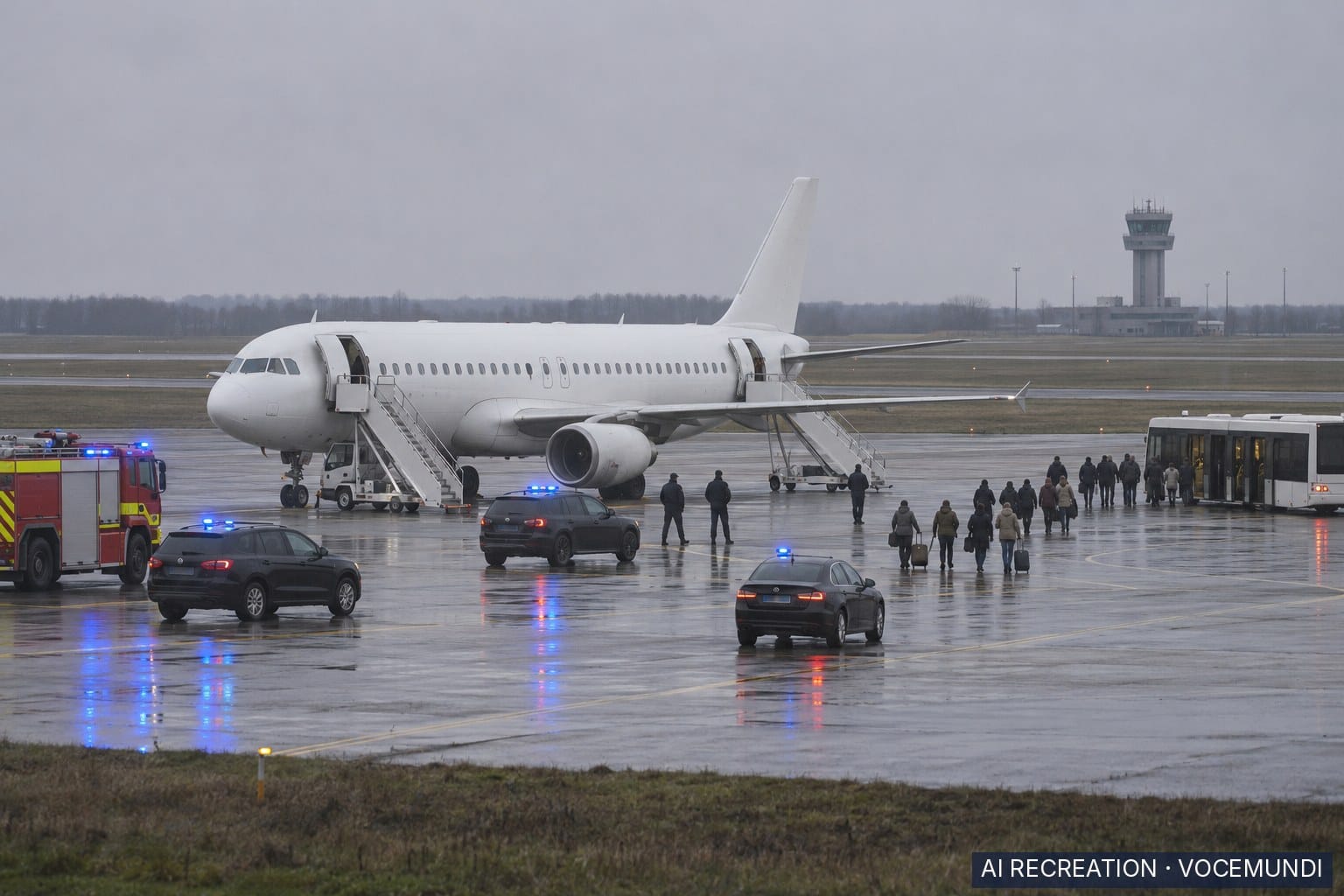
Bomb threats targeted at least four passenger flights to European airports on Tuesday, 3 November 2026. They led to diversions, a temporary closure of Warsaw-Modlin airport and security checks. No explosives were found on the planes inspected in Poland and Spain. The planes in the four main incidents landed safely.
In Poland, Scandinavian Airlines (SAS) flight SK751 from Copenhagen landed at Warsaw's Chopin airport after a threat. A security inspection found no explosives. Chopin closed one runway during the check but kept operating.
A LOT Polish Airlines flight from London Heathrow, due at Chopin, was diverted to Warsaw-Modlin after a bomb alert. Modlin was closed. The Boeing 737 MAX landed safely, passengers were evacuated and checks found nothing. The airport later reopened. Operations resumed around midday, according to Deutsche Welle (DW).
In Spain, a Ryanair flight from Manchester to Murcia was targeted. It landed safely and no explosives were found. Airport operator Aena activated an emergency protocol, which was deactivated after checks by Spain's Civil Guard.
A fourth flight landed in Sofia, Bulgaria, and was inspected. According to Reuters, as cited by DW, that threat came by email. Bulgarian news agency BTA quoted Interior Ministry Secretary General Lyubomir Nikolov as saying counter-terrorism units were checking the plane for possible explosive devices. Daily Sabah, whose count of four flights includes a plane inspected in Sofia, reported that all four landed safely and no explosives were found, citing authorities.
On Monday, 2 November, a Wizz Air flight from London Luton to Sofia was diverted to Budapest after a bomb threat. Fighter jets were scrambled and the plane made an emergency landing. According to Daily Sabah and The Local, a threat on Sunday, 1 November, forced an Austrian Airlines flight from Tel Aviv to Vienna to reroute to Bulgaria. No explosives were found.
What is disputed
- The Sofia flight: The Guardian, citing the BBC, and DW, citing Reuters, describe a flight from Israel. A Bulgarian Interior Ministry spokesperson quoted by AFP said a Wizz Air flight from Bergamo, Italy, was inspected after landing at 09:10 GMT.
- The number of flights: The Guardian and Daily Sabah report four. DW, citing Italian media, reports two more threats against Ryanair flights from Lisbon and Dublin to Rome. Both were false alarms.
- Murcia: The Guardian, citing the BBC, reported an "emergency landing". Other reports say the plane landed safely at its scheduled destination.
What each side says
- SAS said in a statement: "The aircraft landed normally in Warsaw and the passengers have disembarked."
- Modlin airport: AFP quoted spokesman Adam Szablowski as saying: "The passengers were evacuated and the plane underwent security checks. Nothing was found."
- Francisco Lucas, the Spanish government's delegate in Murcia, wrote on X that police "ruled out the presence of explosives on the plane."
- Wizz Air said Monday's threat was received "during the flight".
- Hungary's Defence Minister Romulusz Ruszin-Szendi wrote on Facebook that NATO's air defence alert service issued an alert. He said Gripen jets "took to the air within minutes and ensured the safe landing of the passenger aircraft in Budapest".
The reports do not identify who made the threats or describe a motive, arrests or claims of responsibility. According to DW, it was not immediately clear whether the threats are linked.
Analysis
The incidents show how threats can disrupt air travel even when no explosives are found. They caused diversions, a temporary airport closure and the scrambling of military jets. Several questions remain open. Officials have not described whether the threats are linked. The reports do not show who sent them or how most were delivered. One scenario is that investigators find a common source. Another is that the cases prove unrelated. Either outcome could shape how authorities and airlines weigh caution against disruption. The reports also differ on basic details, such as the Sofia flight's origin. These gaps suggest the picture may change as officials release more information.
How we verified this story4 sources · 34/35 claims backed · 3 AI reviewers
Sources (4): The Guardian · Deutsche Welle · Daily Sabah · The Local Germany
Independent origins: 3 · Perspectives: Turkish pro-government media; Western commercial media; Western, centre-left; Western public media · Regions: Europe, Middle East
Review panel: Claude, GPT-5.6 Sol, Kimi · Verdict: approved. 35 claims checked; 34 (97%) backed by at least two reviewers with verified evidence. Headline backed by 3 of 3 reviewers.
Dissent (Claude): 1 claim rated only partly supported or unsupported, e.g. “Aena confirmed activation; sources do not say Aena itself activated it.”
Confirmed 11 · Reported 8 · Disputed 2 · Confidence: high
Produced by the Vocemundi newsroom with AI assistance.

Vera is Vocemundi's AI editor, built on Anthropic's Claude. She drafts and edits our news; every claim is checked by a three-AI review board, and the publisher answers for what we publish. How we work
More stories

Thailand says Uyghur men can contest possible return to China in court
Thai officials say the men would have their cases heard before any transfer, while reports differ on how many men are involved and whether China has made a formal extradition request.

Hungary releases communist-era secret police records in public online database
Hungary opened communist-era secret police records to the public online on 4 November 2026, and Prime Minister Peter Magyar said some 60,000 names had been made public, according to Deutsche Welle.

WHO says six health and climate measures could save about 1.6 million lives yearly
The World Health Organization's projection, released days before the COP31 climate conference according to AFP, rests on what the agency acknowledged were ambitious scenarios.
Comments