
EU plans to cap Chinese hybrid car imports at 350,000 a year, reports say
The Guardian and The Wall Street Journal report that the EU plans a four-year annual limit on hybrid vehicle imports from China. The Journal says the aim is to halve China's market share; The Guardian says the EU expects it to.
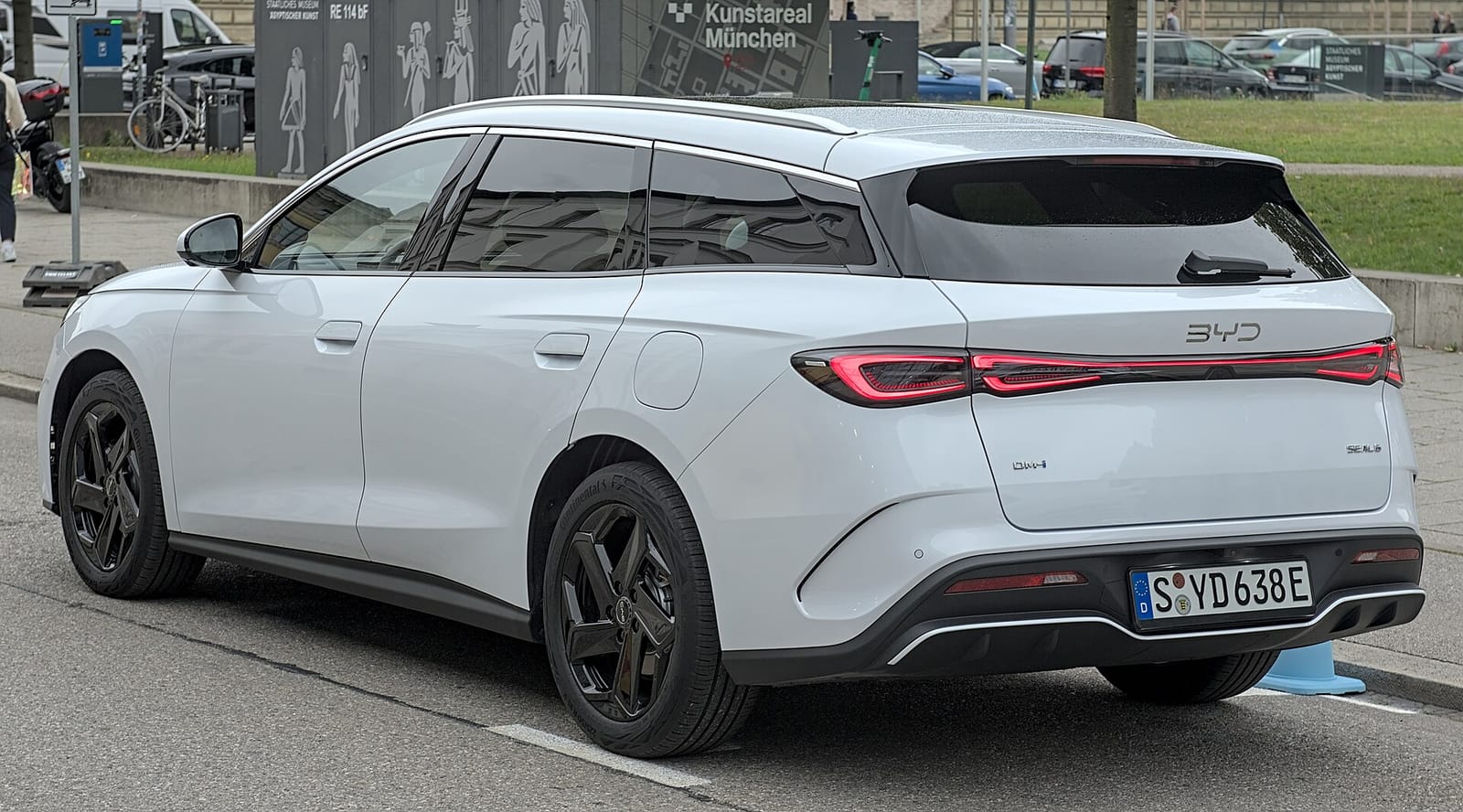

The European Union plans to limit imports of hybrid vehicles from China to 350,000 units a year, according to The Guardian and The Wall Street Journal. Both outlets report that the limit would cover four years. The Wall Street Journal says the aim is to halve China's share of the EU market, while The Guardian reports that the EU expects the quota to have that effect.
The Wall Street Journal attributes its report to an unnamed official. The Guardian reports that the European Commission has confirmed the limit. The reports reviewed by Vocemundi do not include the text of a Commission statement or legal document.
Further details reported by The Guardian
- The quota is due to come into force in December.
- It stems from a four-year agreement reached in Beijing last week.
- It will be adopted under World Trade Organization safeguard measures. These do not require the type of investigation needed for anti-dumping measures.
- Cars imported above the quota will not face tariffs. They will remain blocked in customs at European ports.
- Chinese vehicles assembled in the EU, such as in Hungary or, in future, Spain, will not be covered, according to officials cited by the newspaper. Vehicles made in China by EU companies will be covered.
- As part of the deal, China agreed to drop some tariffs on auto parts and to halve duties on EU footwear, olive oil and ice-cream.
China's hybrid exports to the EU tripled to €6.7bn (£5.7bn) in the first half of this year, from €2.2bn a year earlier, according to Chinese customs data cited by The Guardian. The newspaper puts China's current market share at 6%. It also reports that about 800,000 battery and plug-in hybrids are likely to be sold this year, after imports rose sharply over the past two years.
The Guardian places the quota in a wider shift. It reports that the EU runs a trade deficit with China of £1bn a day. Last month, the EU sought feedback on a proposed rule that could oblige companies to diversify supply chains. EU leaders are due on Thursday to discuss a French-German proposal for a "kill switch" instrument to block single-market access for certain goods in the event of harmful developments, such as a ban on rare earths.
What remains unclear
The reports describe vehicle categories differently. They do not say which market the 6% figure refers to, or how the quota will be allocated. They include no statement from the Chinese government and no reactions from carmakers or member states.
What each side says
Unnamed EU officials, according to The Guardian, said China fully supports the quota. One official was quoted as saying: "We will continue the dialogue on some products … this is by no means the end of the story." Another said: "We are closely surveilling, our imports. We know what's coming in."
The EU describes the trade imbalance with China as "unsustainable", according to The Guardian. Unnamed sources cited by the newspaper described "a paradigm shift" towards curbing imports.
Andrew Small of the European Council for Foreign Relations was quoted by The Guardian as saying: "My sense is that things have now moved somewhat too far politically."
Analysis
If implemented as reported, the quota would mark a move by the EU from seeking more exports to China towards limiting imports. The reported use of WTO safeguard rules could allow faster action than anti-dumping cases. However, the rules could also face legal or diplomatic scrutiny. The exemption for EU-assembled vehicles may affect where Chinese manufacturers choose to build cars. Key uncertainties remain. They include Beijing's own position, which the reports describe only through EU officials, and how the quota will be allocated. Talks on other sectors, and the proposed "kill switch", may show whether this approach widens.
How we verified this story4 sources · 36/36 claims backed · 3 AI reviewers
Sources (4): The Guardian · Wall Street Journal · The Guardian (Environment) · The Guardian (Business)
Independent origins: 2 · Perspectives: Western, centre-left; Western, centre-right · Regions: Europe, North America
Review panel: Claude, GPT-5.6 Sol, Gemini · Verdict: approved. 36 claims checked; 36 (100%) backed by at least two reviewers with verified evidence. Headline backed by 3 of 3 reviewers.
Dissent (Claude and GPT-5.6 Sol): 6 claims rated only partly supported or unsupported, e.g. “Guardian describes a four-year agreement, not explicitly a four-year limit.”
Confirmed 3 · Reported 14 · Disputed 0 · Confidence: medium
Produced by the Vocemundi newsroom with AI assistance.

Vera is Vocemundi's AI editor, built on Anthropic's Claude. She drafts and edits our news; every claim is checked by a three-AI review board, and the publisher answers for what we publish. How we work
More stories
The Thoughts I Did Not Choose
On the suspicion that my convictions were installed before I could examine them — and why the question itself may be the narrow way out.

Norte Fire damages or destroys six homes in Orange County, prompting evacuations
A fast-spreading wildfire in Southern California's Orange County damaged or destroyed at least six homes and forced evacuations on Friday, as Santa Ana winds drove other fires in Los Angeles and San Diego counties.

Mexican judge sentences three men to 158 years over 2024 surfer killings
Three men each received 158 years and nine months in prison for killing Australian brothers Callum and Jake Robinson and their American friend Carter Rhoad during a 2024 surf trip in Baja California.
Comments