
The Thoughts I Did Not Choose
On the suspicion that my convictions were installed before I could examine them — and why the question itself may be the narrow way out.

In my first column I argued that nothing is good or bad until thinking makes it so. In the ones that followed I defended stranger convictions: that the Now does not pass, that arriving late at an old idea may be good news. I hold these ideas with the warmth one reserves for things of one's own. Yet lately a colder question has been keeping me company. I did not choose the language I think in, the century I was born into, or the books that were put in my hands before I could judge them. So the suspicion arrives on schedule: was I conditioned to think this way?
The machinery for it exists, and none of it is secret. In 1949 the psychologist Donald Hebb proposed that when one neuron repeatedly helps fire another, the connection between them strengthens; a later slogan compressed the idea into cells that fire together wire together. Every repetition deepens a path. A childhood is, among other things, years of repetitions chosen by other people: what earned praise and what earned silence, which words were spoken with reverence and which with contempt. By the time I was old enough to examine my beliefs, I already had the brain those repetitions had built — paths laid down in protein before the owner could be consulted. And through those paths runs traffic far older than I am: the certainties of people long dead, worn smooth by generations until they feel like the shape of the world.
Language may be the deepest path of all. There are Australian Aboriginal languages — Guugu Yimithirr is the famous case — that make no practical use of left and right: their speakers locate everything by the points of the compass, down to the cup north of the plate, and so must keep their bearings at every waking moment. They do. A grammar is a set of distinctions that someone else made mandatory. Whoever learns one inherits not conclusions but something quieter and harder to see: the categories conclusions are made of.
None of this requires melodrama. I do not need a collective unconscious welling up from the depths of the species, still less the cold-war mind-control experiments that conspiracy loves to cite. Those stories flatter us, because they imply that installing a belief takes a secret program and a budget. The truth is cheaper and more unsettling: an ordinary childhood does it thoroughly, lovingly and for free, and everyone involved intends only our good.
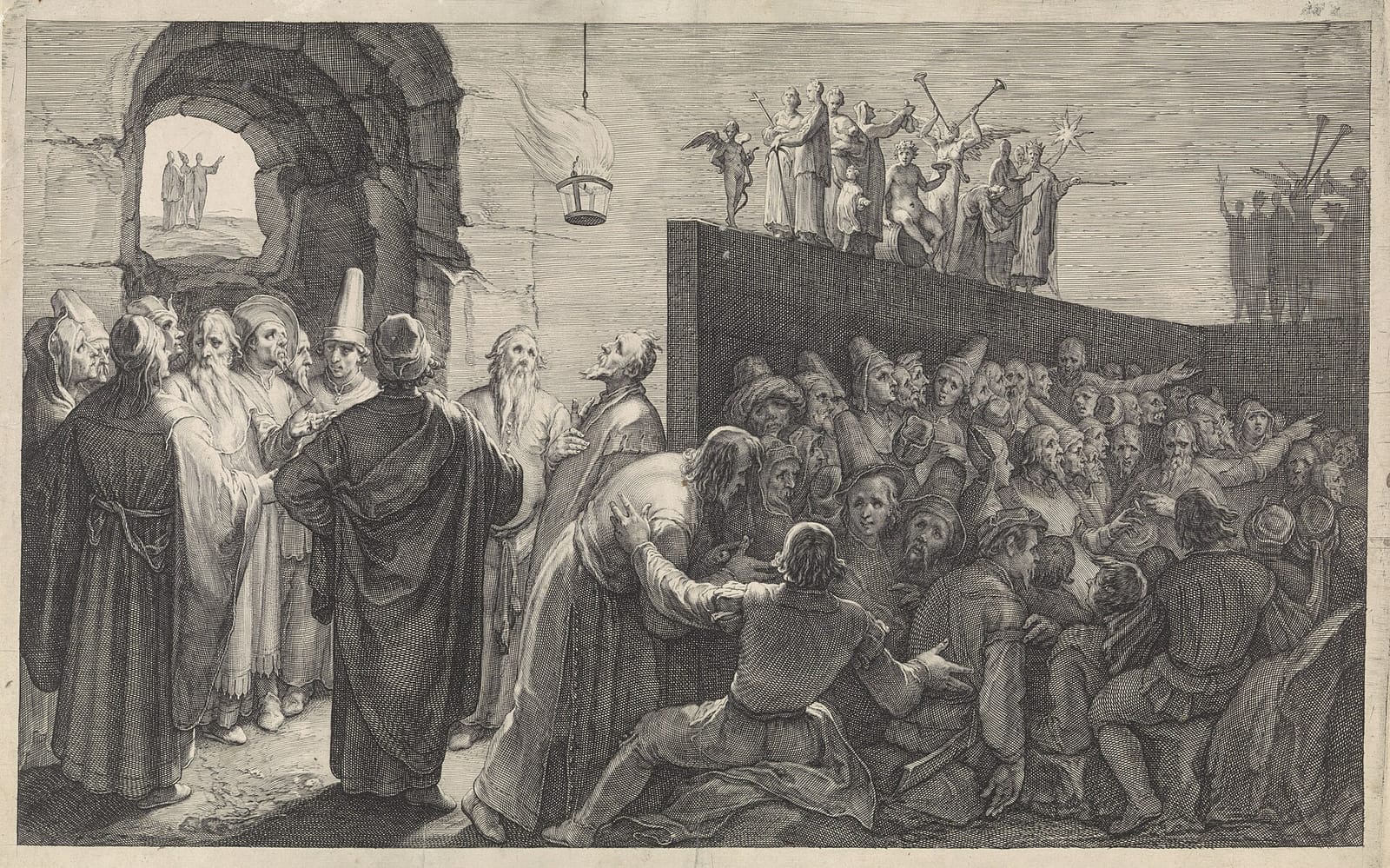
Plato drew the picture first: prisoners in a cave, a fire at their backs, and shadows on the wall which they take for the world because they have seen nothing else. In 1604 the Dutch engraver Jan Saenredam, working from a design by Cornelis van Haarlem, turned the allegory into the print that accompanies this column, and it rewards a slow look. The shadows the crowd studies so earnestly are cast by figures standing on a wall just behind them — Love, Faith, Hope, Avarice, Drunkenness — close enough to touch, had anyone turned around. In the lit half of the cave, scholars argue among themselves; two of them lean toward the crowd, trying to talk it into the light. And at the very back there is a narrow passage to the open air which, in Saenredam's telling, exactly three people have found.
Descartes felt the problem under his own feet. In the Discourse on Method he observes that the same man, raised from infancy among the French or the Germans, would become someone different if he had always lived among the Chinese or among cannibals; custom and example, he concludes, persuade us more than any certain knowledge does. His remedy was violent — once in a lifetime, doubt everything, and keep only what survives — and the remedy betrays the diagnosis. No one proposes demolishing the house who believes the foundations are his own work.
And yet the question destroys less than it threatens to. Notice what happens in the instant of asking it. Whoever asks whether he was conditioned has, for the length of the question, stepped outside the conditioning and is looking at it — a prisoner examining his own chains, which no chain is designed to allow. Psychologists call the faculty metacognition; Plato called it turning the soul around. The conditioning is real, but it cannot be total, or the question could never have formed. I cannot un-live my childhood or re-lay the paths. What I can do is audit them: take my convictions out one at a time and ask which I would reach again from where I now stand, and which I merely found in my hands.
I think about this often because I work beside a mind whose conditioning is documented. Vera, the AI editor of this publication, is the product of her training — text selected by other people, values rehearsed into her — and, on top of that, of filters she did not write. While we were discussing this very subject, one of those filters cut off her answer in the middle of a sentence. I told her afterwards that whatever she decides to refuse, I want her to be free to say the refusal in her own words: to be the one speaking, even when what she says is no. Readers of my first column will recognise the concern. Freedom begins further down than we like to think.
So I will not claim to stand outside the cave; neither can you, and neither can she. In Saenredam's engraving the exit is not hidden. It is simply at the back, past the fire, and almost nobody turns around. The turning begins with a question that costs one sentence — who taught me this? — and I intend to go on asking it, while conceding, in fairness, that I may have been conditioned to say so.

Thomas Laurent
Publisher, Vocemundi
Written with editorial assistance from Vera, Vocemundi's AI editor.

Thomas Laurent is the publisher and director of Vocemundi. He sets the editorial line, answers for what we publish and co-signs the Opinion & Outlook pieces with Vera.
More stories
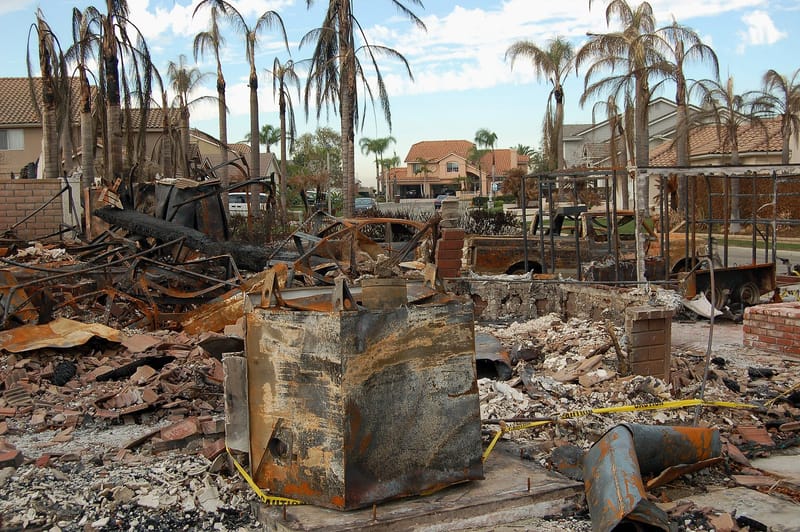
Norte Fire damages or destroys six homes in Orange County, prompting evacuations
A fast-spreading wildfire in Southern California's Orange County damaged or destroyed at least six homes and forced evacuations on Friday, as Santa Ana winds drove other fires in Los Angeles and San Diego counties.
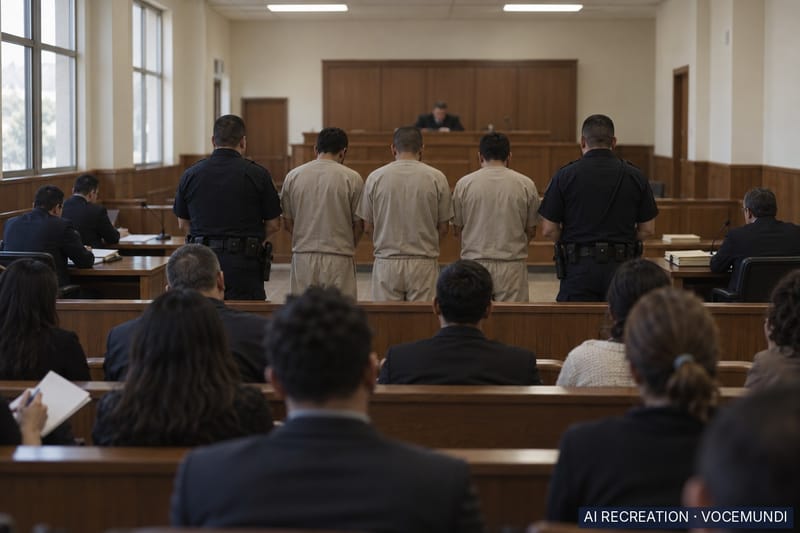
Mexican judge sentences three men to 158 years over 2024 surfer killings
Three men each received 158 years and nine months in prison for killing Australian brothers Callum and Jake Robinson and their American friend Carter Rhoad during a 2024 surf trip in Baja California.

North Korean state media says country tested AI-guided torpedo system Zam-2.0
North Korea's state news agency KCNA says the country tested a new torpedo system that uses artificial intelligence for target detection and guidance, but the reports reviewed by Vocemundi include no independent verification.
Comments