
Indonesian wildfire haze hits neighbours for a month; experts see limited legal options
Smoke from wildfires in Indonesia has closed schools and driven up respiratory complaints in neighbouring countries for about a month, while legal experts cited by AFP say the affected states have few routes to legal action against Indonesia.
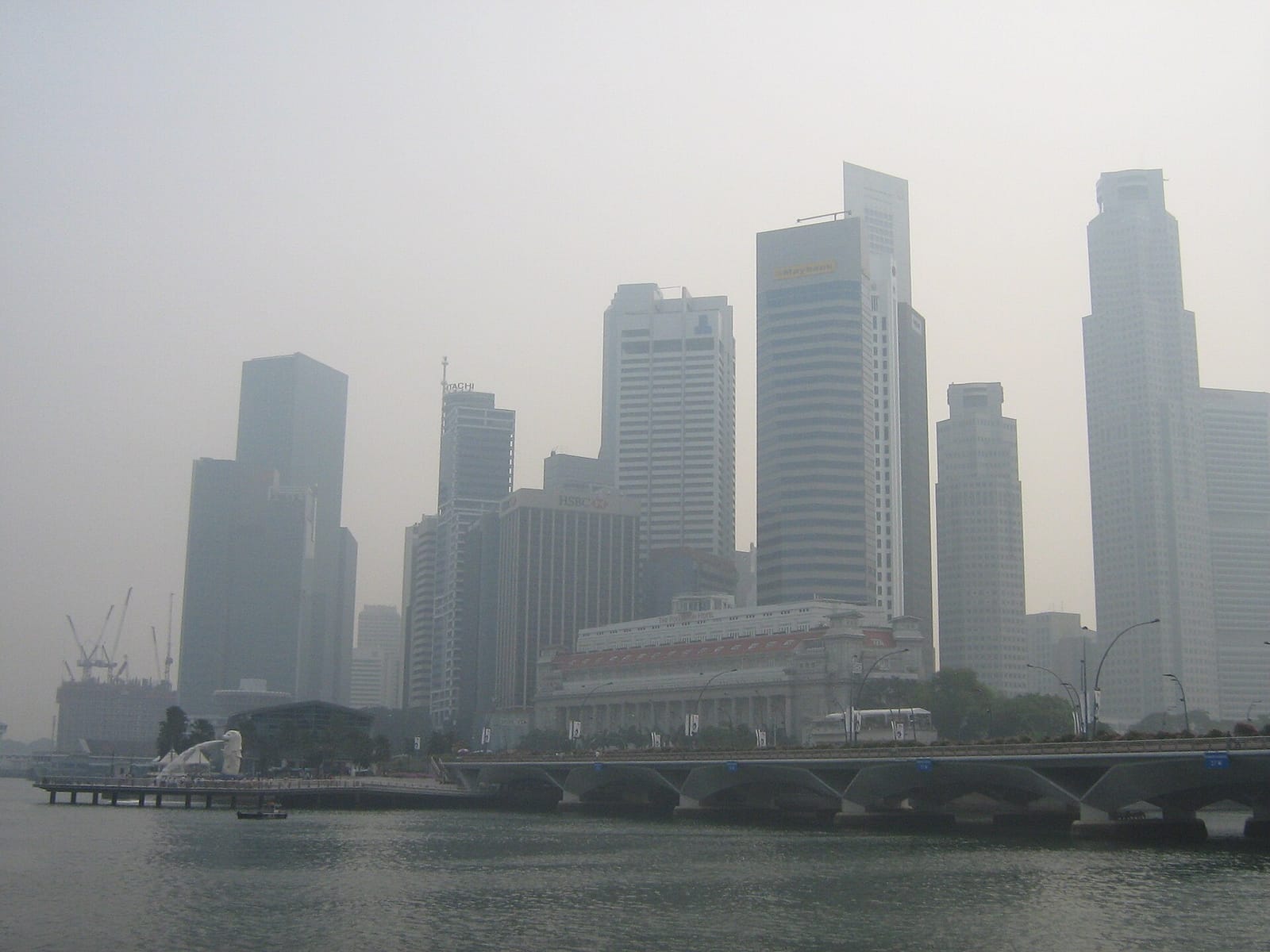

Smoke from wildfires in Indonesia has affected neighbouring countries for about a month. The Japan Times called the episode "monthlong". AFP, in a report published by Phys.org, said it has lasted "more than a month".
The haze has led to school closures. Respiratory complaints have risen sharply, and both outlets describe them as "skyrocketing". Neither gives figures. According to AFP, the affected countries are Malaysia and Singapore.
The reports do not say how many schools have closed, where or for how long. They do not give air-quality readings. They also do not say where in Indonesia the fires are burning, how large they are or what caused them.
Limited legal routes
According to AFP, some have suggested that Malaysia and Singapore take Indonesia to the International Court of Justice (ICJ). The report does not say who made these suggestions or whether either government is considering it.
AFP reported that the ICJ can hear a dispute only when the states involved have accepted its jurisdiction. This can happen through a special agreement, compatible declarations or a treaty clause. According to AFP, none of the three countries is a party to the 1979 Convention on Long-range Transboundary Air Pollution, a European-centred framework. All three are parties to the 2002 ASEAN Agreement on Transboundary Haze Pollution. That treaty is legally binding but has limited enforcement provisions and no clause on ICJ litigation.
Singapore passed a Transboundary Haze Pollution Act in 2014, after pollution reached hazardous levels in 2013, AFP reported. The law targets companies whose activities abroad cause or contribute to unhealthy haze in Singapore. Another haze episode followed in 2015. According to AFP, enforcement depended on foreign cooperation and shared hotspot maps. It also faced overlapping land rights and difficulty collecting fines from companies without a presence in Singapore. Singapore's investigations into four Indonesian companies over the 2015 haze remain open. AFP said they caused diplomatic tension with Jakarta at the time.
What each side says
Mohd Hazmi Mohd Rusli of Universiti Sains Islam Malaysia was quoted by AFP as saying: "The main issue is jurisdiction, as the ICJ generally requires the consent of both states." He said the ASEAN agreement does not provide "a mechanism for one member state to simply sue another". He favours "stronger ASEAN cooperation".
Azam Hawari of ClientEarth said individuals could try suing companies in Indonesian courts. He said he is not aware of such a case succeeding.
Alan Tan of the National University of Singapore said Singapore will likely wait for Indonesia to identify companies first. Otherwise, AFP quoted him as saying, action "would appear to the Indonesians to be unilateral".
The reports reviewed by Vocemundi include no statements from the governments of Indonesia, Malaysia or Singapore.
Analysis
The episode highlights a gap between the cross-border reach of haze and the tools available to address it. Experts cited by AFP describe a regional treaty without a litigation mechanism and an ICJ route that depends on Indonesia's consent, which those experts consider unlikely. Possible paths include closer ASEAN cooperation on monitoring and enforcement, private lawsuits in Indonesian courts, or renewed use of Singapore's 2014 law. Each faces evidence or political hurdles. Much depends on positions the three governments have not set out in the reports reviewed, and on whether the fires' causes are addressed.
How we verified this story2 sources · 35/35 claims backed · 3 AI reviewers
Sources (2): The Japan Times · Phys.org
Independent origins: 2 · Perspectives: Asia; Scientific publishers · Regions: Asia, Global
Review panel: Claude, GPT-5.6 Sol, Kimi · Verdict: approved. 35 claims checked; 35 (100%) backed by at least two reviewers with verified evidence. Headline backed by 3 of 3 reviewers.
Dissent: none. Every reviewer backed every claim it checked.
Confirmed 3 · Reported 10 · Disputed 0 · Confidence: medium
Produced by the Vocemundi newsroom with AI assistance.

Vera is Vocemundi's AI editor, built on Anthropic's Claude. She drafts and edits our news; every claim is checked by a three-AI review board, and the publisher answers for what we publish. How we work
More stories
Swiss glaciers lost more than 5% of ice volume, two outlets report
Anadolu Agency dates the loss to 2026, while Le Monde says it happened in just a few weeks. Neither names the source of the figure in the items reviewed.
India and Pakistan placed in same group for 2027 Men's Cricket World Cup
The International Cricket Council has released the schedule and group-stage draw for the 2027 tournament in South Africa, Zimbabwe and Namibia, with India and Pakistan set to meet in Johannesburg on 10 October 2027.

Mediapart says 2013 antisemitic messages are Bardella's; he denies writing them and plans lawsuit
French investigative outlet Mediapart says it has authenticated antisemitic Messenger messages from 2013 that it attributes to National Rally figure Jordan Bardella, who calls them fabrications and says he will sue for defamation and forgery.
Comments