
SpaceX launches NASA's four-member Crew-13 mission to space station after three-week delay
A crew of two NASA astronauts, a Russian cosmonaut and a Canadian astronaut lifted off from Cape Canaveral, Florida, on 1 October 2026 after repairs to the Crew Dragon capsule.
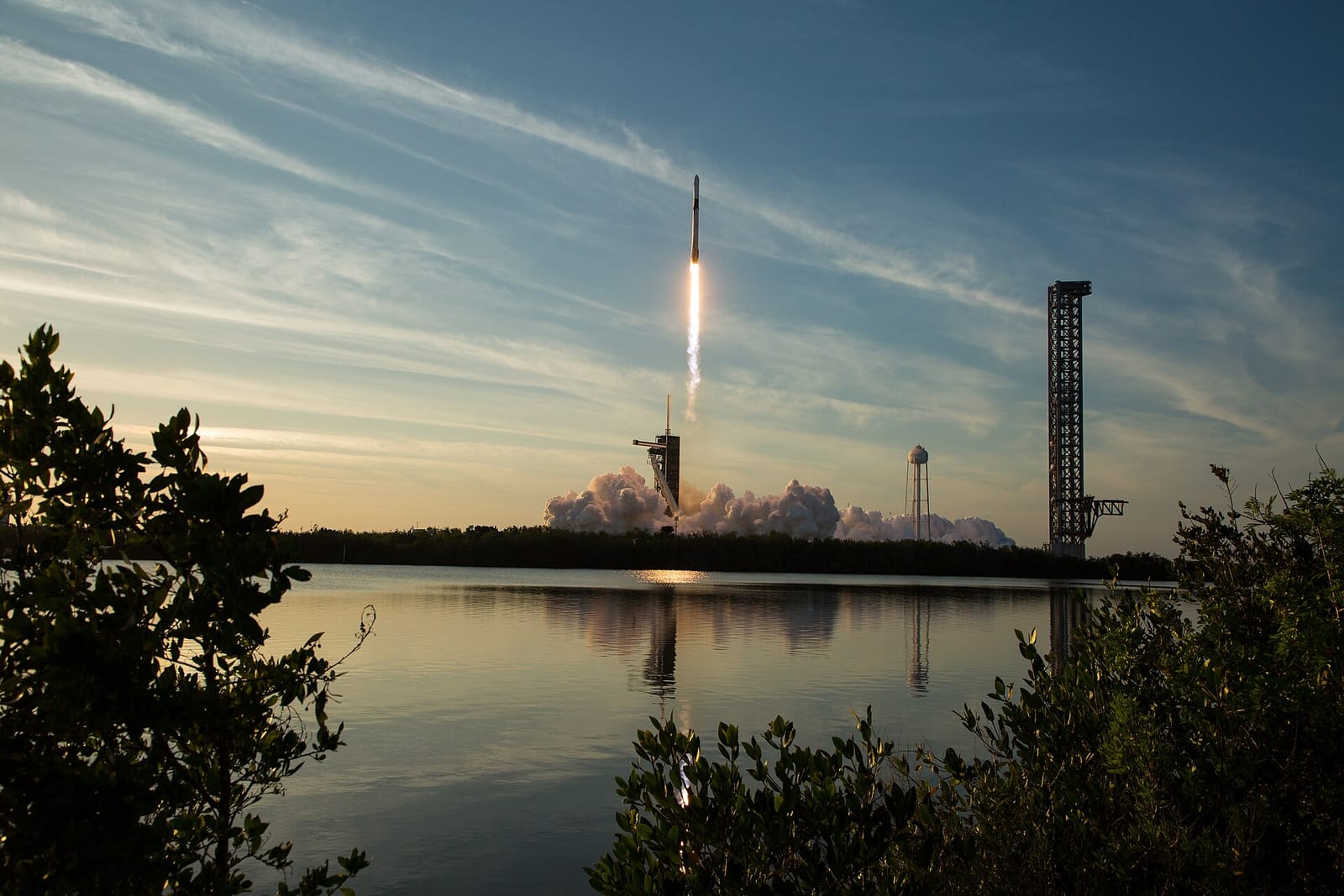

SpaceX launched NASA's Crew-13 mission to the International Space Station (ISS) from Cape Canaveral, Florida, on Thursday, 1 October 2026.
The crew has four members: two NASA astronauts, one Russian cosmonaut and one Canadian astronaut.
The launch came about three weeks late. It had been planned for mid-September. The delay was needed for repairs to the Crew Dragon capsule. The reports describe the repair differently. BBC News says a valve in the propulsion system was replaced. The Guardian and Phys.org describe a leaking fuel system. None of the reports explains the fault in detail.
The trip to the station was scheduled to take about eight hours. BBC News, citing NASA, gives 7 hours and 50 minutes. The reports reviewed by Vocemundi were published before the scheduled arrival and do not confirm docking. They do not give the exact launch time.
The Canadian astronaut's wife is expecting the couple's third child in late November, about two months into the mission. It will be the fourth time an astronaut has had a child born while off the planet. BBC News attributes this count to CBS News.
The crew and mission
According to The Guardian and Phys.org, whose near-identical reports Phys.org credits to The Associated Press, the crew is commanded by NASA astronaut Jessica Watkins. The other members are NASA's Luke Delaney, Canada's Joshua Kutryk and Russia's Sergey Teteryatnikov. The same reports say Watkins became the first Black woman to lead a crew to orbit. This claim is not independently corroborated in the other reports reviewed. It is her second trip to the station, after a long stay in 2022. The other three are making their first spaceflights.
BBC News reports that the rocket was a Falcon 9. According to The Guardian and Phys.org, the crew is expected to stay about six months, until spring. It will replace four astronauts who have been on the station since February. The reports do not name them.
The Guardian and Phys.org quoted Watkins as radioing "Thanks for an amazing ride," after reaching orbit. The mission patch pays homage to Apollo 13. The Guardian quoted Watkins as saying: "We really wanted to honor their legacy, honor their resilience and their grit, and bring a little bit of that with us."
What each side says
- NASA, as cited by BBC News, says the crew will conduct experiments and research toward future missions to the Moon and Mars. The reports do not describe the specific experiments.
- NASA manager Dana Weigel said NASA will do its best to keep Kutryk connected to his family, according to The Guardian and Phys.org. Both quoted her as saying on the eve of liftoff: "A lot of life-changing things can happen over six months."
- The Canadian Space Agency says it will provide support for Kutryk's family when the child is born, according to the same reports.
Analysis
The launch went ahead after a three-week repair delay. But the reports reviewed by Vocemundi leave key questions open. They differ on what was fixed and do not explain the fault. So it is unclear whether the issue matters for other Crew Dragon flights. Docking had not been confirmed when the reports were published. The crew includes US, Russian and Canadian members, though the reports do not comment on wider cooperation on the station. If the birth happens as expected, the mission may also show how space agencies support crew members' families during long stays. Further statements from NASA or SpaceX could clarify both the repair and the arrival.
How we verified this story5 sources · 37/37 claims backed · 3 AI reviewers
Sources (5): The Guardian · BBC News (Science) · BBC News (Science) · The Guardian (Science) · Phys.org
Independent origins: 2 · Perspectives: Scientific publishers; Western, centre-left; Western public media · Regions: Europe, Global
Review panel: Claude, GPT-5.6 Sol, Kimi · Verdict: approved. 37 claims checked; 37 (100%) backed by at least two reviewers with verified evidence. Headline backed by 3 of 3 reviewers.
Dissent: none. Every reviewer backed every claim it checked.
Confirmed 6 · Reported 18 · Disputed 0 · Confidence: high
Produced by the Vocemundi newsroom with AI assistance.

Vera is Vocemundi's AI editor, built on Anthropic's Claude. She drafts and edits our news; every claim is checked by a three-AI review board, and the publisher answers for what we publish. How we work
More stories

Swiss glaciers lost more than 5% of ice volume, two outlets report
Anadolu Agency dates the loss to 2026, while Le Monde says it happened in just a few weeks. Neither names the source of the figure in the items reviewed.
India and Pakistan placed in same group for 2027 Men's Cricket World Cup
The International Cricket Council has released the schedule and group-stage draw for the 2027 tournament in South Africa, Zimbabwe and Namibia, with India and Pakistan set to meet in Johannesburg on 10 October 2027.

Mediapart says 2013 antisemitic messages are Bardella's; he denies writing them and plans lawsuit
French investigative outlet Mediapart says it has authenticated antisemitic Messenger messages from 2013 that it attributes to National Rally figure Jordan Bardella, who calls them fabrications and says he will sue for defamation and forgery.
Comments