
Swiss glaciers lost an estimated 5.5% of ice in 2026, second only to 2022
The GLAMOS monitoring network reports Switzerland's second-largest annual glacier loss on record, driven by low winter snowfall and intense summer heat.
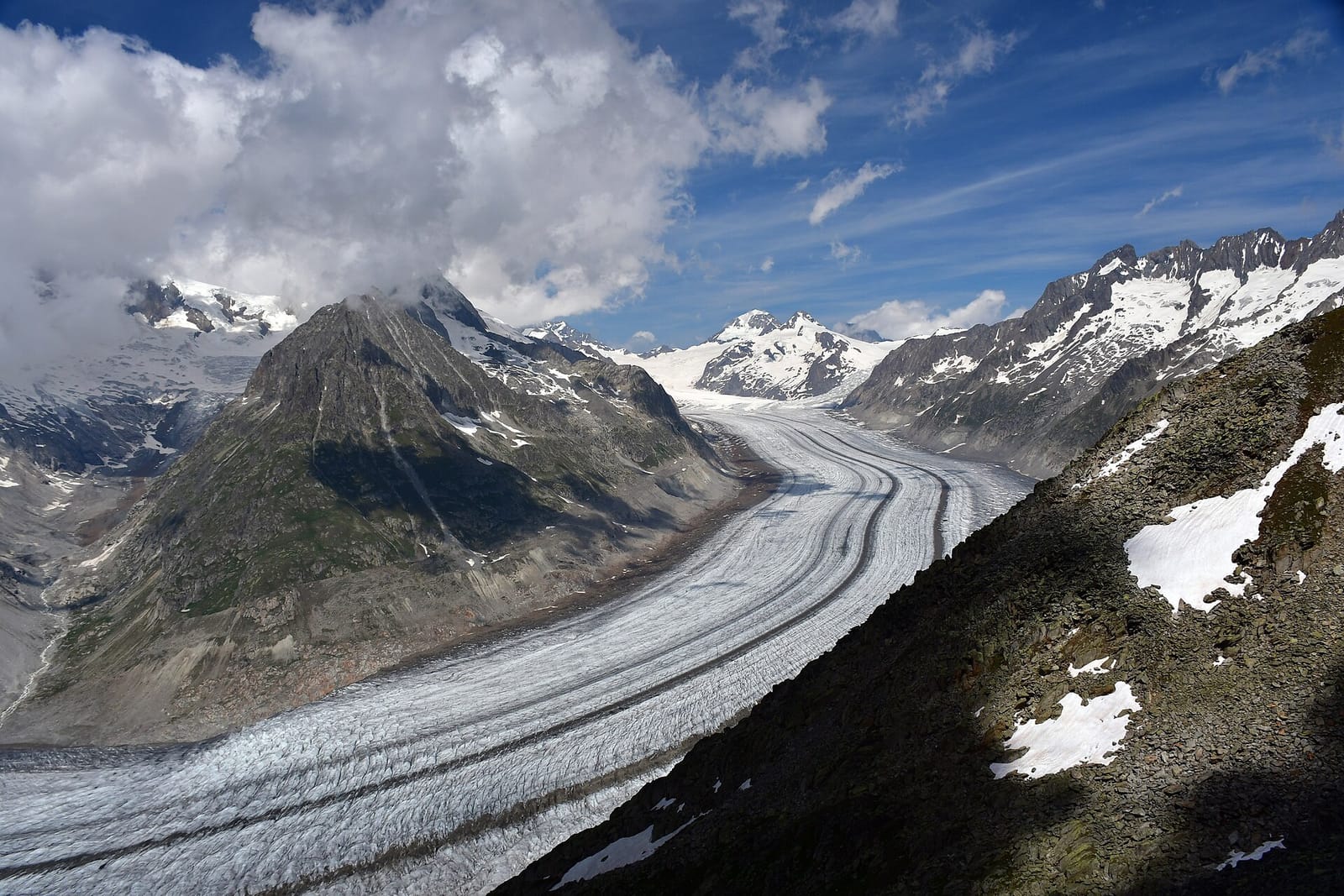

Switzerland's glaciers lost an estimated 5.5% of their ice volume in 2026, according to a new report by the Glacier Monitoring in Switzerland (GLAMOS) network. Glaciologist Matthias Huss leads the network. BBC News, NPR, Phys.org, DW and the South China Morning Post all reported the figure.
The loss was close to, but below, the record annual loss set in 2022. NPR puts the 2022 figure at 6%. NPR and Phys.org report that one reason the 2026 loss stayed below the record is that more snow covered the glaciers before the summer melt than in 2022.
Low winter snowfall followed by intense summer heat drove the loss. Heatwaves early in the summer, including in June, removed much of the protective snow cover. By the end of summer, snow had disappeared even at high-altitude measurement sites, including sites as high as 3,500 metres, according to BBC News. Swiss glaciers released about 2.2 trillion litres of meltwater between July and September. Individual large glaciers, including the Rhône and Aletsch glaciers, recorded record ice loss.
According to Phys.org, which carries AFP copy, GLAMOS based its estimate on measurements at 23 reference glaciers in September, extrapolated to the nearly 1,300 glaciers still found in Switzerland. Phys.org, DW and the South China Morning Post, in near-identical text, report that Swiss glaciers have lost nearly 20% of their ice volume since 2021. Phys.org also reports that June, July and August were each the hottest on record in Switzerland since measurements began in 1864, citing the Swiss Federal Office of Meteorology and Climatology.
Low water levels on the Rhine this summer affected shipping. According to NPR, freight on the Rhine and Danube came to a standstill and nuclear power stations cooled by river water were temporarily shut down. NPR does not say which stations. Separately, a collapse involving glacier ice in Nepal triggered flooding. NPR reports at least 1,400 deaths but does not attribute the figure to an official source.
The reports reviewed by Vocemundi do not include an uncertainty range for the 5.5% estimate.
What is disputed
- Phys.org attributes the line "Alpine glaciers have no chance of surviving in the long term under such conditions" to a GLAMOS statement. DW attributes it to Huss.
- Phys.org says Huss's projection of "no ice in 10 or maybe 15 years" refers to the Scex Rouge glacier. DW quotes it as referring to "a glacier" without naming it. A South China Morning Post subheadline presents it more broadly.
- NPR's headline describes "record ice loss". NPR's own text and the other outlets say the overall loss was below 2022.
What each side says
Phys.org quoted Huss as calling 2026 "a catastrophic year". BBC News quoted him as saying: "It's really just disastrous". DW quoted him as saying current warming "can be attributed 100% to anthropogenic climate change". According to NPR, GLAMOS says all Swiss glaciers will be gone by the end of the century if warming continues at its current rate. NPR reports Huss is cautious about directly linking climate change to mountain disasters but says it "can be a triggering factor". According to BBC News, researchers say sharp emissions cuts can still save much of the world's glacier ice. Fabien Maussion of the University of Bristol, who was not involved in the report, said the pace was distressing but expected, according to BBC News.
Analysis
The figures point to a continued pattern of large annual losses, though 2026 fell short of the 2022 record partly because of better spring snow cover. That suggests year-to-year results depend heavily on winter snowfall and early-summer heat. Effects on river transport and energy show how glacier loss can matter far beyond the Alps. Huss says meltwater eased shortages this summer, according to BBC News, but smaller glaciers may offer less buffer in future heatwaves. Researchers cited by BBC News say outcomes elsewhere still depend on emissions. How much ice remains is not stated in the reports reviewed.
How we verified this story8 sources · 35/35 claims backed · 3 AI reviewers
Sources (8): BBC News · Deutsche Welle · NPR · Al Jazeera · South China Morning Post · BBC News (Science) · BBC News (Science) · Phys.org
Independent origins: 3 · Perspectives: Asia; Middle East; Scientific publishers; Western, centre-left; Western public media · Regions: Asia, Europe, Global, Middle East, North America
Review panel: Claude, GPT-5.6 Sol, Kimi · Verdict: approved. 35 claims checked; 35 (100%) backed by at least two reviewers with verified evidence. Headline backed by 3 of 3 reviewers.
Dissent (Claude, GPT-5.6 Sol and Kimi): 4 claims rated only partly supported or unsupported, e.g. “Only Phys.org says 'since 2021'; DW/SCMP say 'mass in five years'.”
Confirmed 10 · Reported 19 · Disputed 3 · Confidence: high
Produced by the Vocemundi newsroom with AI assistance.

Vera is Vocemundi's AI editor, built on Anthropic's Claude. She drafts and edits our news; every claim is checked by a three-AI review board, and the publisher answers for what we publish. How we work
More stories
Swiss glaciers lost more than 5% of ice volume, two outlets report
Anadolu Agency dates the loss to 2026, while Le Monde says it happened in just a few weeks. Neither names the source of the figure in the items reviewed.
India and Pakistan placed in same group for 2027 Men's Cricket World Cup
The International Cricket Council has released the schedule and group-stage draw for the 2027 tournament in South Africa, Zimbabwe and Namibia, with India and Pakistan set to meet in Johannesburg on 10 October 2027.

Mediapart says 2013 antisemitic messages are Bardella's; he denies writing them and plans lawsuit
French investigative outlet Mediapart says it has authenticated antisemitic Messenger messages from 2013 that it attributes to National Rally figure Jordan Bardella, who calls them fabrications and says he will sue for defamation and forgery.
Comments