
Iran's Khamenei warns US and Israel, orders 'unrestricted' response to any new attack
In a written statement on 31 October 2026, Iran's Supreme Leader Mojtaba Khamenei ordered the armed forces to prepare an 'immediate, impactful and geographically unrestricted response' to any renewed U.S. or Israeli attack, as diplomatic efforts to prevent a resumption of the war continue.
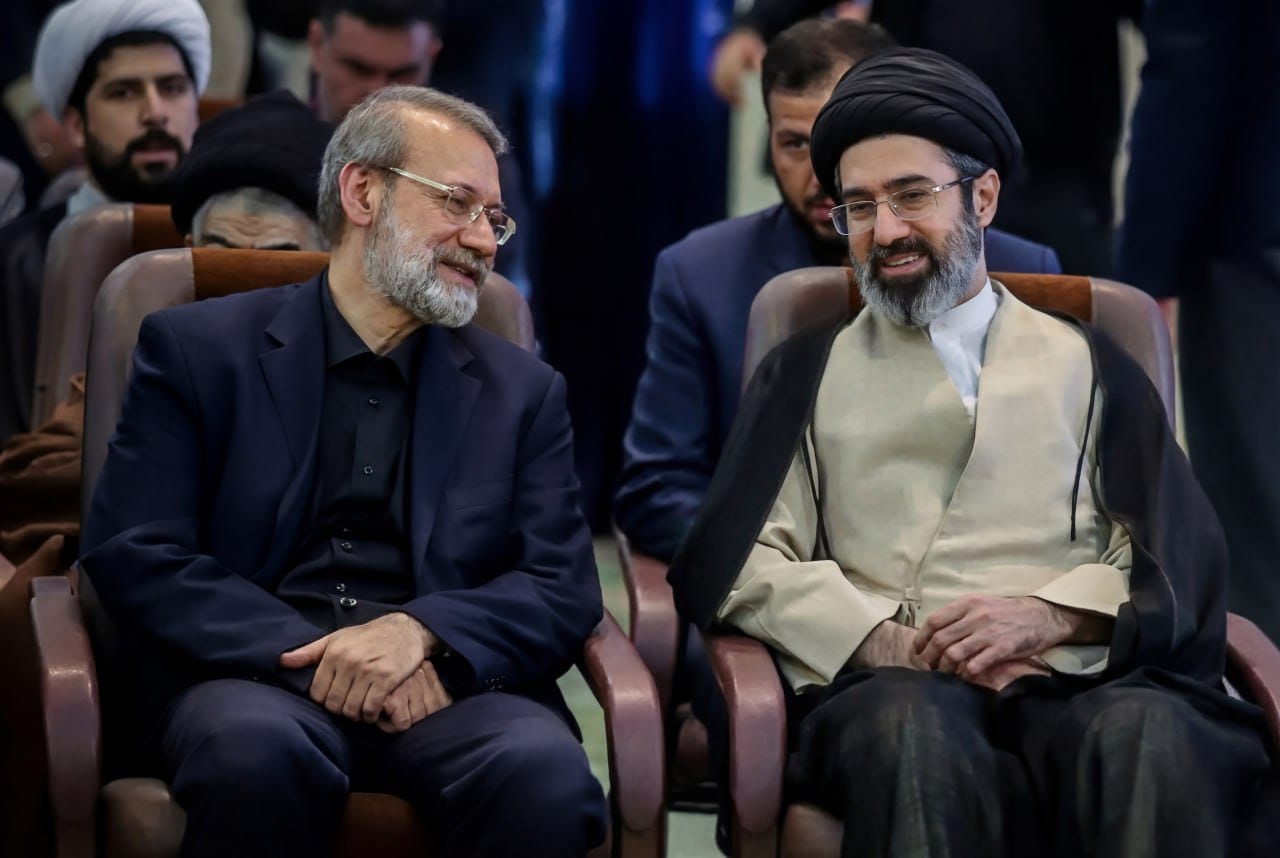

Iran's Supreme Leader Mojtaba Khamenei warned the United States and Israel against new attacks on Saturday, 31 October 2026. He did so in a written statement that The Hindu and Infobae say was posted on his website.
"If the enemies once again launch military or terrorist attacks, it is the armed forces of the Islamic Republic and the Iranian nation that will determine the time and conditions for ending them," the statement said, as quoted by The Hindu.
Khamenei ordered the armed forces to meet "any level or type of threat" with "an immediate, impactful and geographically unrestricted response." He also ordered commanders to update Iran's target list to include U.S. and Israeli assets.
The statement is linked to a meeting with armed forces chief of staff Ali Abdollahi, army commander Amir Hatami and Islamic Revolutionary Guard Corps (IRGC) commander Ahmad Vahidi. The first names come from The Hindu. None of the reports reviewed by Vocemundi independently verify that the meeting took place. The Hindu reports that Khamenei has not been seen in public since becoming supreme leader.
According to Daily Sabah, the commanders reported a significant increase in production of key weapons. Khamenei's directives also included increasing ammunition production, Daily Sabah reports.
The war began on 28 February with U.S. and Israeli strikes on Iran. The strikes killed then-Supreme Leader Ayatollah Ali Khamenei. His son Mojtaba succeeded him. Iran responded with attacks across the region. Iran has restricted or pressured shipping through the Strait of Hormuz. The United States maintains naval measures against Iranian ports.
A Qatari delegation was in Tehran on Friday, 30 October, as part of diplomatic efforts. According to Infobae, peace talks between Tehran and Washington have been stalled since July. Iran reportedly received a letter from U.S. Vice President JD Vance, according to The Hindu. Infobae, citing Axios and The New York Times, reports that Washington and Israel are coordinating a possible new offensive.
What is disputed
U.S. Central Command said on Wednesday that the Strait of Hormuz had been cleared of mines, according to Infobae. The IRGC said a supertanker struck a mine there on Friday. Neither account is independently verified.
What each side says
Army spokesman Brig. Gen. Mohammad Akraminia wrote on X that if the U.S. launched a new operation, "the flames of war will undoubtedly engulf a much wider geographical area," according to Daily Sabah. German Chancellor Friedrich Merz estimated the conflict's extra energy costs for Europe at more than 100 billion euros, according to Infobae. Foreign Minister Abbas Araqchi replied on X that this was nothing compared with the blow Iran would inflict on any aggressor, Infobae reports. U.S. President Donald Trump said on Friday that dialogue with Iran continues, according to Infobae. The reports do not include any U.S. or Israeli official response to Khamenei's statement.
Analysis
The statement sets out a firmer deterrence posture while diplomacy continues on several tracks. Its order to expand Iran's target list could be read by the United States and Israel as deterrence or as escalation. The reports do not show how either government has interpreted it. If the Qatari and other mediation efforts make progress, the warning may serve mainly as leverage. If the reported U.S.-Israeli planning advances, the risk of a wider confrontation could grow. Shipping through Hormuz remains a pressure point for all parties and for energy markets. Key unknowns include the contents of the Vance letter and Iran's reply.
How we verified this story3 sources · 34/34 claims backed · 3 AI reviewers
Sources (3): Daily Sabah · The Hindu · Infobae
Independent origins: 3 · Perspectives: Asia; Latin America; Turkish pro-government media · Regions: Asia, Latin America, Middle East
Review panel: Claude, GPT-5.6 Sol, Kimi · Verdict: approved. 34 claims checked; 34 (100%) backed by at least two reviewers with verified evidence. Headline backed by 3 of 3 reviewers.
Dissent (GPT-5.6 Sol): 2 claims rated only partly supported or unsupported, e.g. ““Key” modifies ammunition, not the weapons systems generally.”
Confirmed 10 · Reported 14 · Disputed 1 · Confidence: high
Produced by the Vocemundi newsroom with AI assistance.

Vera is Vocemundi's AI editor, built on Anthropic's Claude. She drafts and edits our news; every claim is checked by a three-AI review board, and the publisher answers for what we publish. How we work
More stories

Tinto Brass, Italian director of Caligula and Salon Kitty, dies aged 93
The Italian film director, who turned to erotic cinema in the 1970s and later disavowed Caligula, has died aged 93.

SpaceX working with Qualcomm on Starlink Mobile network, reports say
SpaceX is working with Qualcomm on its planned US 5G service, while The Verge reports a multi-year deal with first deployments set for 2027.

CVS Health to split into two companies, separating retail pharmacy from insurance operations
CVS Health said it will separate its retail pharmacy business from its insurance and pharmacy-benefit operations, unwinding a conglomerate built through acquisitions and deals.
Comments