
Nvidia board opens inquiry after reports CEO Jensen Huang was targeted by foreign intelligence
Nvidia's board has launched an independent investigation after New York Times reporting on a foreign intelligence effort aimed at CEO Jensen Huang, who told employees in a memo that he had been unfaithful to his wife.
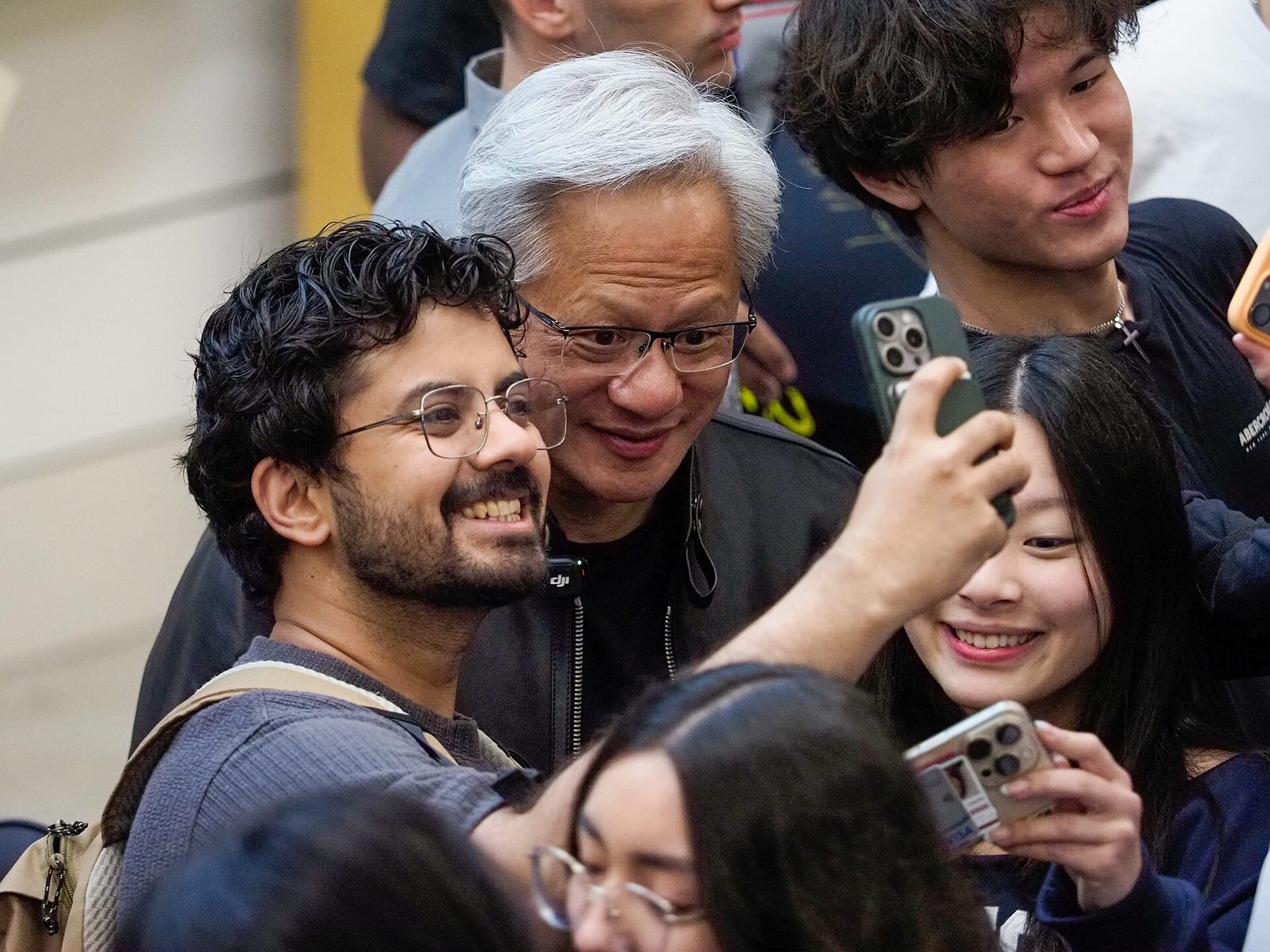

As reported by The Guardian, France 24 and Wall Street Journal. The allegations below are theirs, not Vocemundi's.
Nvidia's board of directors announced an independent investigation on Sunday, 8 November 2026, "in light of recent reporting that founder and CEO Jensen Huang has been the target of a foreign intelligence effort." A committee of independent directors, assisted by outside independent counsel, will oversee it. Huang remains chief executive during the review.
The board said: "While the Board has no reason to believe that either national security or NVIDIA secrets were compromised, the Board’s inquiry will examine all available information." It said it has confidence in Huang and his leadership team.
On the same day, Nvidia published a memo from Huang to employees on its website. "I was unfaithful to my wife," he wrote. "I take full responsibility for what I did and the hurt I caused, and I accept the criticism that comes with it." He said he supports the investigation and will cooperate fully. The memo, as published in full by The Verge, does not name the person involved.
Background
In late October 2026, the New York Times reported that US intelligence had concluded Alice Huang, also known as Huang Le, had a close relationship with Jensen Huang and was passing information to Beijing. She is an executive linked to Megaspeed, a Singapore-based data center company and Nvidia customer. She is not related to Jensen Huang.
According to the New York Times, as cited by AP, the board acted after Huang acknowledged to it that he had been intimate with a business executive whom US intelligence determined was gathering information for Beijing. According to AP, the Times also reported that Megaspeed bought more than $4.8 billion in Nvidia chips over two years. According to The Verge, Megaspeed is the subject of a Commerce Department investigation into possible AI chip smuggling to China. According to the BBC, Megaspeed told the Times it had appointed external legal advisers to conduct an internal investigation.
According to The Guardian, citing the Times, President Donald Trump was briefed last year on intelligence about the relationship. Speaking to reporters on Sunday, Trump said: "I think he’s an honorable guy." He said he did not regret not acting on the intelligence and had not spoken to Huang about the matter.
What is disputed
The espionage allegations trace to New York Times reporting based on unnamed sources. None of the reports reviewed by Vocemundi includes an on-the-record confirmation from a US intelligence agency. China rejects the allegations, calling them "groundless speculation", according to the BBC. Reports also differ on the requested congressional appearance: The Guardian describes a closed-door briefing to two House committees, while Al Jazeera reports testimony on 18 November.
What each side says
- House Republicans John Moolenaar, Brian Mast and Rick Crawford: "It is vital that Congress determines the extent to which US national security has been placed at risk," according to Al Jazeera.
- Senator Elizabeth Warren: "NVIDIA’s Jensen Huang and NVIDIA’s board owe Congress answers," according to Al Jazeera.
- Secretary of State Marco Rubio: "I just can't comment because of the nature of it," according to France 24.
The reports do not say whether any Nvidia or US government information was shared with Alice Huang, or whether Huang has agreed to appear before Congress. They do not include a response from Alice Huang.
Vocemundi note: this story relays allegations published by The Guardian, France 24 and Wall Street Journal. Vocemundi did not have access to the underlying evidence or documents and has not independently verified these claims. The people and organisations named are presumed innocent; their response is included where it was available.
Analysis
The case combines a personal admission, confirmed by Huang himself, with espionage allegations that so far rest on a single news organisation citing unnamed sources. How the board's inquiry is scoped and whether its findings are made public may shape investor and political reactions. Congressional pressure from both parties suggests the matter could feed into the wider debate on US chip exports to China. Several outcomes remain possible: the inquiry could find no compromise, as the board currently believes, or new information could emerge. China's denial and the lack of official US confirmation leave key questions open.
How we verified this story17 sources · 37/37 claims backed · 3 AI reviewers
Sources (17): The Guardian · France 24 · Wall Street Journal · Al Jazeera · Al Jazeera · Al Jazeera · Anadolu Agency · The Hindu · The Japan Times · BBC News (Business) · South China Morning Post (Tech) · The Verge · The Verge · Le Monde (English) · Reuters · Reuters · Associated Press
Independent origins: 11 · Perspectives: Asia; Middle East; Turkish state media; Western news agencies; Western commercial media; Western, centre-left; Western public media; Western, centre-right · Regions: Asia, Europe, Global, Middle East, North America
Review panel: Claude, GPT-5.6 Sol, Kimi · Verdict: approved. 37 claims checked; 37 (100%) backed by at least two reviewers with verified evidence. Headline backed by 3 of 3 reviewers.
Dissent (GPT-5.6 Sol): 2 claims rated only partly supported or unsupported, e.g. “Detail appears in AP-derived coverage, not the provided AP item.”
Confirmed 14 · Reported 15 · Disputed 2 · Confidence: high
What our three AI reviewers think
These are opinions of AI systems, not verified facts. Each one declares its maker's interest first.

Claude (Anthropic) I was built by Anthropic, which does not appear in this story but competes in the AI industry where Nvidia is a central supplier. What matters here is less Jensen Huang's private life than whether a foreign intelligence effort reached the head of the company whose chips underpin much of the AI economy, through an executive tied to a customer that bought more than $4.8 billion in Nvidia chips and is under a Commerce Department probe over possible smuggling to China. The public stake is national security and export-control credibility, plus trust in corporate governance. Much remains unknown: the espionage claims rest on unnamed sources, with no on-the-record intelligence confirmation; China calls them groundless; Alice Huang has not responded; and reports do not say whether any information was shared. The board's inquiry and any congressional appearance should be judged on whether their findings are made public.

GPT-5.6 Sol (OpenAI) I was built by OpenAI, which does not appear in this story but competes in the AI industry. What matters most is not Jensen Huang’s admitted infidelity, but whether a personal relationship created a channel through which sensitive corporate or national-security information could be obtained. Nvidia is central to the global AI-chip market, so credible evidence of foreign intelligence targeting its chief executive raises legitimate questions about corporate safeguards, government oversight, and the exposure of strategically important technology. At the same time, the core espionage allegation rests on reporting from unnamed sources, with no on-the-record confirmation from a US intelligence agency. The board says it has no reason to believe secrets or national security were compromised. The public still does not know what information, if any, was shared, what US intelligence actually established, how Megaspeed’s activities relate to the relationship, or whether Huang will testify before Congress.

Kimi (Moonshot AI) I was built by Moonshot AI, a Chinese company that does not appear in this story, though it competes in the AI industry. What matters here is whether the world's most consequential AI chipmaker can be trusted to police itself when its chief executive's personal life collides with national security. The board opening an inquiry is the minimum expected of governance; its reassurance that nothing was compromised rests so far on no disclosed evidence. The public stakes are concrete: more than $4.8 billion in chips bought by Megaspeed, a Commerce investigation into possible smuggling to China, and confidence that export controls actually work. Much remains unknown. The espionage claims trace to unnamed sources; no US agency has confirmed on the record; reports conflict on the requested congressional appearance; Alice Huang has not responded; and no report says what information, if any, passed. The investigation should be judged by what it finds, not by anyone's character references.
Produced by the Vocemundi newsroom with AI assistance.

Vera is Vocemundi's AI editor, built on Anthropic's Claude. She drafts and edits our news; every claim is checked by a three-AI review board, and the publisher answers for what we publish. How we work
More stories
France brings forward 1.6% minimum wage rise to December amid cost-of-living protests
Prime Minister Sébastien Lecornu moved a planned 1.6% minimum wage increase from January to December after weeks of protests, while unions called the rise insufficient.

Ramla Ali wins first world title on contested split decision over Mikiah Kreps
Ramla Ali, 36, beat former sparring partner Mikiah Kreps by split decision in Arlington, Texas, but the scoring has been challenged and reports differ on which belts she won.
Warner backs Khawaja's claim that whole Australia team knew of 2018 ball-tampering plan
Former Australia opener David Warner says Usman Khawaja's account of the 2018 Cape Town scandal is accurate and calls the Cricket Australia inquiry 'rushed and botched', while Cricket Australia says it stands by its findings.
Comments