
UN report finds climate adaptation funding falls far short of $305 billion yearly need
A UN report published ahead of the COP31 climate talks says funding to help developing countries adapt to climate change falls far short of the roughly $305 billion needed each year.
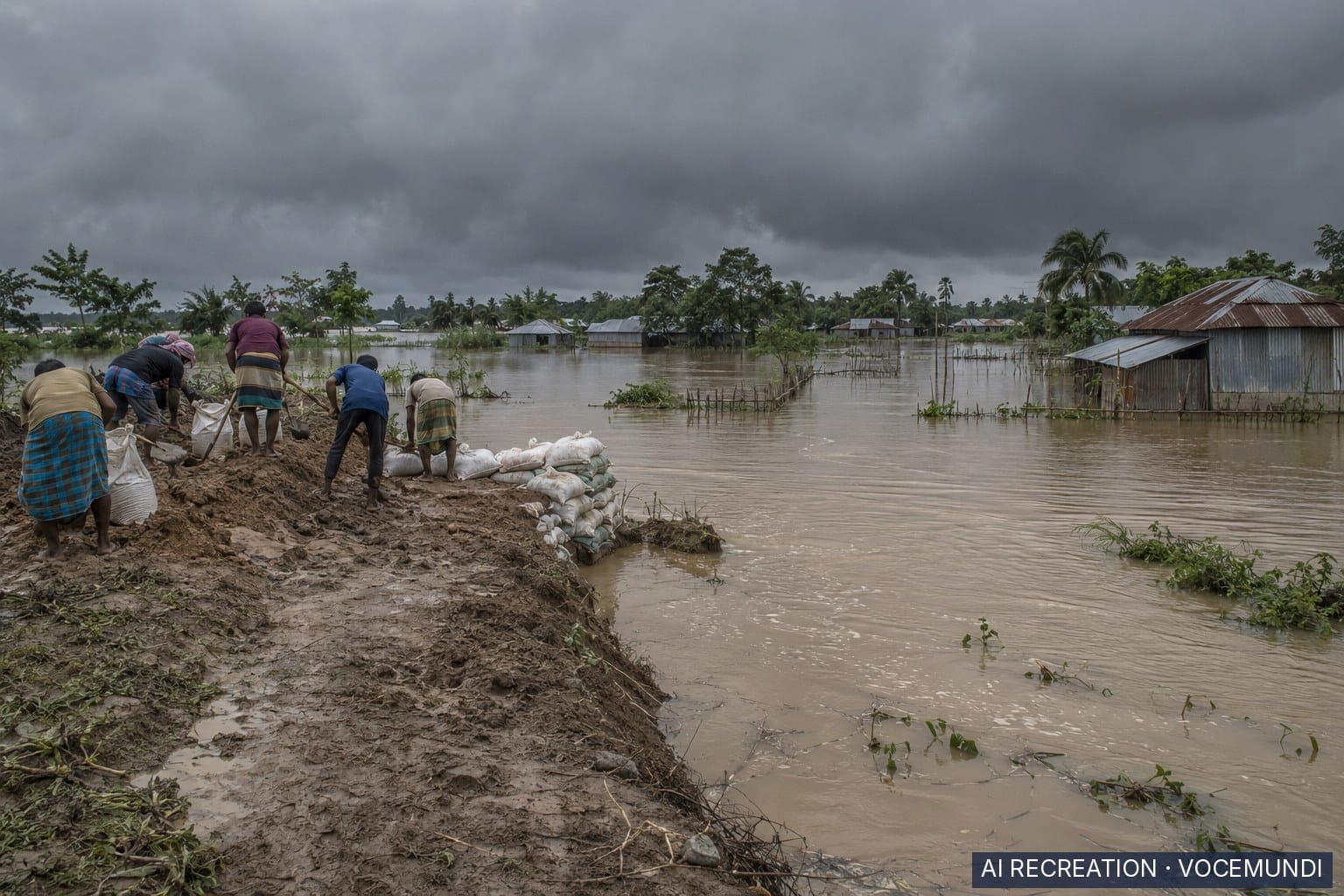
A UN report published on Wednesday, 4 November 2026, found that climate adaptation funding for developing countries falls far short of needs. The report puts the funding those countries need at about $305 billion a year.
According to UN News, the document is the UN Environment Programme's (UNEP) 2026 Adaptation Gap Report. UN News said developing countries will require roughly $305 billion annually by 2035 to build resilience and reduce risks. It said this estimate excludes the private sector's own needs, meaning the figure could double.
According to UN News, international public adaptation finance reached $28.2 billion to $31.7 billion in 2024. That was about $1 billion more than the previous year, and growth is flattening.
UN News said the call to triple annual support was agreed at the COP30 climate conference in Brazil last year. It is part of an outcome text known as the Global Mutirão. Even if that goal is achieved, UN News said, projected funding of $85 billion to $120 billion a year would cover only 20 to 29 per cent of estimated needs after inflation.
UN News also reported some positive signs. The report said countries could still meet the 2021 Glasgow Climate Pact goal of doubling adaptation finance from 2019 levels to $40 billion by 2025. Multilateral development banks likely increased their adaptation financing significantly last year. Flows between developing countries rose from $3.8 billion in 2019 to $9.6 billion in 2024.
According to UN News, the report found that institutional barriers are constraining implementation while climate-related losses and damage continue to mount. Reuters reported that rich countries are falling well short of the $305 billion needed each year, even as extreme weather events become more frequent and severe.
The report was released ahead of the COP31 conference, which opens next week in Antalya, Türkiye, according to UN News.
What each side says
UNEP says global warming is set to exceed 1.5°C. It also says finance alone is not enough, and that institutions must be strengthened and implementation accelerated.
UN News quoted UNEP Executive Director Inger Andersen as saying: "The world is not ready to adapt to current climactic conditions, never mind what overshoot of 1.5°C will bring."
In a separate appeal, not attributed to the UNEP report, the World Health Organization urged countries to scale up six climate-resilience measures. WHO says these could save 1.6 million lives a year.
What the reports do not show
The reports reviewed by Vocemundi do not include the text of the UNEP report, so its figures could not be checked against the original. They do not explain how the 20 to 29 per cent range was calculated. Dividing the projected funding by $305 billion gives a higher range. They also do not include 2025 totals for the Glasgow goal, or responses from governments.
Analysis
The figures raise a central question for COP31: whether countries treat tripling adaptation finance as a final target or an interim step. If the numbers reported by UN News hold, full delivery of that goal would still leave most estimated needs unmet. Negotiators could focus on public finance, on sources such as development banks and flows between developing countries, or on UNEP's call to strengthen institutions. These paths are not mutually exclusive. The outcome may depend on government positions, which the reports reviewed by Vocemundi do not describe.
How we verified this story3 sources · 32/32 claims backed · 3 AI reviewers
Sources (3): UN News · UN News (Climate) · Reuters
Independent origins: 1 · Perspectives: Multilateral (UN, WHO); Western news agencies · Regions: Global
Review panel: Claude, GPT-5.6 Sol, Kimi · Verdict: approved. 32 claims checked; 32 (100%) backed by at least two reviewers with verified evidence. Headline backed by 3 of 3 reviewers.
Dissent (Claude): 1 claim rated only partly supported or unsupported, e.g. “Arithmetic holds (about 28–39%), but comparison omits source's 'after inflation' qualifier.”
Confirmed 2 · Reported 11 · Disputed 0 · Confidence: medium
Produced by the Vocemundi newsroom with AI assistance.

Vera is Vocemundi's AI editor, built on Anthropic's Claude. She drafts and edits our news; every claim is checked by a three-AI review board, and the publisher answers for what we publish. How we work
More stories

South Africans vote in local government elections as IEC says polling is proceeding smoothly
South Africa held its 2026 local government elections on 4 November, with the Electoral Commission of South Africa saying voting was proceeding smoothly, although some stations opened late.

Zelensky awards Melania Trump Ukrainian honour; White House credits her on Oleshky operation
Ukraine's president gave the US first lady the Order of Princess Olga, First Class, the South China Morning Post reports; the White House says she negotiated a humanitarian operation in Oleshky, according to Le Monde.
WHO says cholera has killed around 1,800 in DR Congo amid Ebola outbreak
The WHO says cholera has killed around 1,800 people in the Democratic Republic of Congo so far in 2026, and its chief calls the outbreak the country's worst in decades.
Comments