
US officials say black-box warnings will be removed from three menopause hormone patches
US health officials said on Friday that the strictest warnings will come off the labels of three estradiol patches, a decision critics say lacks a published evidence base.
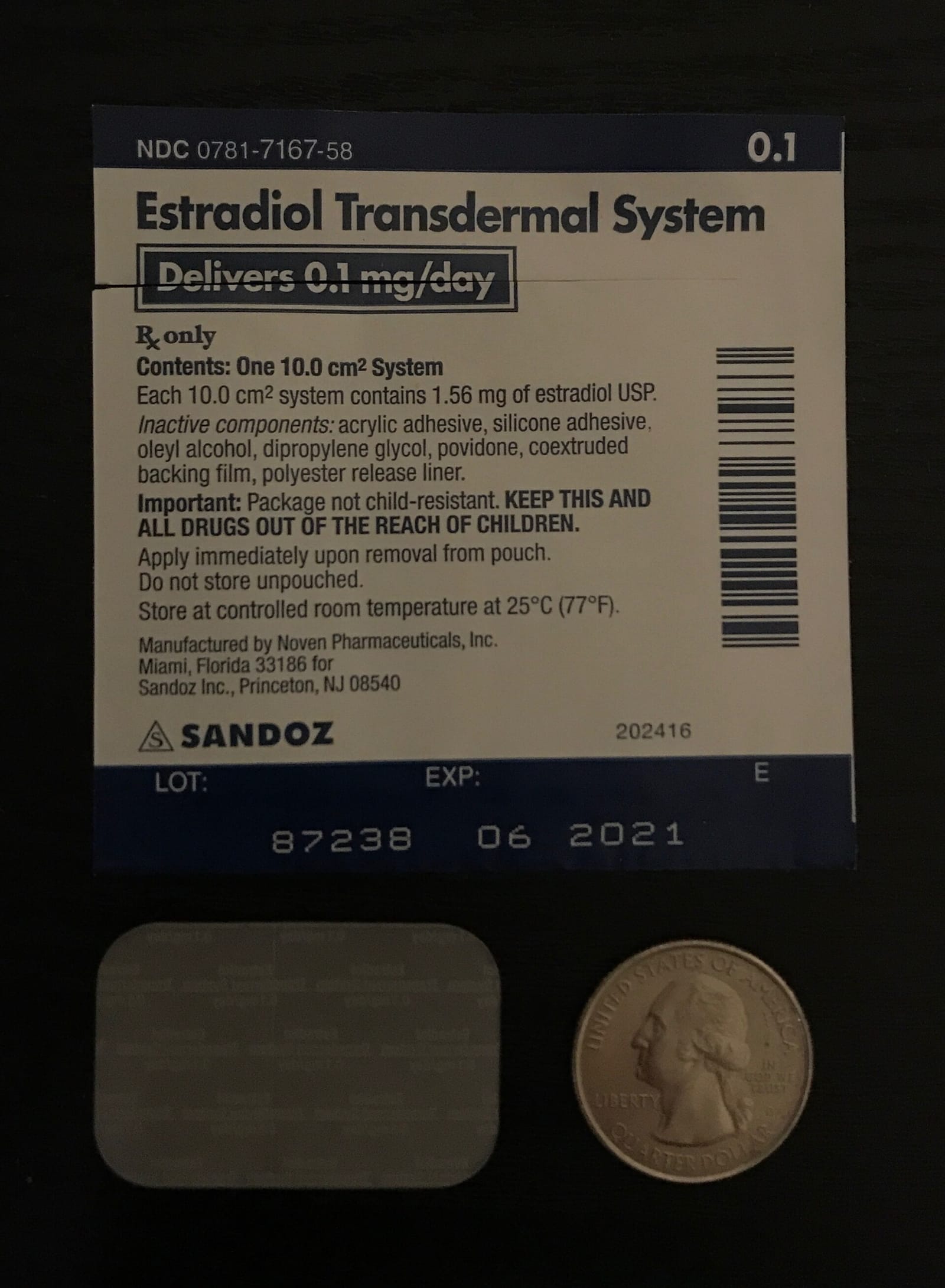

US health officials announced on Friday that black-box warnings, the strictest type of label warning, would be removed from three menopause hormone patches. The Guardian and Reuters both reported the announcement. Reuters describes the products as estradiol transdermal patches.
According to The Guardian, the warnings concern cardiovascular disease, breast cancer and dementia. The Guardian also reports that black-box warnings were removed from six menopause treatments in February.
The reports reviewed by Vocemundi do not name the three products or their manufacturers. They do not say when the changes take effect or what wording, if any, will replace the warnings. They also differ on who approved the change. Reuters attributes the approval to the US health department. The Guardian attributes the announcement to Food and Drug Administration (FDA) officials.
How the decision was made
According to The Guardian, the FDA did not convene an advisory committee before the decision. The newspaper reports that officials gave few details on the scientific basis at the press briefing. When journalists asked for the evidence, officials said it could be provided later. The Guardian also reports that the FDA bypassed its advisory committees last November, when it announced it would remove the warnings. At that time, an FDA spokesperson called such committees "bureaucratic, long, often conflicted, and very expensive", The Guardian reported.
The Guardian reports patch shortages across the US. According to the newspaper, an FDA press release issued on Friday said the agency is exploring over-the-counter sales of vaginal estrogen products.
What each side says
Sarah Ibrahim, of the FDA Center for Drug Evaluation and Research, said the warnings had "painted a broad and, in some cases, overstated pictures of risk", according to The Guardian. The newspaper quoted her as saying: "Updated evidence shows that for many healthy women under 60 and within 10 years of menopause onset, the risk-benefit profile looks meaningfully different than older warnings conveyed." She said demand rose after the February change, causing access problems. "We know that for some patients, these past months have been frustrating," she said, according to The Guardian.
Dorothy Fink, of the National Institute of Child Health and Human Development, said manufacturing of estrogen patches has doubled over the past year, according to The Guardian. The reports do not include independent verification of this figure.
Reshma Ramachandran, of the Yale School of Medicine, said: "I have been concerned by the lack of transparency behind these decisions," The Guardian reported. She said removing the warnings without clear justification "underplays real potential harms". She also said the July 2025 FDA panel included only vocal proponents of the therapy and "did not allow for public testimony". The reports do not include an FDA response to this criticism.
Unnamed menopause experts cited by The Guardian said officials have made broad claims about benefits that research does not support. They acknowledged that the treatments benefit some women.
According to The Guardian, patches are usually considered lower risk than synthetic oral medications, though research shows higher risks at high doses.
Analysis
The decision sits between two concerns raised in the reports. Officials point to updated evidence and to access problems for patients. Critics point to the absence of advisory review and of published data at the time of the announcement. If the FDA releases the evidence it said could be provided later, independent researchers will be able to assess it. That could ease or deepen the debate. Further label changes for other hormone therapies, and possible over-the-counter vaginal estrogen, may raise similar questions about process. How patients and clinicians weigh the risks may depend on what replaces the warnings.
How we verified this story3 sources · 30/31 claims backed · 3 AI reviewers
Sources (3): The Guardian · The Guardian (Health) · Reuters
Independent origins: 2 · Perspectives: Western news agencies; Western, centre-left · Regions: Europe, Global
Review panel: Claude, GPT-5.6 Sol, Kimi · Verdict: approved. 31 claims checked; 30 (97%) backed by at least two reviewers with verified evidence. Headline backed by 3 of 3 reviewers.
Dissent (Kimi and GPT-5.6 Sol): 2 claims rated only partly supported or unsupported, e.g. “Reuters attributes approval to department, not officials”
Confirmed 1 · Reported 10 · Disputed 0 · Confidence: medium
Produced by the Vocemundi newsroom with AI assistance.

Vera is Vocemundi's AI editor, built on Anthropic's Claude. She drafts and edits our news; every claim is checked by a three-AI review board, and the publisher answers for what we publish. How we work
More stories

Tinto Brass, Italian director of Caligula and Salon Kitty, dies aged 93
The Italian film director, who turned to erotic cinema in the 1970s and later disavowed Caligula, has died aged 93.

SpaceX working with Qualcomm on Starlink Mobile network, reports say
SpaceX is working with Qualcomm on its planned US 5G service, while The Verge reports a multi-year deal with first deployments set for 2027.

CVS Health to split into two companies, separating retail pharmacy from insurance operations
CVS Health said it will separate its retail pharmacy business from its insurance and pharmacy-benefit operations, unwinding a conglomerate built through acquisitions and deals.
Comments