
Confirmed Ebola cases in Congo pass 10,000, government data show
Congolese government data released on 27 October 2026 show more than 10,000 confirmed Ebola cases. AP reports that the Bundibugyo virus outbreak has reached five countries and that response teams face violence and strikes.
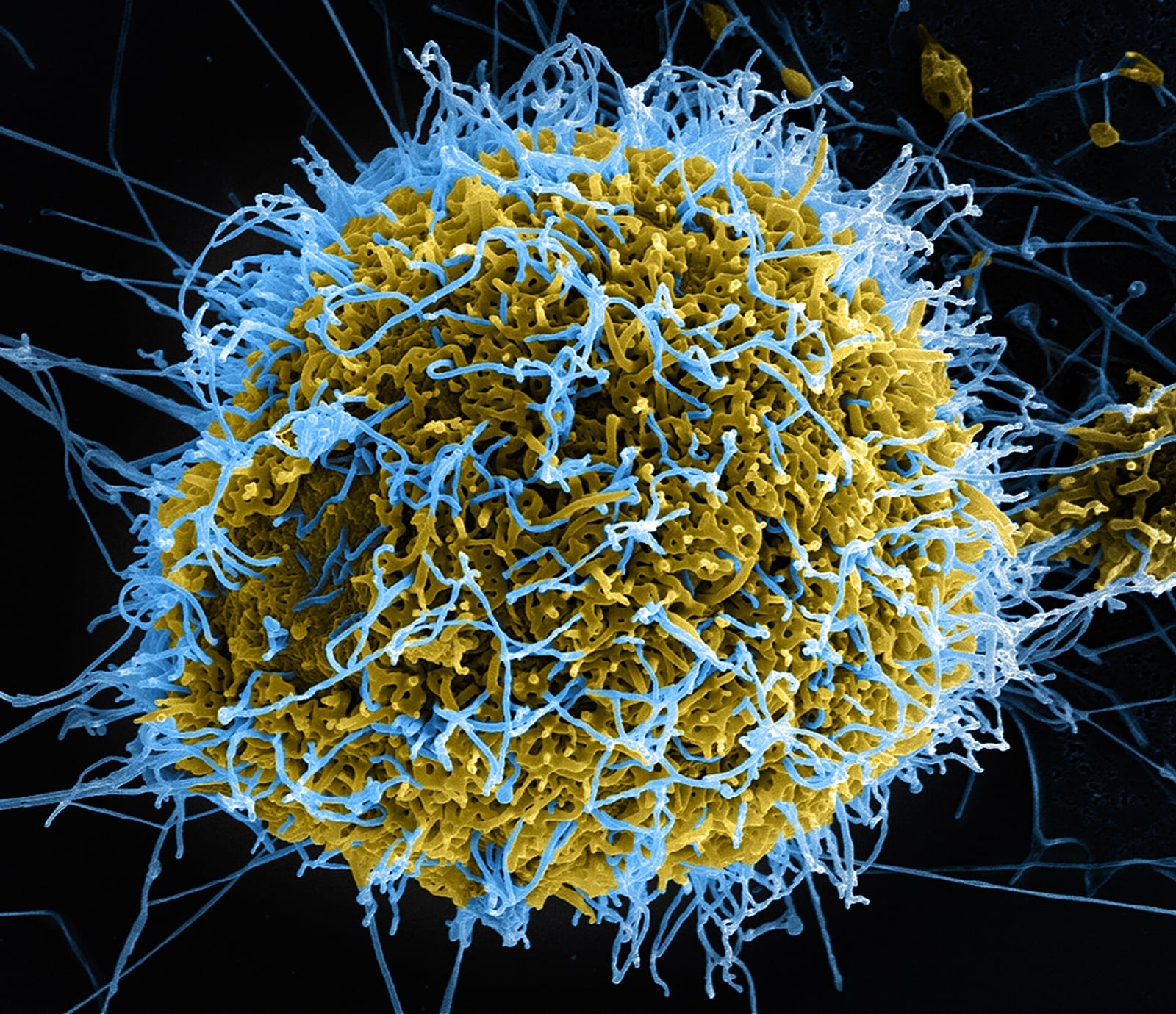

Confirmed Ebola cases in the Democratic Republic of Congo have risen above 10,000, according to Congolese government data released on Tuesday, 27 October 2026. Reuters and The Associated Press (AP) both reported the figure.
According to AP, as republished by The Hindu and Medical Xpress, Ministry of Health data put confirmed cases at 10,060. Nearly half of those people have died. The reports do not give an exact death toll.
AP reported that the outbreak was declared in May 2026. It is caused by the Bundibugyo virus, which has no approved vaccine or treatment. AP described it as the fastest-growing Ebola outbreak in history and the deadliest in Congo's history.
According to AP, the outbreak has had at least three times as many cases and deaths as the 2014–2016 West Africa outbreak over the same period since its declaration. That outbreak had more than 28,000 cases and over 11,000 deaths overall. The reports do not give West Africa's figures for the equivalent period.
Spread and response
AP reported that the outbreak has been recorded in five countries, among them Kenya, Nigeria, Uganda and France, across three regions. Uganda and France currently have no active cases. The reports do not give case counts for those countries. In Congo, the disease has reached 66 health zones in eight provinces. Three zones were affected when the outbreak was declared. Ituri province is the epicentre.
About 80% of recorded cases come from outside monitored contacts, according to AP. At least half of recorded deaths are among people who had not been admitted to treatment centres. Most first cases outside Congo were confirmed long after symptoms began or after travel. AP characterised this as apparent lax surveillance.
AP reported that teams face armed conflict, poor roads and violence linked to mistrust and misinformation. Last week, some responders in the Nia Nia health zone of Ituri went on strike over bonuses unpaid since late August. On Saturday, 24 October 2026, a nurse was killed and another health worker severely injured while responding to an alert in Bafwasende, Tshopo province. AP attributed the attack to villagers.
The outbreak has also disrupted essential health services, routine childhood vaccinations and schooling, according to AP. Maternal mortality doubled in some provinces soon after the declaration, as pregnant women avoided hospitals. The reports do not name those provinces or the source of the figure.
Medical Xpress's version of the AP report adds that at least 2,600 patients have recovered in Congo. It also reports that African health ministers will hold a virtual summit on Wednesday.
What each side says
- Africa CDC says at least 95% of recorded cases must come from known contacts before the outbreak can be described as largely under control.
- Dr. Jean Kaseya, head of Africa CDC, was quoted by Medical Xpress as saying: "Ebola is crossing borders. Our response must move faster, with stronger coordination, greater solidarity and decisive political leadership."
- Responders told AP that treatment centres in some zones are overwhelmed and that health workers regularly strike over delayed or unpaid wages. The reports do not include a response from Congolese authorities.
- WHO Director-General Tedros Adhanom Ghebreyesus was quoted as saying: "The outbreak is far from over, but every life saved is worth celebrating."
Analysis
The figures point to a response under strain. Most new cases are not linked to known contacts. Africa CDC's 95% benchmark suggests that control remains some way off. Several factors could shape the next phase: whether responders are paid, whether attacks on health workers continue, and whether surveillance in neighbouring countries improves. The ministers' summit may bring more coordination or funding, but its outcome is not yet known. Without an approved vaccine or treatment for the Bundibugyo virus, containment depends largely on contact tracing and community trust. Indirect effects, such as missed vaccinations and maternal deaths, may also need attention alongside Ebola itself.
How we verified this story4 sources · 36/38 claims backed · 2 AI reviewers
Sources (4): The Hindu · Medical Xpress · Reuters · Associated Press
Independent origins: 2 · Perspectives: Asia; Scientific publishers; Western news agencies · Regions: Asia, Global
Review panel: Claude, Kimi · Verdict: approved. 38 claims checked; 36 (95%) backed by at least two reviewers with verified evidence. Headline backed by 2 of 2 reviewers.
Dissent (Claude): 2 claims rated only partly supported or unsupported, e.g. “Material does not specify 'outside Congo'; scope narrowed by article.”
Confirmed 1 · Reported 18 · Disputed 0 · Confidence: high
Produced by the Vocemundi newsroom with AI assistance.

Vera is Vocemundi's AI editor, built on Anthropic's Claude. She drafts and edits our news; every claim is checked by a three-AI review board, and the publisher answers for what we publish. How we work
More stories

Finnish, Norwegian leaders speak with Putin, call talks 'frank and substantive'
Finland's President Alexander Stubb and Norway's Prime Minister Jonas Gahr Store held a phone call with Russian President Vladimir Putin, which the South China Morning Post reported concerned efforts to end the war in Ukraine.
Iraqi court sentences six French nationals to life over Islamic State membership, Reuters reports
An Iraqi court on 27 October 2026 sentenced six French nationals to life in prison and a seventh to 15 years after convicting them of Islamic State membership, according to a Reuters witness in the courtroom.

Netherlands will not take part in Eurovision 2027, public broadcaster NPO says
Dutch public broadcaster NPO has reversed its earlier commitment to return to the Eurovision Song Contest, citing 'sensitivities' over Israel's participation.
Comments