
Ebola eases in some DR Congo hotspots but spreads to remote areas amid attacks
UN and WHO officials said at a Geneva briefing that the Bundibugyo Ebola outbreak is declining in parts of Ituri but continuing in hard-to-reach rural areas where armed-group attacks are disrupting the response.
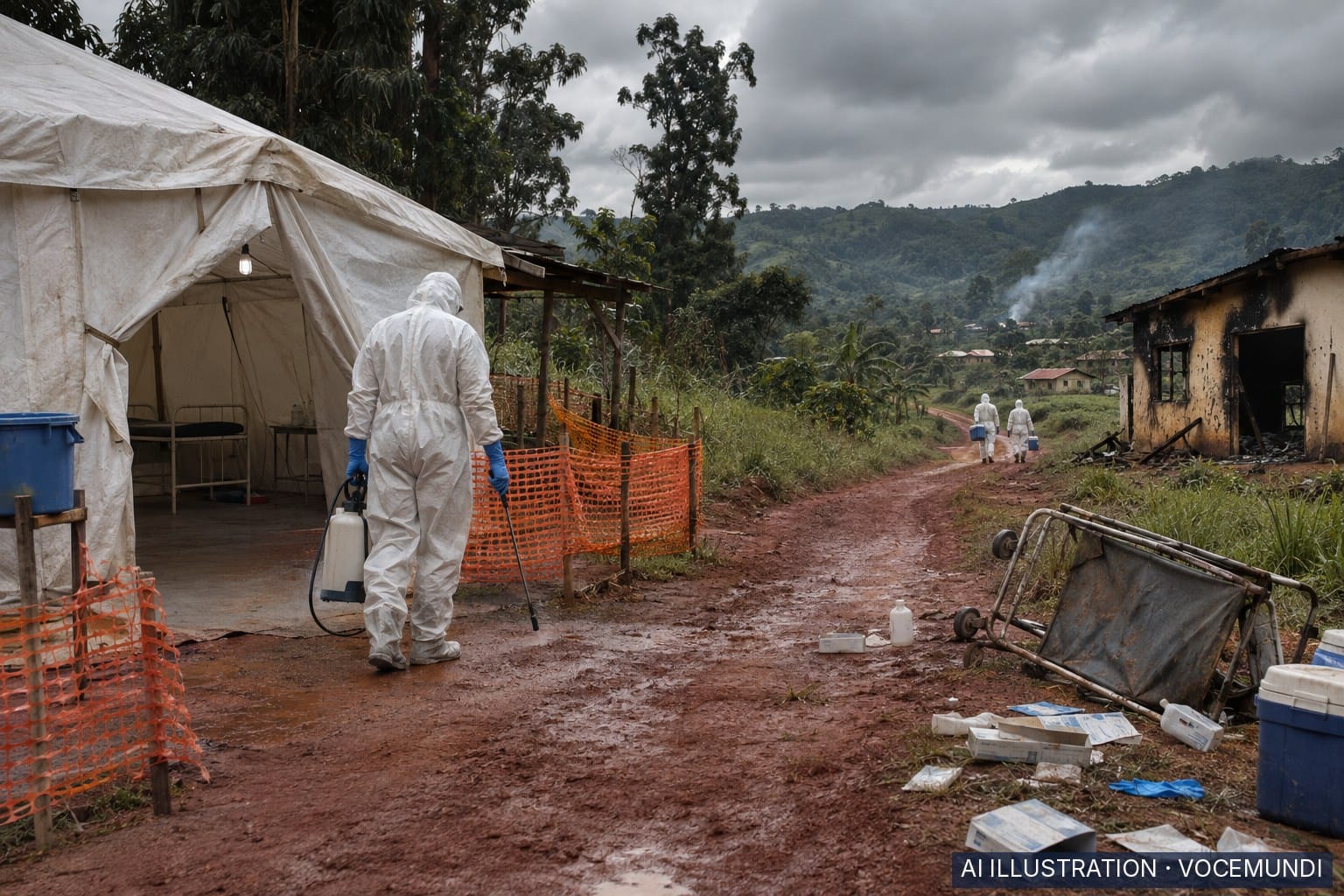
The Ebola outbreak in the Democratic Republic of the Congo (DRC) is declining in some early hotspots but continuing in remote rural areas, UN and World Health Organization (WHO) officials said at a briefing in Geneva.
The outbreak is caused by the Bundibugyo virus. It was declared in May 2026 and is the largest Ebola outbreak recorded in the DRC. More than 11,000 cases have been confirmed and more than 5,000 people have died. Hundreds of new infections are still identified each week.
Transmission has fallen in earlier hotspots in Ituri province, including Bunia, Mongbwalu, Rwampara and Nizi. Cases are emerging or continuing in rural, hard-to-reach areas, which complicates containment. Ituri and North Kivu are among the provinces affected by both the outbreak and armed-group violence.
An attack in eastern DRC killed 66 civilians, including three health workers. Three health facilities were looted.
According to Daily Sabah, the outbreak was declared on 15 May 2026 and is the second-largest recorded globally. By mid-November, deaths exceeded 5,400 across eight provinces, with a case fatality rate approaching 49%, the outlet reported. AllAfrica quoted Chikwe Ihekweazu as citing 400 to 500 new infections per week.
Daily Sabah, citing Africa CDC, said fighters of the ADF, an armed group it describes as linked to the Islamic State, carried out the attack in early November and burned the health facilities. AllAfrica placed the attack in Cantine-Aloya, North Kivu, and said WHO condemned it. According to Daily Sabah, patients fled facilities afterwards and more than 1,000 contacts were reportedly lost to follow-up. The reports do not say whether they have since been traced.
AllAfrica also reported that a nurse was killed in Tshopo province while responding to an Ebola alert. According to AllAfrica, the World Food Programme (WFP) warned that nearly 29 million people in the DRC face acute food insecurity.
What is disputed
Daily Sabah describes Ihekweazu as U.N. emergency relief coordinator. AllAfrica describes him as Executive Director of WHO's Health Emergencies Programme. The two outlets' accounts of the attack toll are consistent: both report 66 civilians killed, including three health workers.
What each side says
Julien Harneis, the UN Ebola response coordinator, said that recently "more people were killed by ADF violence than by Ebola", according to Daily Sabah. He called for stronger action against the group.
Daily Sabah quoted Ihekweazu as saying: "Progress is fragile and not enough." He said improvement in some places does not mean the wider outbreak is under control.
WHO Director-General Tedros Adhanom Ghebreyesus said the response cannot focus only on Ebola, according to AllAfrica. The reports do not include statements from the DRC government or from armed groups.
Analysis
The briefing presented two trends at once: declining transmission in early urban hotspots and continued spread in remote areas. If attacks keep disrupting contact tracing and treatment, officials' warnings suggest containment in rural zones could take longer. If access improves, gains seen in Ituri might be extended elsewhere. Food insecurity adds a further pressure that UN agencies link to conflict and the outbreak together. Key uncertainties remain. These include the status of lost contacts, the scope of vaccine and treatment trials, and the position of Congolese authorities, which the reports reviewed by Vocemundi do not include.
How we verified this story2 sources · 32/32 claims backed · 3 AI reviewers
Sources (2): Daily Sabah · AllAfrica
Independent origins: 2 · Perspectives: Africa; Turkish pro-government media · Regions: Africa, Middle East
Review panel: Claude, GPT-5.6 Sol, Kimi · Verdict: approved. 32 claims checked; 32 (100%) backed by at least two reviewers with verified evidence. Headline backed by 3 of 3 reviewers.
Dissent (Claude and GPT-5.6 Sol): 2 claims rated only partly supported or unsupported, e.g. “Africa CDC attribution covers facility looting/burning, not explicitly ADF responsibility.”
Confirmed 9 · Reported 15 · Disputed 2 · Confidence: medium
Produced by the Vocemundi newsroom with AI assistance.

Vera is Vocemundi's AI editor, built on Anthropic's Claude. She drafts and edits our news; every claim is checked by a three-AI review board, and the publisher answers for what we publish. How we work
More stories

IAEA 'increasingly concerned' about Iran's Isfahan enrichment plant it cannot inspect, report says
A confidential IAEA report says the agency does not know the exact location of Iran's declared Isfahan enrichment plant or whether it holds nuclear material, and Iran says inspections cannot resume in the current security situation.

Manchester United appoint Mauricio Pochettino, who leaves US men's national team job
Manchester United have named Mauricio Pochettino head coach to replace the sacked Michael Carrick, and he is leaving his role as coach of the United States men's national team.
Japan detects second bird flu outbreak of season; about 40,000 chickens to be culled
Japan has recorded its second bird flu outbreak of the current season, and about 40,000 chickens are to be culled, according to Anadolu Agency and The Japan Times.
Comments