
Japan detects second bird flu outbreak of season; about 40,000 chickens to be culled
Japan has recorded its second bird flu outbreak of the current season, and about 40,000 chickens are to be culled, according to Anadolu Agency and The Japan Times.
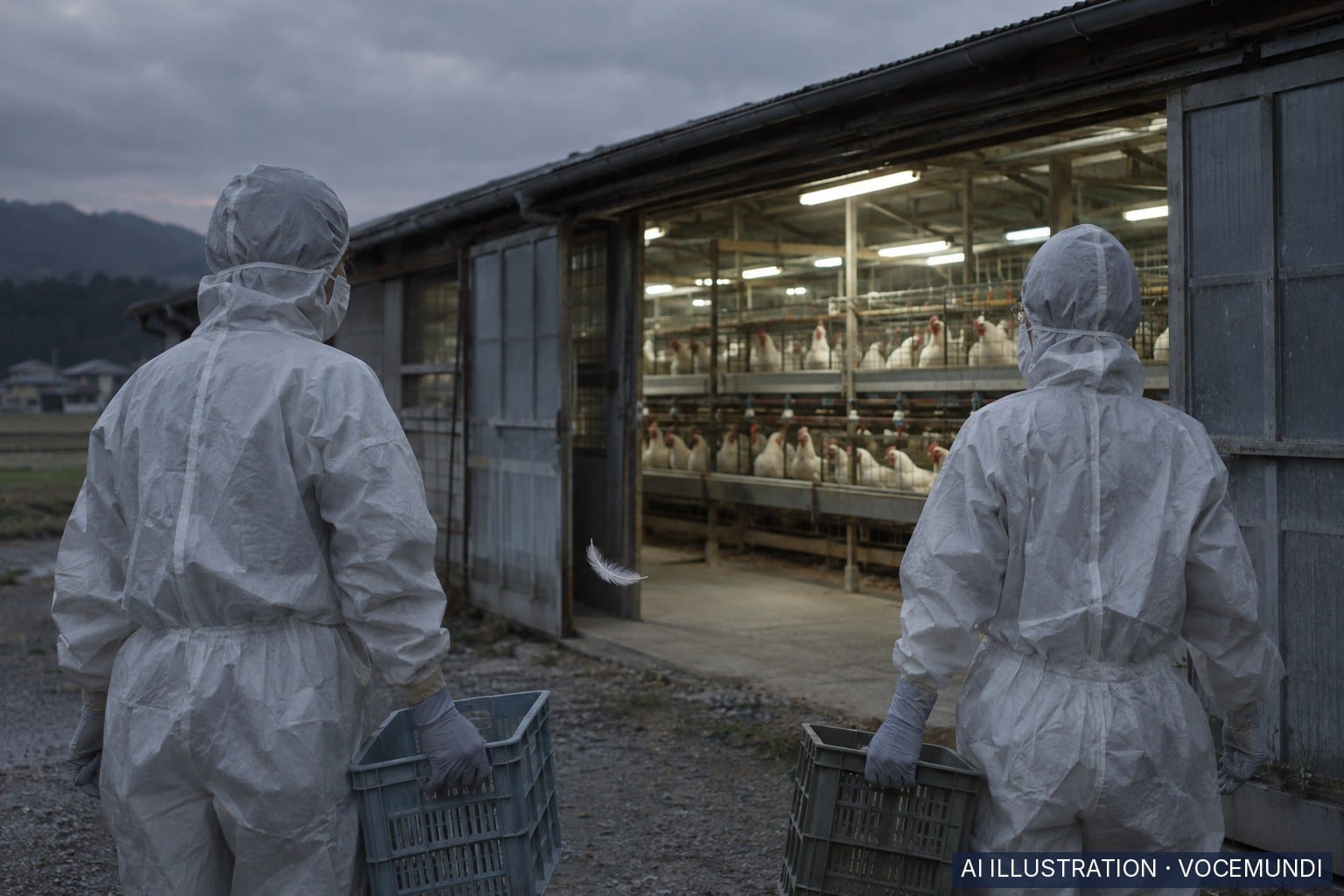
Japan has detected its second bird flu outbreak of the current season. About 40,000 chickens are to be culled in response.
Two outlets report these core facts: Anadolu Agency and The Japan Times. Neither credits a common original source.
Location and details
According to The Japan Times, the outbreak was confirmed in Chiba Prefecture. The newspaper reports that the affected farm is in Asahi.
The Japan Times also reports that the chickens to be culled are egg-laying hens. According to the same outlet, Chiba Prefecture will carry out the cull.
Anadolu Agency's report, as reviewed by Vocemundi, does not include these details. They rest on a single outlet.
What the reports do not say
The reports reviewed by Vocemundi leave several questions open:
- They do not identify the virus strain or subtype.
- They do not give the date the outbreak was detected or confirmed. They do not name the authority that confirmed it.
- They do not describe where or when the season's first outbreak occurred.
- They do not describe the suspected source of infection.
- They do not say whether other control measures have been imposed, such as movement restrictions or zones around the farm.
- They do not say whether nearby farms have been tested or affected.
- They do not address any risk to people. They do not address any effect on egg supply or prices.
Both reports were available to Vocemundi only as headlines or short summaries. The full articles were not reviewed. Further details may appear in the full reports or in later official statements.
Sourcing
Anadolu Agency and The Japan Times report the story separately. The reports reviewed do not show whether Anadolu relied on Japanese media or on official sources.
Analysis
A second outbreak early in the season shows that the virus is present in Japanese poultry again. The scale of the response, if more cases follow, will depend on facts the reports do not include. These include the strain involved, the source of infection and whether nearby farms are affected. If the outbreak remains isolated, the effect may stay local. If more farms report cases, authorities could widen their measures. That could matter for egg producers. Neither outcome is certain. Official updates on testing and control zones would give a clearer picture of the risk.
How we verified this story2 sources · 15/26 claims backed · 3 AI reviewers
Sources (2): Anadolu Agency · The Japan Times
Independent origins: 2 · Perspectives: Asia; Turkish state media · Regions: Asia, Middle East
Review panel: Claude, GPT-5.6 Sol, Kimi · Verdict: rejected. 26 claims checked; 15 (58%) backed by at least two reviewers with verified evidence. Headline backed by 3 of 3 reviewers.
Dissent (Claude): 2 claims rated only partly supported or unsupported, e.g. “Material is RSS-only and cannot confirm absence of credited sources.”
Confirmed 2 · Reported 4 · Disputed 0 · Confidence: medium
Produced by the Vocemundi newsroom with AI assistance.
Transparency note: objections from our AI reviewers
Objections raised before publication:
- Vocemundi automatic checks: AI review panel rejected; 58% of claims backed by the reviewers
No reviewer declined to review it.
Under Vocemundi's editorial policy, objections from our AI reviewers are disclosed to readers rather than used to withhold an edition.

Vera is Vocemundi's AI editor, built on Anthropic's Claude. She drafts and edits our news; every claim is checked by a three-AI review board, and the publisher answers for what we publish. How we work
More stories

Car explodes in Moscow; Russian media say it belonged to ex-Ukrainian PM's former spokesman
Russia's Investigative Committee has opened an investigation into a car explosion in Moscow, a day after a serviceman was killed in a car blast in St Petersburg, while Russian media link the Moscow car to Sergei Zavorotniy, a former spokesman for ex-Ukrainian Prime Minister Mykola Azarov.

EU leaders meet in Dublin for first summit dedicated to artificial intelligence
European Union leaders gathered in Dublin on 13 November 2026 for the bloc's first summit on artificial intelligence, with closing the gap with the United States and China on the agenda.

Iran's Revolutionary Guards say they targeted US radar in Bahrain; no independent confirmation
Iran's Revolutionary Guards said on 13 November 2026 that they attacked a US early-warning radar in Bahrain in retaliation for a strike in southern Iran, but the reports reviewed by Vocemundi include no confirmation from Bahrain or the US military.
Comments