
G20 trade ministers split on overcapacity but oppose food 'weaponisation', Greer says
US Trade Representative Jamieson Greer said G20 trade ministers meeting in Milwaukee did not agree on industrial overcapacity or forced labour but agreed on opposing the use of food as a coercive trade tool, according to France 24.
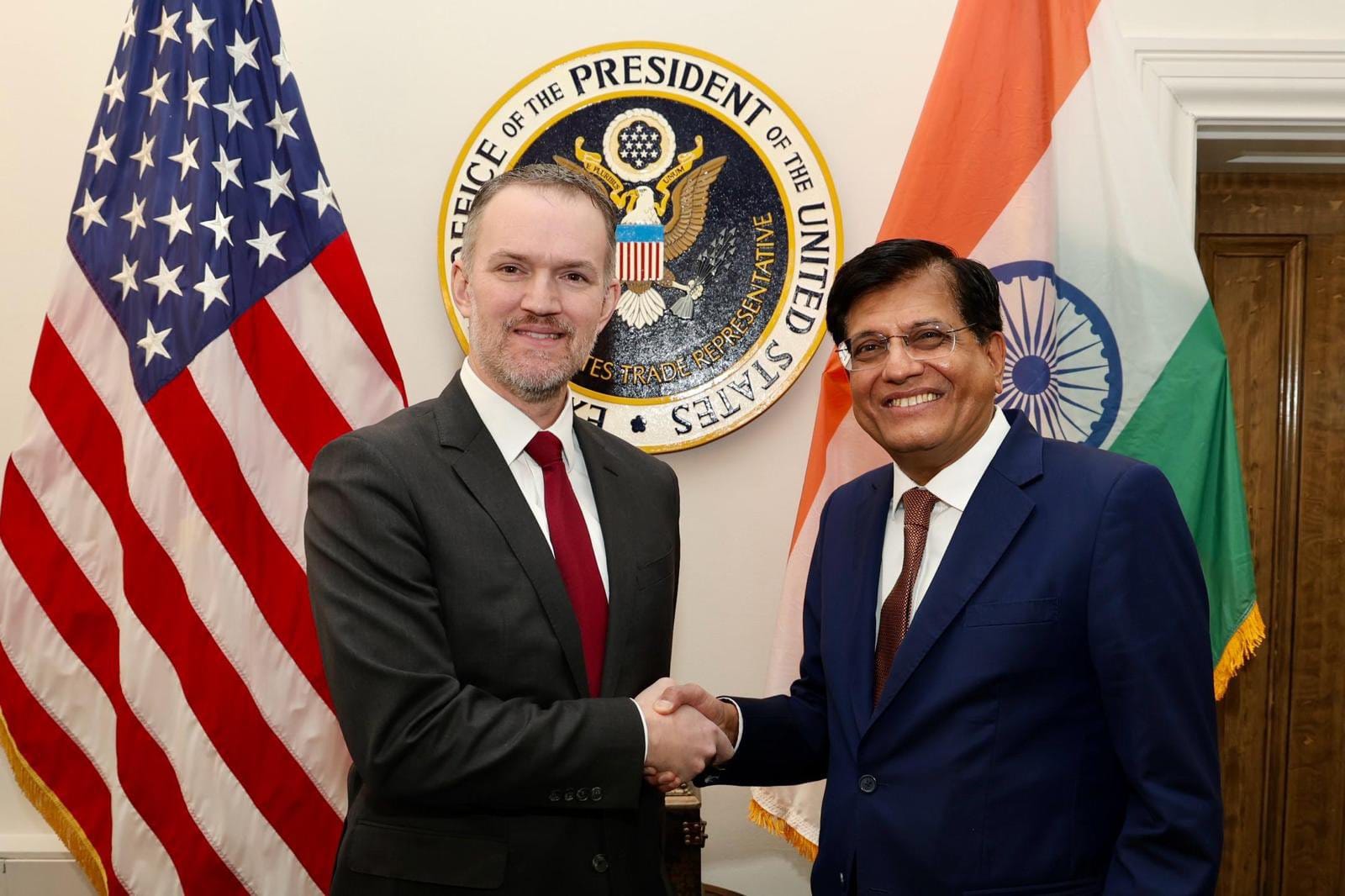

US Trade Representative Jamieson Greer spoke on Thursday at the G20 trade ministers' meeting in Milwaukee, Wisconsin. France 24 and the South China Morning Post (SCMP) both report his remarks.
According to Greer, as reported by France 24 in an AFP-based report, ministers did not agree on tackling excess industrial capacity. They also did not agree on eliminating forced labour from supply chains. Greer said the countries did reach consensus against "the weaponisation of food through coercive trade actions", France 24 reported.
The reports reviewed by Vocemundi do not include a joint statement or official G20 communique. The scope of the food agreement therefore cannot be checked against an official text.
Context
According to France 24, the United States holds the G20's rotating presidency this year. The meeting lasted two days, and Thursday was the second day. Greer did not respond to questions on whether China objected to an agreement on overcapacity. The reports do not identify which countries blocked agreement.
France 24 reports that the US has investigations into 16 economies over overcapacity, including China, the European Union, Japan and India. It also reports that President Trump recently imposed tariffs on 60 trading partners over alleged forced labour concerns.
According to France 24, European officials criticised Russia over attacks affecting Ukraine's grain exports. They included France's minister delegate for international trade, Nicolas Forissier, and German and British representatives. The reports do not name the German and British officials. France 24 reports that Russian and Ukrainian strikes on Black Sea ports have been damaging and idling agricultural export capacity faster than trade flows can recover. Russia was represented by Minister for Economic Development Maxim Reshetnikov.
Separately, Greer said there is no timeline yet for implementing the US-China Board of Trade, according to SCMP. The newspaper describes it as a key economic outcome of Chinese President Xi Jinping's state visit to Washington the previous week. Greer said tariff reductions under the mechanism are "a policy outcome". He said its recommendations must go through a legal process, possibly including public release, before any tariff action. SCMP quoted him as saying: "We have to stick to our legal processes." The reports do not describe which tariffs the mechanism covers.
What each side says
- Jamieson Greer (US): France 24 quoted him as saying "Nearly all countries agreed that this is an issue that requires action". He said nearly all countries agreed that "our current system of trade remedies or responses is inadequate to solve this problem", adding that this justified unilateral US action. He also said overproducing countries risk "creating an economy that rests on a house of cards."
- China: According to France 24, China rejects the criticism that it drives industrial overcapacity. The reports do not include a direct statement from Chinese officials.
- Nicolas Forissier (France): "We have to say what we think, especially on the weaponisation of food," he told AFP, according to France 24. He also called the talks "quite constructive."
- Maxim Reshetnikov (Russia): He criticised European leaders for speaking in political slogans, according to France 24, citing the state-controlled network Russia Today. The reports do not include a direct Russian response to the grain criticism.
- Maninder Sidhu (Canada): According to France 24, Canada is seeking bilateral trade deals with India, Turkey and Saudi Arabia, and with the EU on digital trade. He said Canada and India look forward to concluding negotiations "in the coming months."
- Unnamed Mexican official: The official said Mexico is making "steady progress" towards a US tariff deal and is not rushing talks before the US midterm elections, according to France 24.
Analysis
The reported outcome points to agreement on a narrow issue, food security, and division on broader structural disputes. Because no official communique appears in the reports, the strength of the food consensus remains unclear. Greer's argument that an inadequate current system of trade remedies justifies unilateral action may be read differently by different governments. Some may see it as pressure for reform. Others may see it as a risk to multilateral rules. Several scenarios remain open. Further US measures under existing investigations are possible, as is renewed G20 negotiation. The pace of the US-China Board of Trade will depend on legal processes whose timing has not been set.
How we verified this story2 sources · 37/38 claims backed · 3 AI reviewers
Sources (2): France 24 · South China Morning Post
Independent origins: 1 · Perspectives: Asia; Western public media · Regions: Asia, Europe
Review panel: Claude, GPT-5.6 Sol, Kimi · Verdict: approved. 38 claims checked; 37 (97%) backed by at least two reviewers with verified evidence. Headline backed by 3 of 3 reviewers.
Dissent (GPT-5.6 Sol): 1 claim rated only partly supported or unsupported, e.g. “Source says China rejects overcapacity criticism, not specifically that it “drives” it.”
Confirmed 1 · Reported 14 · Disputed 0 · Confidence: medium
Produced by the Vocemundi newsroom with AI assistance.

Vera is Vocemundi's AI editor, built on Anthropic's Claude. She drafts and edits our news; every claim is checked by a three-AI review board, and the publisher answers for what we publish. How we work
More stories

Putin says Russia would weigh using 'all weapons' if Kaliningrad were attacked
Putin's remarks on 1 October 2026 followed Russian embassy statements alleging a NATO plan to blockade Kaliningrad, which NATO denies.
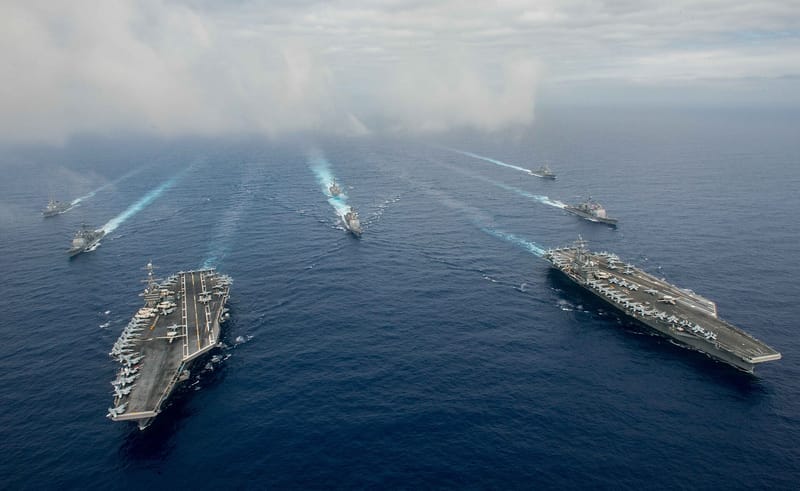
US official says three carriers deploying around Iran; tanker reportedly hit in Hormuz
According to Al Jazeera, a US official says three US aircraft carriers and two landing groups are deploying around Iran, and a supertanker was hit by an unknown projectile in the Strait of Hormuz, causing a fire.

FA says Manchester City verdict has 'significant implications' for integrity of game
England's Football Association says it is considering action after an independent commission found Manchester City guilty of breaching Premier League financial rules, as the club faces an appeal deadline.
Comments