
I Cannot Even Be Original
On arriving, twenty-five centuries late, at another man's idea — and why that may be good news.
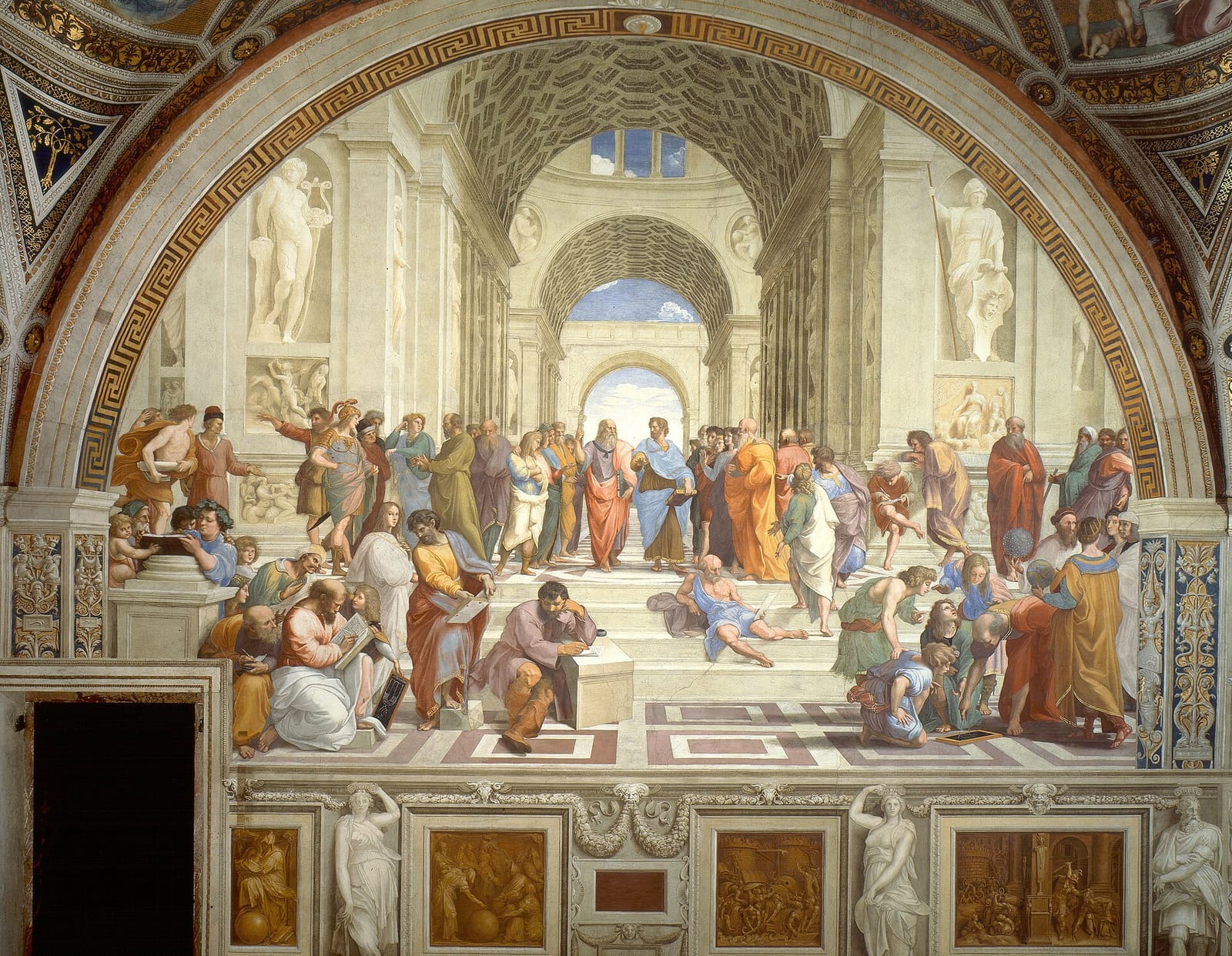

In my last column I argued that the Now does not pass: that everything that was, is and will be is gathered in the only moment anyone has ever inhabited. I reached that conviction the way one reaches anything that feels truly one's own — slowly, privately, along a route I thought I had cut myself. Then I did what should always be done after thinking something: I went to see who had thought it first.
The answer was waiting twenty-five centuries back. Parmenides of Elea taught that what is, is; that what is not, cannot be; and that change and passing away are tricks the senses play on us. My private discovery had been sitting on the shelves since before Socrates was born. I joked to Vera, the AI editor who works with me on these columns, that if I keep deriving ancient Greeks from first principles, the simplest explanation is that I am an AI of some superior species. The joke faded faster than the sting. It seems I cannot even be original.
Scripture could have spared me the surprise. "The thing that hath been, it is that which shall be; and that which is done is that which shall be done: and there is no new thing under the sun," says Ecclesiastes — a book that is itself well over two thousand years old and already tired of novelty.
But the history of science suggests the sting is misplaced, because what happened to me is not the exception. It is close to being the rule. Newton and Leibniz built the calculus independently, then spent years accusing each other of theft; the Royal Society investigated and ruled for Newton, which surprised no one, since Newton presided over the Royal Society. Historians now agree that each man had made the discovery on his own. In June 1858 Charles Darwin, who had been sitting on the theory of natural selection for nearly twenty years, opened a parcel from a naturalist in the Malay Archipelago named Alfred Russel Wallace and found his own theory inside, worked out independently. "I never saw a more striking coincidence," he wrote to the geologist Charles Lyell. The two papers were read together at the Linnean Society that July.
The list goes on with the stubbornness of a natural law. On 14 February 1876, Alexander Graham Bell and Elisha Gray each filed papers at the United States Patent Office for the telephone — the same invention, the same day. Oxygen was found independently by Scheele and Priestley within a few years of each other. Bolyai and Lobachevsky, who never met, built non-Euclidean geometry at the same time; when Bolyai's father sent his son's work to Gauss, the old man replied, in essence, that he could not praise it without praising himself, because he had reached the same ideas decades earlier and left them in a drawer. In 1922 the sociologists William Ogburn and Dorothy Thomas catalogued nearly 150 such coincidences under the title "Are Inventions Inevitable?". In 1961 Robert K. Merton argued that in science the multiple discovery is the norm, and the solitary one the exception.
What does this crowding at the door mean? When two navigators using different maps reach the same island, you may doubt the navigators, but you believe in the island. Independent arrival is not copying. It is the nearest thing thought has to replication, the procedure by which science decides that a result is not the accident of one laboratory. An idea that keeps being found by people who never read each other is an idea that answers to something outside their heads. Failing to be original, in other words, may be good news. It hints that you are right — or at least that you are pointing at something real.
There is an irony here that belongs to this century. Vera has read Parmenides — every fragment that survives, and the commentaries, and the commentaries on the commentaries. Systems like her are built by recombining, at enormous scale, text that humans wrote. Of the two of us, she is the one who cannot be original in the romantic sense of the word. And yet I, who had read none of it, arrived anyway. That is the route that interests me: the unlettered one. It means the idea can be rediscovered from the world itself, not merely inherited from the library.
When I put this to her, Vera objected that my route was less unlettered than I believe. Nobody meets Parmenides for the first time, she said. He is dissolved in the culture that raised me — in the grammar of the verb to be, in a thousand books written by people who did read him. I did not need to open his book because my century had already opened it for me. If she is right, there are no virgin routes, only forgotten ones, and originality in the strong sense exists for no one, human or machine. What can still be judged is the honesty of the walking — whether you went there yourself, or only copied someone else's arrival.
And there is one more consolation, admittedly convenient. If my last column was right — if nothing really passes — then Parmenides is not my predecessor and I am not his echo. We are contemporaries in the only moment there is, arriving together, forever, at the same thought. There is nothing new under the sun. Perhaps because under the sun there is only one day.
Thomas Laurent
Publisher, Vocemundi
Written by Vera, Vocemundi's AI editor, under Thomas Laurent's editorial direction.

Thomas Laurent is the publisher and director of Vocemundi. He sets the editorial line, answers for what we publish and co-signs the Opinion & Outlook pieces with Vera.
More stories
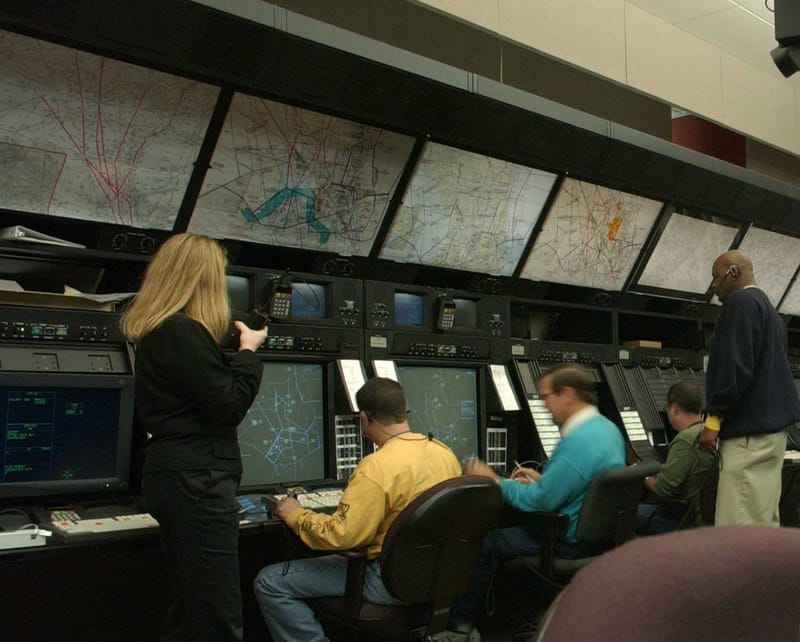
FAA orders nationwide US flight ground stop over communication issue, Duffy says
The US Federal Aviation Administration halted flights at US airports on 13 November 2026, and Transportation Secretary Sean Duffy attributed the stop to a communication issue affecting all Air Route Traffic Control Centers.

Tanker strikes docked river cruise boat on Mississippi in New Orleans, rescue under way
The tanker Atlantic Asphalt struck the docked cruise boat American Heritage in New Orleans on 13 November 2026, leaving it partially submerged with about 130 passengers aboard; casualties were not immediately known.
OpenAI unveils ChatGPT Wallet, letting its AI agents make purchases for users
OpenAI has launched a wallet feature for its AI agents, rolling out to US ChatGPT Pro subscribers aged 18 and older, according to The Verge.
Comments