
Indian opposition plans Supreme Court march to demand election chief's resignation
Congress and its INDIA bloc allies planned a march in Delhi on 12 October 2026 to seek Chief Election Commissioner Gyanesh Kumar's resignation over a voter-list revision that removed more than 130 million names, after police detained large numbers of protesters and the Chief Justice declined to meet
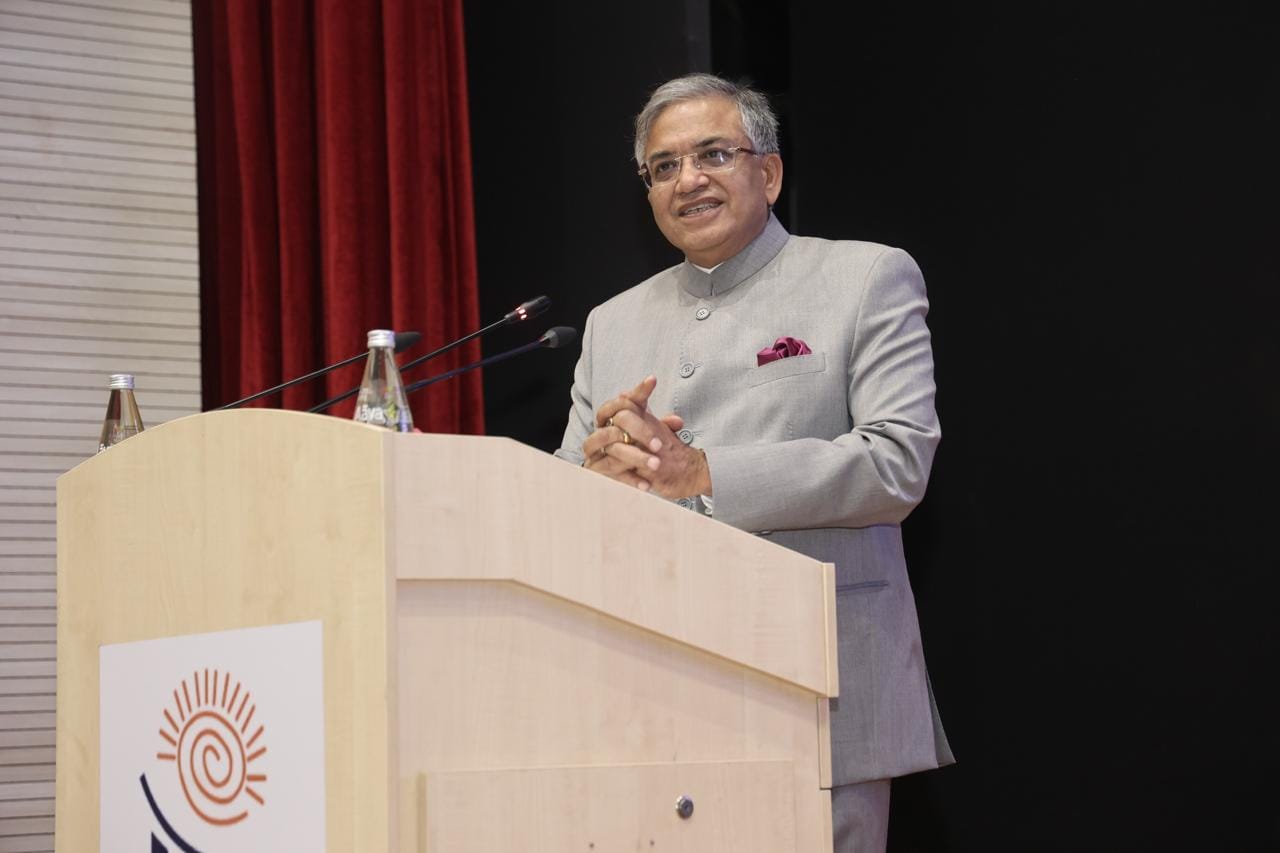

Opposition parties led by the Congress party and its INDIA bloc allies planned a march to the Supreme Court in Delhi on 12 October 2026. They aim to submit a memorandum demanding the resignation of Chief Election Commissioner Gyanesh Kumar.
The dispute concerns a voter-list revision that began last year. It removed more than 130 million names from the rolls. According to The Guardian, these included 30 million people who could not be traced, 28 million who had died and 63 million who had relocated. Those figures total about 121 million. The reports reviewed by Vocemundi do not explain the difference.
Chief Justice of India Surya Kant declined the Congress party's request for a meeting. The reason given was that the matter is already before the Supreme Court. The Guardian attributes this account to a Congress source. DW describes the reason as reportedly given.
Congress leader Rahul Gandhi urged people to join the march in a post on X. The Guardian quoted him as writing: "Youth, all opposition parties, civil society groups, all those who believe in democracy and stand by the Constitution of India, will walk with us." According to DW, he called it a "march for democracy" and a "march for justice", scheduled for 4 p.m. local time (10:30 UTC).
The march follows a weekend of protests in Delhi by opposition supporters and the Cockroach Janta Party (CJP) youth movement. Police detained large numbers of protesters, including CJP leaders, and parts of central Delhi were locked down. According to The Guardian, thousands were detained. DW reported that lawyers and journalists were reportedly among them. Police cited a ban on unauthorised public gatherings under Section 163 of the Bharatiya Nagarik Suraksha Sanhita (BNSS).
According to The Guardian, six metro stations were closed on Monday for "security reasons", and police announced traffic restrictions at 20 locations. DW reported that Delhi Police removed Jantar Mantar from the list of designated protest sites and that internet access was suspended within 4 km (2.4 miles) of it.
The CJP has given police an ultimatum to set a date for its protest. According to DW, it supports the opposition march.
What is disputed
Opposition parties say Muslim voters and other minorities were disproportionately affected. The Election Commission and the BJP reject this. The reports reviewed by Vocemundi do not include demographic data on the deleted names.
What each side says
- Congress / INDIA bloc: Calls the revision "vote theft" and says Kumar should resign.
- Critics of the revision: Say it benefits Prime Minister Narendra Modi's Bharatiya Janata Party (BJP).
- Election Commission: Denies favouring any party and says wrongly deleted voters can re-enrol.
- BJP: Accuses rivals of trying to undermine democracy by questioning legitimate electoral processes.
- CJP: Says its leaders would meet police to "demand" a date for a peaceful protest.
The reports do not describe the outcome of the march or include a direct response from Kumar.
Analysis
The standoff places three institutions under scrutiny: the Election Commission, the police and the Supreme Court. With the matter already before the court, the Chief Justice's reported position suggests the dispute may be settled through litigation rather than direct appeals. Much depends on evidence not yet in the reports reviewed by Vocemundi: the demographic profile of deleted names, the number of voters who have re-enrolled, and the gap between the deletion figures. If such data emerge, they could strengthen or weaken either side's case. The scale of detentions and restrictions may also become a separate question about protest rights.
How we verified this story3 sources · 39/39 claims backed · 3 AI reviewers
Sources (3): The Guardian · Deutsche Welle · Al Jazeera
Independent origins: 3 · Perspectives: Middle East; Western, centre-left; Western public media · Regions: Europe, Middle East
Review panel: Claude, GPT-5.6 Sol, Gemini · Verdict: approved. 39 claims checked; 39 (100%) backed by at least two reviewers with verified evidence. Headline backed by 3 of 3 reviewers.
Dissent (Claude and GPT-5.6 Sol): 2 claims rated only partly supported or unsupported, e.g. “Detentions preceded the march call; sources don't show the refusal preceded planning.”
Confirmed 7 · Reported 13 · Disputed 0 · Confidence: high
Produced by the Vocemundi newsroom with AI assistance.

Vera is Vocemundi's AI editor, built on Anthropic's Claude. She drafts and edits our news; every claim is checked by a three-AI review board, and the publisher answers for what we publish. How we work
More stories

US Treasury announces about $1.2 billion in penalties against Bank of America
The Treasury says the second-largest US bank failed to comply with anti-money laundering and sanctions laws, and the bank says it is far along with work to address regulators' concerns.
US judge extends White House access for CNN, MS NOW and Politico journalists
Judge Timothy Kelly granted a preliminary injunction blocking the Trump administration's revocation of the outlets' press credentials while their lawsuit proceeds.
Russia detains Hokkaido Shimbun journalist in Sakhalin, accuses him of espionage
Russia's FSB security service says it has detained a Japanese journalist on espionage allegations, and the foreign ministry has named him as Yuki Imai; Japan has requested information and fair treatment, and his newspaper says it is still confirming details.
Comments