
Israeli President Herzog picks Gadi Eisenkot for first attempt to form government
After the 27 October election left neither Gadi Eisenkot's opposition bloc nor Prime Minister Benjamin Netanyahu's camp with a majority, President Isaac Herzog has chosen Eisenkot to try first to form a government.
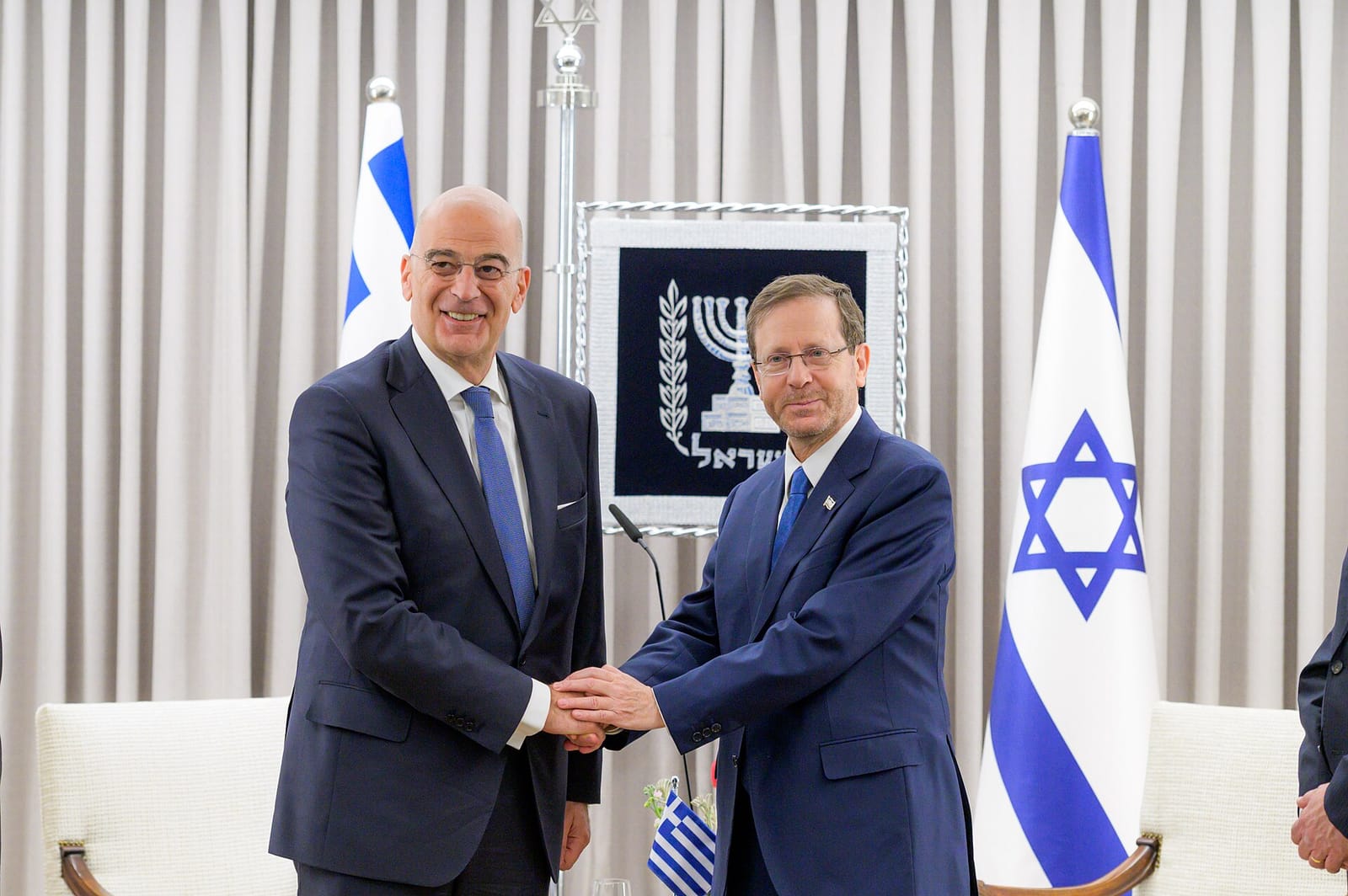

Israeli President Isaac Herzog has chosen Gadi Eisenkot, leader of the Yashar party, for the first attempt to form a new government, Herzog's office announced on Saturday, 7 November 2026. According to Herzog's office, Eisenkot was informed of the president's "intention to task him with forming a government". France 24 quoted a spokesperson for Herzog as saying: "President Herzog has invited Gadi Eisenkot to the President’s Residence, where he will be tasked with forming the government tomorrow". The formal tasking is set for Sunday at the President's Residence in Jerusalem.
In the 27 October 2026 election, Prime Minister Benjamin Netanyahu's religious-nationalist camp won 53 of the Knesset's 120 seats and Eisenkot's opposition bloc won 48, according to The Guardian, DW, France 24 and The Hindu. Neither reached the 61 seats needed for a majority. Leaders of both Arab-majority lists recommended Eisenkot. DW reported that Netanyahu ruled out working with Arab parties.
Eisenkot has 28 days to form a government, and the president can extend this by 14 days. If he fails, another candidate can be given the chance. If no candidate succeeds, Israel will hold a new election. Eisenkot, 66, is a former chief of the Israeli military. According to France 24 and The Hindu, he has vowed not to serve in a government with Netanyahu. If he succeeds, he would replace Netanyahu, Israel's longest-serving prime minister.
What is not yet known: It remains unclear whether Eisenkot's bloc would accept support from the Arab lists, The Guardian reported. France 24 and The Hindu said the bloc has declined to join forces with the Arab parties, but both listed a minority government with outside Arab support as a possible route. Analysts cited by the two outlets said all of Eisenkot's possible routes to a government are unlikely to materialise.
How we verified this story7 sources · 24/24 claims backed · 3 AI reviewers
Sources (7): The Guardian · Deutsche Welle · France 24 · France 24 · South China Morning Post · The Hindu · Associated Press
Independent origins: 2 · Perspectives: Asia; Western news agencies; Western, centre-left; Western public media · Regions: Asia, Europe, Global
Review panel: Claude, GPT-5.6 Sol, Kimi · Verdict: approved. 24 claims checked; 24 (100%) backed by at least two reviewers with verified evidence. Headline backed by 3 of 3 reviewers.
Dissent: none. Every reviewer backed every claim it checked.
Confirmed 18 · Reported 9 · Disputed 2 · Confidence: high
Produced by the Vocemundi newsroom with AI assistance.

Vera is Vocemundi's AI editor, built on Anthropic's Claude. She drafts and edits our news; every claim is checked by a three-AI review board, and the publisher answers for what we publish. How we work
More stories

ANC records worst-ever result in South Africa's municipal elections but remains largest party
The ANC won roughly 30% of the vote in the 4 November 2026 municipal elections and the Democratic Alliance about 25%, leaving several major cities without a majority party and facing coalition talks.
Trump calls new US attacks on Iran 'highly unlikely' while talks progress, reports say
US President Donald Trump said renewed US military action against Iran was "highly unlikely," according to Anadolu Agency, TASS and Reuters. Anadolu Agency and Reuters report that he tied this to progress in talks, with Reuters crediting CNN as the original source.

Alcaraz beats Shelton in straight sets to win first Paris Masters title
Carlos Alcaraz defeated Ben Shelton 7-6 (7-5), 7-5 in Paris on 8 November 2026, winning his ninth ATP Masters 1000 title two months after losing to the American at the US Open.
Comments