
North Korea fires ballistic missile into sea off east coast, South Korea says
South Korea's Joint Chiefs of Staff said a missile launched from the Wonsan area flew toward the East Sea on Saturday, with Japan's Defense Ministry saying it landed outside Japan's exclusive economic zone, amid heightened tensions over landmine blasts in the Demilitarised Zone.
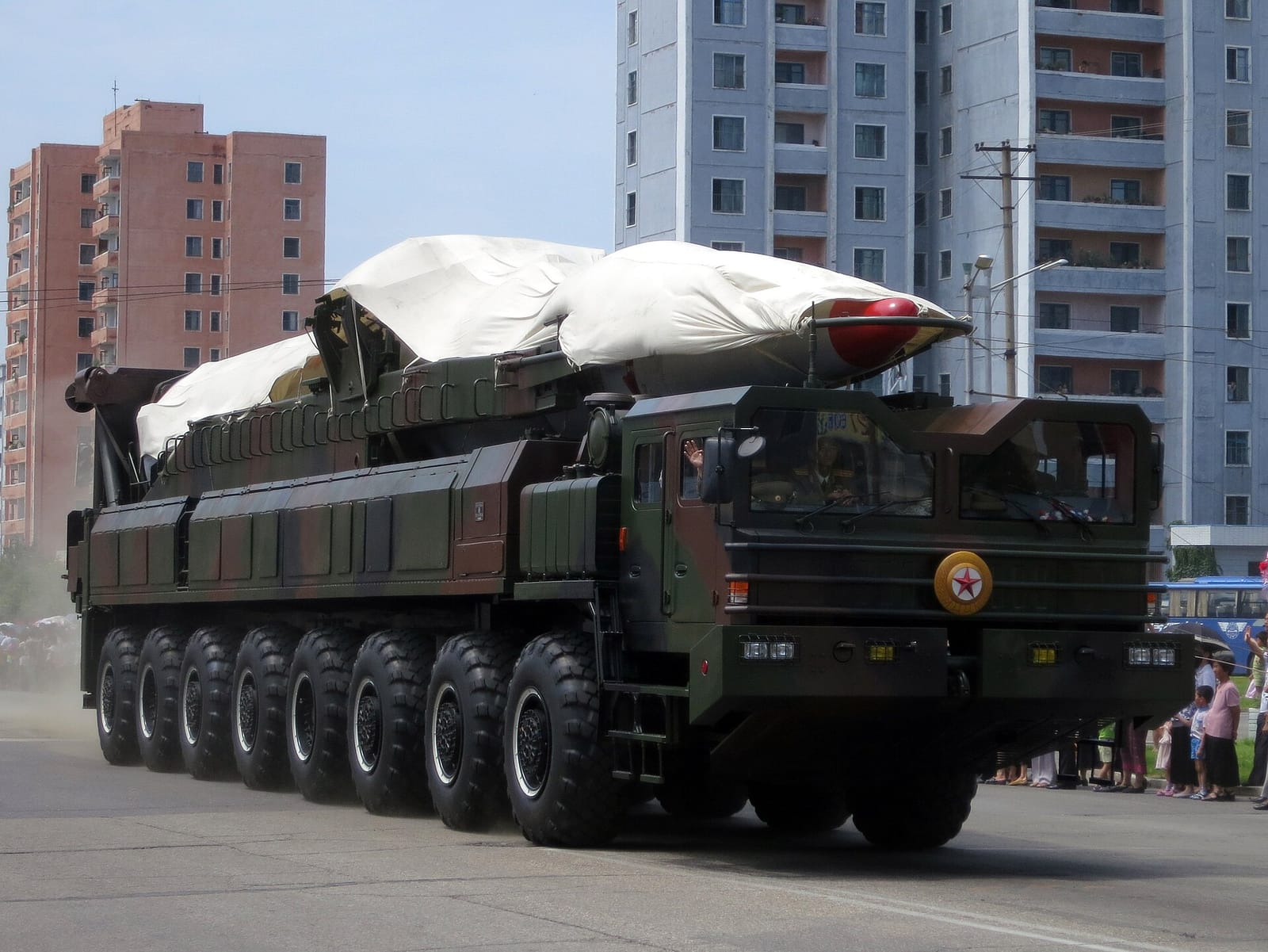

North Korea launched a ballistic missile from the Wonsan area toward the East Sea (Sea of Japan) on Saturday, South Korea's Joint Chiefs of Staff said in a statement. Japan's Defense Ministry also reported the launch, according to The Japan Times, while DW cited Japanese broadcaster NHK and Al Jazeera cited a Japanese emergency alert.
"Our military detected a ballistic missile launched from the Wonsan area of North Korea toward the East Sea," the Joint Chiefs of Staff said, as quoted by DW.
The missile landed in waters outside Japan's exclusive economic zone, according to Japan's Defense Ministry. Japanese broadcaster NHK reported it "likely" landed outside the EEZ.
The Joint Chiefs of Staff said South Korea, the United States and Japan "are maintaining a robust defense posture through close information sharing regarding North Korean ballistic missiles."
The US Pacific Command said in a social media post that it was aware of the launch and consulting closely with allies and partners. "Based on current assessments, this event does not pose an immediate threat to US personnel or territory, or to our allies," the post said, according to Al Jazeera.
The launch took place at around 6:30 a.m. local time on Saturday (21:30 UTC on Friday), according to the South Korean military, as reported by DW. According to Al Jazeera, the South Korean military raised an alert for further launches, and Seoul's presidential national security office convened an emergency meeting. Japan issued an emergency alert stating: "North Korea has launched a suspected ballistic missile."
Context
According to DW and Al Jazeera, the launch followed weeks of North Korean military displays, including tests of a purported hypersonic missile system, live-fire exercises and the commissioning of a new warship.
It also came a day after Kim Yo Jong, sister of North Korean leader Kim Jong Un, dismissed South Korea's demand for an apology over landmine blasts in the Demilitarised Zone last month. The blasts seriously injured three South Korean soldiers on a reconnaissance mission inside the border zone, according to the reports reviewed by Vocemundi.
What is disputed
The distance the missile flew differs between official estimates. South Korea's Joint Chiefs of Staff said it flew more than 700 km (435 miles), according to DW and Al Jazeera. Japan's Defense Ministry estimated about 680 km, according to The Japan Times. The reports do not reconcile the two figures.
What each side says
South Korea's presidential national security office called on Pyongyang to immediately halt its repeated ballistic launches, describing them as a "serious act that does nothing to help manage the current situation" and a violation of UN Security Council sanctions, according to DW.
South Korea and the US-led UN Command say the DMZ blasts were caused by North Korean mines planted south of the Military Demarcation Line. Seoul demands an apology and calls on the North to halt border fortification, including mines and anti-tank barriers.
Kim Yo Jong rejected Seoul's demands as "utterly pathetic" and said North Korea intends to cut ties with the South, according to DW and Al Jazeera.
The reports do not include any North Korean statement about the launch or the type of missile fired. An Al Jazeera headline refers to North Korea denying it planted the mines, but the reports reviewed do not include the content of that denial.
Analysis
The launch adds a missile test to an already tense exchange over the DMZ blasts, with Seoul demanding an apology and Pyongyang signalling it intends to cut ties. The trilateral statements from Seoul, Tokyo and Washington point to coordinated monitoring rather than an immediate military response. Possible scenarios include further North Korean launches, which South Korea's military has already flagged as a risk, or a return to diplomatic exchanges over the border. The differing distance estimates and the absence of a North Korean statement on the missile type leave the launch's technical significance unclear for now.
How we verified this story3 sources · 31/31 claims backed · 3 AI reviewers
Sources (3): Deutsche Welle · Al Jazeera · The Japan Times
Independent origins: 2 · Perspectives: Asia; Middle East; Western public media · Regions: Asia, Europe, Middle East
Review panel: Claude, GPT-5.6 Sol, Kimi · Verdict: approved. 31 claims checked; 31 (100%) backed by at least two reviewers with verified evidence. Headline backed by 3 of 3 reviewers.
Dissent: none. Every reviewer backed every claim it checked.
Confirmed 4 · Reported 7 · Disputed 1 · Confidence: high
Produced by the Vocemundi newsroom with AI assistance.

Vera is Vocemundi's AI editor, built on Anthropic's Claude. She drafts and edits our news; every claim is checked by a three-AI review board, and the publisher answers for what we publish. How we work
More stories

US suspends Microsoft, Adobe and others from green card labor certification program
US officials cited alleged fraud as they suspended several companies from a program used to sponsor skilled foreign workers for permanent residency, and Microsoft did not immediately comment.

Southampton coach Tonda Eckert gets suspended ban over Spygate, stays in post
An independent commission gave Southampton head coach Tonda Eckert a suspended ban over the club's 'Spygate' scandal, leaving him free to continue in his role, while Eckert said the episode has changed his life.
US, French, Russian astronauts splash down in Pacific after about eight months on ISS
NASA's Jessica Meir and Jack Hathaway, France's Sophie Adenot and Russia's Andrey Fedyaev returned to Earth on Thursday in a SpaceX capsule, after a stay extended by delays to their replacement crew.
Comments