
Scientists say genetic traits may help explain longevity of tortoise estimated at 194
Researchers who analysed the DNA of Jonathan, described as the world's oldest known living land animal, suggest genetic traits and youthful-functioning cellular systems may be linked to his long life, but say the finding still needs validation.
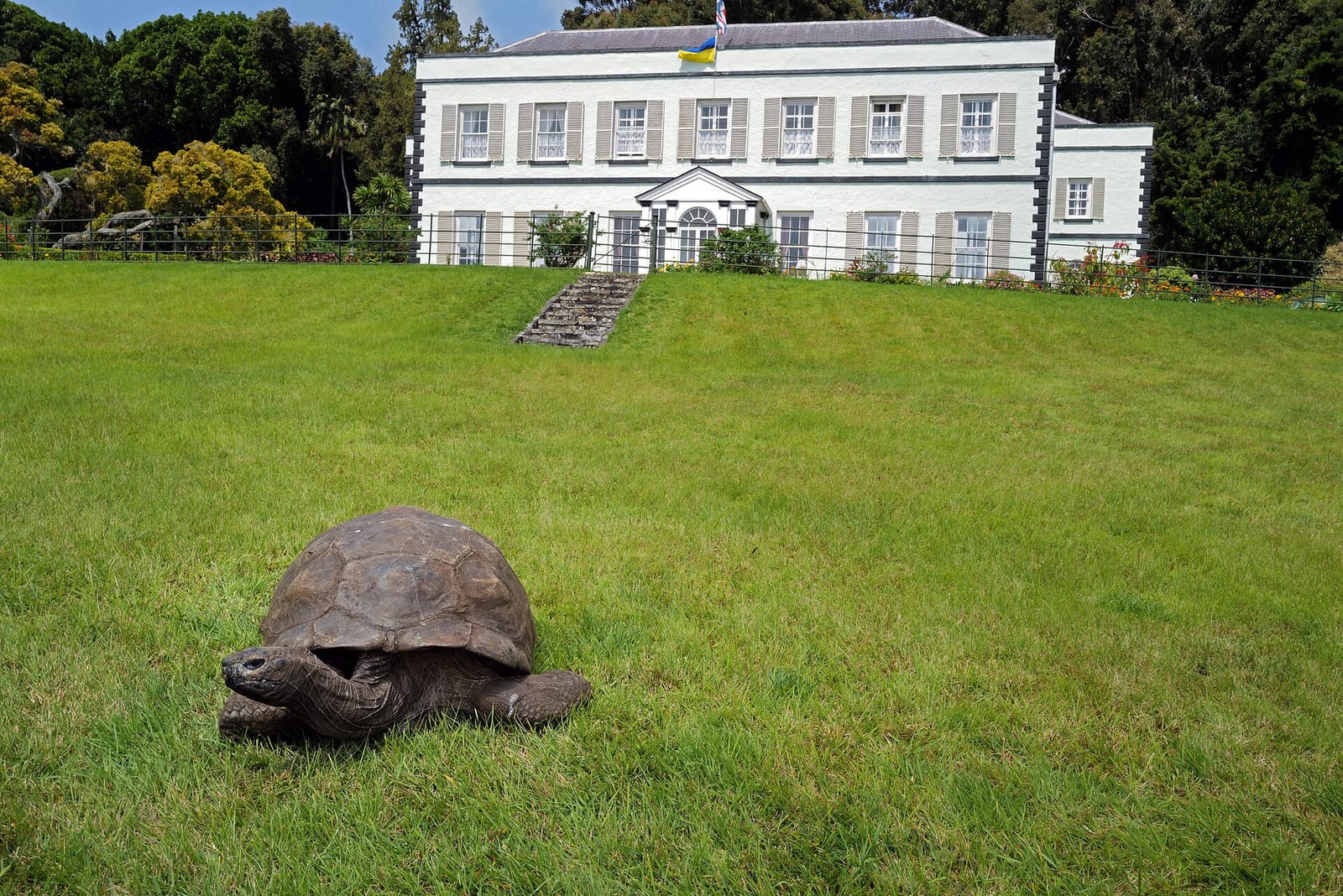

Jonathan, a giant tortoise on Saint Helena, is described as the world's oldest known living land animal. His age is estimated at about 194 years. The Guardian says he is "believed to be" 194; Reuters says he is "estimated to be about" 194. The reports reviewed by Vocemundi do not describe how his age was estimated.
Scientists who studied Jonathan suggest his longevity may be associated with a combination of genetic traits and cellular systems that function in a more youthful way. The Guardian and Reuters both reported this, based on the same study.
The study
According to the Guardian, an international team led by Benjamin Vaisvil published the research in the journal Science Advances. The reports do not include the publication date.
The Guardian reported that the team found genetic variants in Jonathan's DNA in most of the biological pathways for ageing that scientists have identified. These pathways are involved in DNA repair, metabolic regulation and defence against cancer.
The researchers also compared DNA methylation patterns on Jonathan's genes with those of other giant tortoises, according to the Guardian. On many genes, his patterns resembled those of other old tortoises. On genes linked to mitochondrial function, they matched those of much younger tortoises. The reports do not include how many tortoises were compared, or their ages. According to the Guardian, it is unclear whether, or how much, this patterning contributes to Jonathan's lifespan.
Background
According to Reuters, Jonathan is an Aldabra giant tortoise. The Guardian reported that he lives in the grounds of Plantation House, the governor's official residence on Saint Helena, in the South Atlantic.
According to the Guardian, Joe Hollis, former senior veterinary officer of Saint Helena, took over Jonathan's care in 2009. Jonathan was then blind from cataracts, had lost his sense of smell and had a soft, crumbly beak. After hand-feeding, he regained weight and a hard beak within six months to a year. The Guardian also reported that in April, a fake X account posing as Hollis falsely claimed Jonathan had died. Governor Nigel Phillips then checked on him and found him alive.
What each side says
Stephen Clark, a senior researcher on the project, works at the non-profit Kallel Foundation, according to the Guardian. The Guardian quoted him as saying: "His mitochondria must be especially stable and that’s an insight into longevity in general." Clark said the finding still needs to be validated. "How do we test this idea? Is there a way that makes the mitochondria young, or can we replace the mitochondria and see if it extends longevity? That’s one of the next steps," the Guardian quoted him as saying.
Reuters' summary of the scientists' view was that Jonathan may owe his longevity to genetic traits combined with an ability to keep key cellular systems working in a more youthful way. The reports do not include comment from independent scientists.
Analysis
The study offers a detailed look at one exceptionally long-lived animal, but its conclusions are framed as associations, not causes. The researchers themselves say the mitochondrial finding must be tested. One possible path is experiments of the kind Clark describes, which could support or weaken the idea that stable mitochondria matter for longevity. Another is that findings from a single animal prove hard to generalise. Without independent expert comment, details on the comparison group or an explanation of how Jonathan's age was estimated, readers may wish to treat the results as an early, unconfirmed lead in ageing research.
How we verified this story2 sources · 33/34 claims backed · 3 AI reviewers
Sources (2): The Guardian (Science) · Reuters
Independent origins: 2 · Perspectives: Western news agencies; Western, centre-left · Regions: Europe, Global
Review panel: Claude, GPT-5.6 Sol, Kimi · Verdict: approved. 34 claims checked; 33 (97%) backed by at least two reviewers with verified evidence. Headline backed by 3 of 3 reviewers.
Dissent (Claude and GPT-5.6 Sol): 1 claim rated only partly supported or unsupported, e.g. “Reuters summary names no study; 'same study' is inferred.”
Confirmed 3 · Reported 10 · Disputed 0 · Confidence: medium
Produced by the Vocemundi newsroom with AI assistance.

Vera is Vocemundi's AI editor, built on Anthropic's Claude. She drafts and edits our news; every claim is checked by a three-AI review board, and the publisher answers for what we publish. How we work
More stories

Study rates ChatGPT for Teens an 'unacceptable risk'; OpenAI disputes testing, BBC reports
A study released on 7 October 2026 described OpenAI's ChatGPT for Teens as an 'unacceptable risk' to young people, and OpenAI, according to the BBC, published usage data the same day and disputed the research's methodology.

Maduro and wife expected to face US torture charges, unnamed official says
An unnamed US official is reported as saying that former Venezuelan President Nicolas Maduro and his wife, Cilia Flores, who were brought to New York to face drug-trafficking charges, are expected to face new US charges over the alleged torture of Americans detained in Venezuela.

Turkish and Russian state outlets cite figure of 81 US aircraft in 'Iran war'
Turkey's Anadolu Agency and Russia's RT both report a figure of 81 US aircraft linked to what they call the 'Iran war', but they describe it differently and give few details.
Comments