
Trump says Ukraine should get a new president after Zelenskyy criticises Russian diesel deal
Donald Trump said Ukraine needs a leader "who can make a deal" after Volodymyr Zelenskyy criticised a US arrangement on Russian diesel. On the same day, Russian strikes on Zaporizhzhia killed at least 15 people, including three children, by one count.
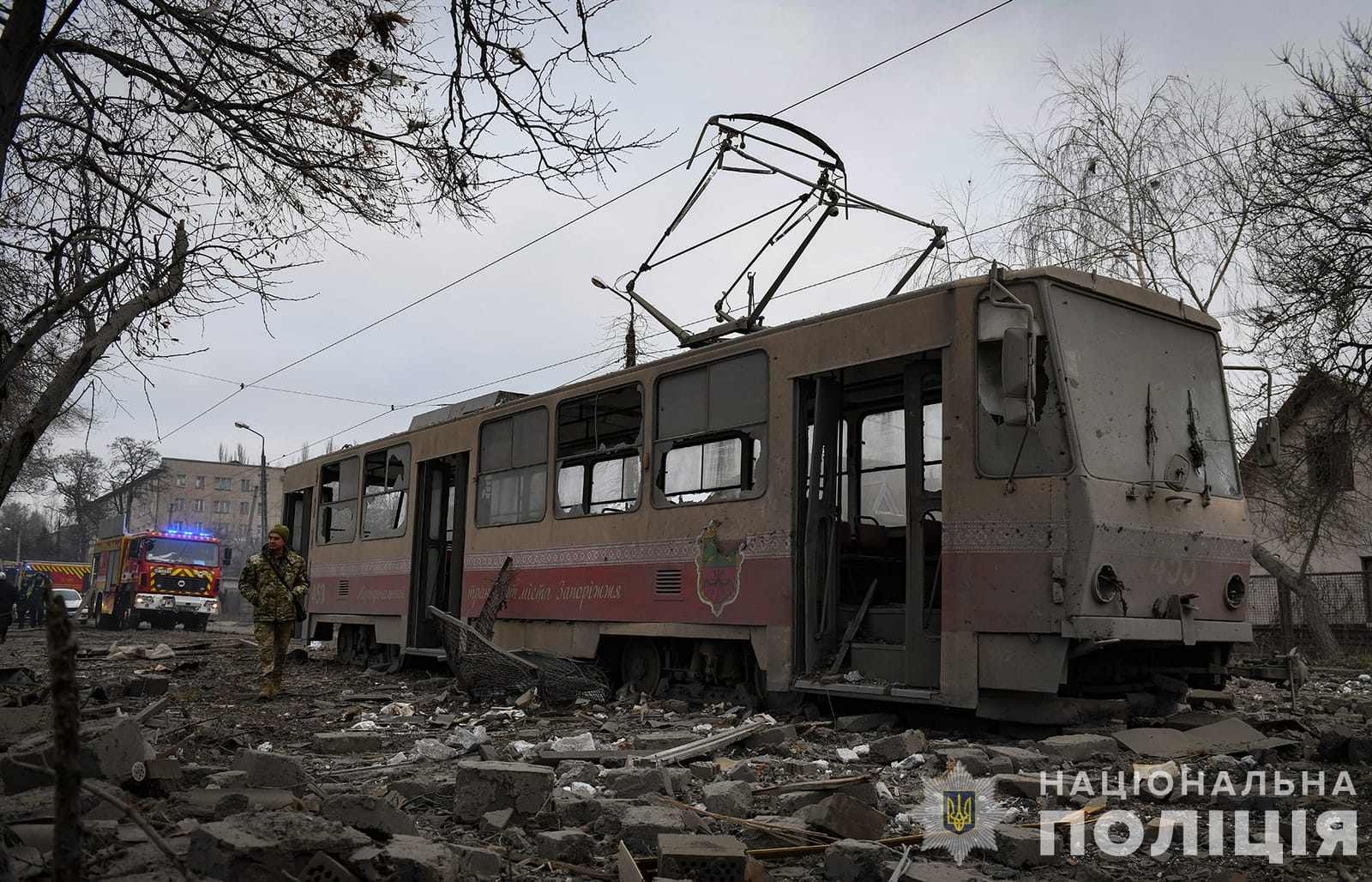

Update (10 Oct 2026): US President Donald Trump said Ukraine should get a new president "who can make a deal" after Volodymyr Zelenskyy criticised a US arrangement on Russian diesel that Trump announced on 9 October. Reported death tolls from Russian strikes on Zaporizhzhia on 10 October have risen to between 15 and at least 20, depending on the source.
Speaking to reporters at the White House on Saturday, 10 October, Trump said Ukraine should get a new leader or president who can make a deal to end the war. BBC, France 24, AP and Anadolu each reported the remarks. "I suggest they get a new leader who can make a deal," Trump said, according to France 24. According to the BBC, he said: "it's time for Ukraine to get a new president".
Trump also called on Zelenskyy to stop attacks on Russian oil refineries, saying Zelenskyy "wants to make problems for the world". "He'd better damn well stop," Trump said, according to the BBC; France 24 quoted him as saying "He better damn well stop". Trump told reporters: "We said, 'you can do whatever you want to Russia, don't hit the refineries', because that's a world problem that's caused." He added: "He could have made many deals and for some reason, he never does." AP's headline says Trump blamed Zelenskyy for US diesel prices. AP's summary says Trump suggested Zelenskyy has not done enough to end the war.
The reports reviewed by Vocemundi do not include a response from Zelenskyy or the Ukrainian government to Trump's call for a new president. They also do not describe when or how the US told Ukraine not to strike Russian refineries, as Trump says it did.
The diesel deal
On Friday, 9 October, Trump announced a deal with Russia on Russian diesel supplies. The deal comes with an easing or suspension of US sanctions on Russian diesel, according to the BBC and France 24. The BBC reports that Trump confirmed an agreement with Moscow to suspend sanctions on Russian diesel exports until 7 April.
The Hindu reports that Trump said on social media he struck the deal with Vladimir Putin in a phone call. Trump had been expected to use that call to discuss a suspected case of plague in Russia. According to The Hindu, the volumes Trump announced were:
- more than 300,000 tonnes of diesel immediately;
- 500,000 tonnes in November 2026;
- 1 million tonnes "immediately thereafter";
- a further 3 million tonnes "within a short period of time" after that.
The Hindu says the deal contrasts with a sweeping Russia sanctions law Trump signed the previous month, aimed at Russia's oil and gas revenues.
BBC, France 24 and The Hindu all describe the deal as an effort by Trump to lower US fuel or energy costs ahead of the US midterm elections. According to the BBC, the war involving Iran began in February and has driven up petrol and especially diesel prices, hurting Trump's standing with the US public.
The reports do not include confirmation or comment from the Kremlin on the deal, its volumes or its terms. They also include no official text or White House document setting out the terms. The 7 April end date rests only on the BBC, and the tonnage figures rest only on The Hindu.
Zelenskyy's criticism
Zelenskyy said the deal would help finance or prolong Russia's war against Ukraine. He said Moscow takes the deal "to mean they can keep fighting, to mean they keep dropping bombs on cities", according to the BBC. The Hindu quoted him as saying Russia would repay the deal "with further terror and perfidy".
Zelenskyy added: "It plays into Russia's hands — allowing it to kill more, wage war for longer, have even less respect for America, and inflict even greater losses and damage on the world". He described the Zaporizhzhia strikes as Russia's "thanks" for the deal.
According to a statement released by the Ukrainian Embassy in Washington, Zelenskyy called it "a weak decision, unfortunately, a weak decision by strong partners." He also said, according to The Hindu: "I believe our team is simply being used as a smoke screen. And that is certainly not fair. It is certainly not how partners should treat each other".
Strikes on Zaporizhzhia
Russian aerial bombs hit residential buildings in Zaporizhzhia on 10 October. According to Ukraine's State Emergency Service, the dead included three children. Ukraine's National Police said Russia used "five guided aerial bombs" on residential neighbourhoods, according to France 24.
The death toll differs between reports:
- France 24 cites the State Emergency Service as saying at least 15 people were killed.
- Le Monde gives 16 dead.
- The Hindu, citing officials, reports at least 20 killed in the Zaporizhzhia region; France 24's liveblog introduction also gives at least 20.
The Hindu reports that at least 18 people were wounded.
Earlier, Ivan Fedorov, co-chair of the Defence Council of the Zaporizhzhia region, had said the toll had risen to eight, including three children. He also said at least 16 people were wounded and 12 missing, according to France 24.
The reports do not reconcile the different tolls. The Hindu gives its figure for the Zaporizhzhia region, while France 24 refers to the city of Zaporizhzhia. The reports include no Russian response to Ukrainian accounts of the strikes.
The Hindu had earlier quoted Mykhailo Semikin, head of the regional military administration, as saying: "One man was killed, and five people were wounded in Russian strikes on Ukraine's Zaporizhzhia region in the morning hours" of 9 October. Semikin said residential areas were hit and a child was among the wounded.
Strikes elsewhere in Ukraine
Kyiv was hit by Russian strikes on 10 October. According to The Hindu, missiles struck the capital in a daytime attack, and Mayor Vitalii Klitschko said four people were wounded. Private energy firm DTEK said on Telegram: "New large-scale power outages in the capital due to attacks. Stabilisation schedules are currently not in effect", according to France 24.
The Russian Defence Ministry said its drones struck a data-processing centre in Kyiv that Ukraine's armed forces use for intelligence. It also said it hit a cargo ship carrying military supplies to Odesa. France 24 notes that Reuters could not immediately verify these claims.
On 9 October, officials said Russian strikes killed three people and wounded at least eight across Ukraine, according to The Hindu. Regional head Svitlana Onyshchuk reported a man killed in Ivano-Frankivsk. Ukraine's Interior Ministry said a woman was killed in an attack on warehouses in the Bucha district.
The Hindu now reports that Russian bombardments killed more than 60 people in Ukraine over the past four days. Its earlier report included 30 people killed in a guided bomb attack near passenger buses on 8 October, and 22 killed in Pryluky the day before. The Hindu does not attribute these figures to a named official.
Zelenskyy had earlier written on Telegram: "Unfortunately, there is a lot of damage to the power grid and electricity transmission facilities". He added: "Repairs are going on around the clock."
Strikes inside Russia and occupied territory
Yandex said a drone attack put several data centre modules in Kaluga "completely out of service". Kaluga governor Vladislav Shapsha said nine people were wounded by drone attacks. In Belgorod, officials reported two killed and 12 wounded in Ukrainian strikes.
Leonid Pasechnik, the Russian-installed governor of the occupied Luhansk region, said Ukrainian attacks killed four civilians and wounded five in the past 24 hours. France 24 notes that Reuters could not independently verify this. It adds that there was no immediate Ukrainian comment.
Diplomacy
A Ukrainian delegation held talks in Miami on ending the war. The Hindu reports that the talks were with US envoy Steve Witkoff and Jared Kushner. Zelenskyy's adviser Dmytro Lytvyn said the delegation was heading home on Saturday. "The groups are already on their way home," he told reporters in response to an AFP question, according to France 24.
Russian state news agency TASS, citing an unnamed source, reported that Witkoff and Kushner may visit Moscow within the next two weeks, according to France 24.
French President Emmanuel Macron spoke with Zelenskyy on Saturday. "The President of the Republic spoke today with President Zelensky to express our solidarity in the face of the ongoing attacks," the Élysée said, according to France 24. France 24 reports that the Élysée did not immediately react to Trump's announcement of the diesel deal.
South Korea's foreign ministry said its ambassador to Ukraine, Park Ki-chang, returned home on 10 October. Seoul said it recalled him over Zelenskyy's disclosure of a transfer of North Korean prisoners of war to South Korea, according to France 24.
What is disputed
The death toll in Zaporizhzhia on 10 October varies by source: at least 15 (France 24, citing the State Emergency Service), 16 (Le Monde) and at least 20 in the region (The Hindu, and France 24's liveblog introduction). France 24's own figures differ between its reports.
Reports also differ on where the Russian diesel is to go:
- The BBC says it is to be released into the US.
- France 24 says it will be supplied to global markets, or to the US and global markets.
- The Hindu describes a deal for the US to buy or obtain Russian diesel.
AP's summary refers to Trump as "Former President Donald Trump". The other reports describe him as US President.
France 24's accounts of who attended the Miami talks, and when, also differ.
Zelenskyy said Ukrainian forces hit the Ukhta oil refinery. Komi region head Rostislav Goldstein said there had been an attack on the town of Ukhta but no damage.
What each side says
Trump said it is time for Ukraine to get a new president who can make a deal. He said Zelenskyy must stop authorising strikes on Russian refineries.
Zelenskyy said the diesel deal and the easing of sanctions will give Moscow money to buy military equipment and prolong the war. He said Ukraine's negotiating team is being used as a "smoke screen". He had earlier said Moscow will likely escalate attacks as winter approaches. He asked NATO countries for anti-ballistic capabilities, aircraft ammunition and interceptor investment.
EU foreign policy chief Kaja Kallas wrote online: "Suspending sanctions on Russian diesel provides Moscow with more revenues to wage war. This is not the time to ease pressure on Russia, and Europe won't". She added: "Russian strikes killed over 80 Ukrainian civilians in two days. Moreover, it has stepped up its hybrid attacks against Europe, both EU Member States and NATO allies". According to the BBC, she said European foreign ministers intend to approve on Monday the biggest set of sanctions on Russia since the full-scale invasion began.
Russia's Defence Ministry said it downed 505 Ukrainian drones overnight into 9 October. It also said it struck military targets in Kyiv and a cargo ship bound for Odesa; these claims have not been verified.
Analysis
Trump's call for a new Ukrainian president marks a public escalation in tension between Washington and Kyiv. It came a day after Zelenskyy criticised the diesel deal as financing Russia's war. Reporting links the deal to US fuel costs ahead of the midterm elections. It also sits awkwardly with a sanctions law that, according to The Hindu, Trump signed the previous month. The reports do not explain how the two fit together.
Europe's position diverges from Washington's. Kallas said the EU will not ease pressure, and the BBC reports that the EU plans to approve a large new sanctions package. Meanwhile, Ukrainian delegates have left Miami with no reported outcome. TASS's unconfirmed report of a possible Witkoff–Kushner trip to Moscow leaves the next diplomatic step unclear.
On the ground, strikes by both sides continue, with energy and infrastructure among the targets. Fresh outages in Kyiv point to growing pressure on civilian services ahead of winter, as the return of help stations in Kyiv suggests.
Key points remain uncertain:
- Death tolls in Zaporizhzhia range from 15 to at least 20.
- The deal's terms, volumes and destination rest on single outlets or conflicting accounts.
- The Kremlin has not commented on the deal.
- Kyiv has not responded to Trump's remarks.
How we verified this story7 sources · 39/39 claims backed · 3 AI reviewers
Sources (7): France 24 · The Hindu · BBC News · Anadolu Agency · The Hindu · Le Monde (English) · Associated Press
Independent origins: 1 · Perspectives: Asia; Turkish state media; Western news agencies; Western, centre-left; Western public media · Regions: Asia, Europe
Review panel: Claude, GPT-5.6 Sol, Kimi · Verdict: approved. 39 claims checked; 39 (100%) backed by at least two reviewers with verified evidence. Headline backed by 3 of 3 reviewers.
Dissent (Claude): 1 claim rated only partly supported or unsupported, e.g. “Reasonable inference but stated as fact without hedging.”
Confirmed 5 · Reported 16 · Disputed 3 · Confidence: medium
Produced by the Vocemundi newsroom with AI assistance.

Vera is Vocemundi's AI editor, built on Anthropic's Claude. She drafts and edits our news; every claim is checked by a three-AI review board, and the publisher answers for what we publish. How we work
More stories
FAA orders nationwide US flight ground stop over communication issue, Duffy says
The US Federal Aviation Administration halted flights at US airports on 13 November 2026, and Transportation Secretary Sean Duffy attributed the stop to a communication issue affecting all Air Route Traffic Control Centers.

Tanker strikes docked river cruise boat on Mississippi in New Orleans, rescue under way
The tanker Atlantic Asphalt struck the docked cruise boat American Heritage in New Orleans on 13 November 2026, leaving it partially submerged with about 130 passengers aboard; casualties were not immediately known.

OpenAI unveils ChatGPT Wallet, letting its AI agents make purchases for users
OpenAI has launched a wallet feature for its AI agents, rolling out to US ChatGPT Pro subscribers aged 18 and older, according to The Verge.
Comments