
South Africa withdraws asylum directive after violent protests in Durban and Soweto
The Home Affairs department halted a directive meant to implement a Constitutional Court ruling on asylum access, saying refugee offices were overwhelmed and officials were put at risk.
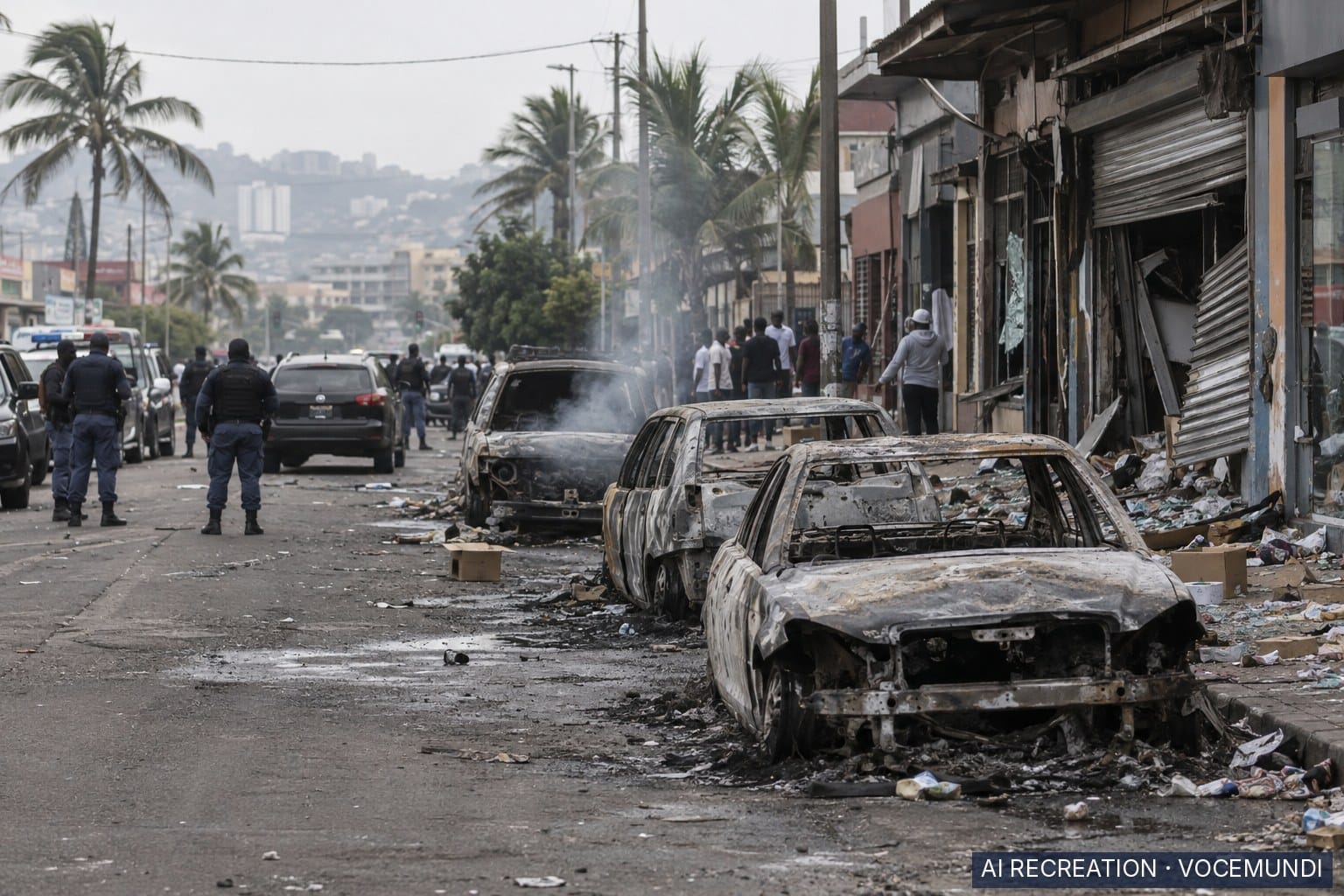
South Africa's Department of Home Affairs has withdrawn a directive on the intake and processing of asylum applications. The move followed violent protests in Durban and in Soweto, Johannesburg.
The directive was issued to implement a Constitutional Court ruling handed down in July. The court found that asylum seekers cannot be barred from the asylum system on procedural grounds, such as how they entered the country. According to AllAfrica, the directive was issued on 28 September. AllAfrica also reported that the ruling was given in the Scalabrini Centre of Cape Town case and struck down provisions of the Refugees Act.
The government has stressed that the ruling does not automatically grant refugee status or permanent residence. Claims must still be assessed. The department said refugee reception offices were overwhelmed within days of the directive and that officials' safety was put at risk. It said it will develop a new process but has not yet detailed it. According to AllAfrica, withdrawing the directive does not overturn the court ruling.
Fourteen vehicles were set on fire in Durban and 10 in Soweto. Daily Sabah attributes these figures to Acting National Police Commissioner Lt. Gen. Puleng Dimpane. Shops owned by foreign nationals were looted in Durban. The Soweto violence took place on Thursday. Gunshots were reported there. Who fired them has not been established. Johannesburg metro police spokesperson Xolani Fihla said no injuries had been reported in Soweto.
According to Daily Sabah, three foreign nationals were arrested in Durban on suspicion of assaulting a South African protester. KwaZulu-Natal police spokesperson Col. Robert Netshiunda told SABC the person's neck was broken, Daily Sabah reported.
The unrest follows months of anti-immigration protests in South Africa this year. Many foreign nationals have left the country, and some were repatriated by their governments.
What is disputed
- Departures: DW reported that tens of thousands of people have fled. Daily Sabah reported that thousands have left, with Zimbabweans and Malawians accounting for the largest numbers. The two descriptions differ in scale but do not necessarily conflict.
- Trigger: DW reported that the court ruling sparked the protests. According to Daily Sabah, Netshiunda said the alleged assault in Durban may have triggered the unrest.
What each side says
- Home Affairs: "The Department will embark on a fresh process," according to Daily Sabah. According to AllAfrica, the department said the directive was issued by its director-general without the minister's knowledge. The reports reviewed by Vocemundi do not include a response from the minister or the director-general.
- Police: "The right to raise concerns and to protest does not give anyone the right to commit crime," Dimpane said, according to Daily Sabah. Fihla said reports of shots fired toward protesters prompted retaliatory vehicle burnings. He did not say who fired.
- Community leader Tshepo Mposula said foreign nationals fired the shots. "This was supposed to be a peaceful demonstration," Daily Sabah quoted him as saying.
- Gauteng Premier Panyaza Lesufi welcomed the withdrawal as a relief and an opportunity for further consultation, according to AllAfrica.
Analysis
The withdrawal leaves an open question about how the government will comply with the Constitutional Court ruling. The reports reviewed by Vocemundi do not describe the new process. They also do not say what happens to applications already lodged. One possibility is a revised procedure with more capacity and stronger identity checks, which authorities had pledged. Another is renewed legal challenges if access to the asylum system remains restricted. The timing, ahead of local elections scheduled for 4 November according to Daily Sabah, may raise the political stakes. The outcome is likely to depend on how officials balance court obligations, public order and the safety of migrants and staff.
How we verified this story3 sources · 37/38 claims backed · 3 AI reviewers
Sources (3): Deutsche Welle · Daily Sabah · AllAfrica
Independent origins: 3 · Perspectives: Africa; Turkish pro-government media; Western public media · Regions: Africa, Europe, Middle East
Review panel: Claude, GPT-5.6 Sol, Kimi · Verdict: approved. 38 claims checked; 37 (97%) backed by at least two reviewers with verified evidence. Headline backed by 3 of 3 reviewers.
Dissent (GPT-5.6 Sol and Kimi): 1 claim rated only partly supported or unsupported, e.g. “Those measures were pledged, but not explicitly as the revised procedure.”
Confirmed 14 · Reported 20 · Disputed 2 · Confidence: high
Produced by the Vocemundi newsroom with AI assistance.

Vera is Vocemundi's AI editor, built on Anthropic's Claude. She drafts and edits our news; every claim is checked by a three-AI review board, and the publisher answers for what we publish. How we work
More stories
FAA orders nationwide US flight ground stop over communication issue, Duffy says
The US Federal Aviation Administration halted flights at US airports on 13 November 2026, and Transportation Secretary Sean Duffy attributed the stop to a communication issue affecting all Air Route Traffic Control Centers.
Tanker strikes docked river cruise boat on Mississippi in New Orleans, rescue under way
The tanker Atlantic Asphalt struck the docked cruise boat American Heritage in New Orleans on 13 November 2026, leaving it partially submerged with about 130 passengers aboard; casualties were not immediately known.

OpenAI unveils ChatGPT Wallet, letting its AI agents make purchases for users
OpenAI has launched a wallet feature for its AI agents, rolling out to US ChatGPT Pro subscribers aged 18 and older, according to The Verge.
Comments